
How Often Should You Clean Your Dryer Vent? (Yearly — Here’s Why)
"Once a year" is the honest answer, and it is the one most homeowners need to hear, because the average vent never gets cleaned at all. But the right schedule depends on how much laundry you run, what kind of dryer you own, and how your vent is routed. Here is how to figure out where your home falls — and the warning signs that mean you should not wait for the calendar.
Why Is Once a Year the Standard for Dryer Vent Cleaning?
Every load of laundry pushes warm, moist air through the vent, and that air carries lint that slipped past the trap. As the air cools on its way to the exterior hood, moisture condenses on the duct walls and lint sticks to it — most heavily at elbows, in the transition hose behind the dryer, and at the outside termination. Load after load, the open diameter of the duct shrinks.
A narrower duct means weaker airflow. Weaker airflow means the dryer holds heat instead of pushing it outside, so cycles run longer, the machine works harder, and the temperature inside the duct climbs — right next to a growing supply of one of the most flammable materials in your house. Lint ignites easily, and a restricted vent gives a fire both the heat source and the fuel.
For a typical household running three to five loads a week, one year is roughly the point where buildup starts to restrict airflow enough to notice in your dry times. That is why fire-safety organizations, dryer manufacturers’ owner’s manuals, and every honest vent technician land on the same baseline: have the full vent line cleaned once a year.
The U.S. Fire Administration (FEMA) reports a similar picture from its own data: an estimated 2,900 home clothes dryer fires are reported each year. These are not exotic mechanical failures — the most common story is simply a vent that never got cleaned.
Which Households Should Clean More Often Than Once a Year?
Annual cleaning assumes average use. Several situations fill a vent faster, and a few raise the stakes enough that you should never stretch the interval. Find your household in the table below.
| Your situation | How often to clean |
|---|---|
| Typical household, 3–5 loads a week | Once a year |
| Large family or 6+ loads a week | Every 6 months |
| Shedding pets in the home | Every 6 months |
| Gas dryer | Every 12 months, never skipped |
| Vent run over 15 feet or with multiple elbows | Every 6–12 months |
| Vent terminates on the roof | Once a year, with the exterior cap checked each visit |
| Just moved in or installed a new dryer | Inspect now, then start the yearly schedule |
The reasoning is straightforward. More loads means more lint, so heavy-laundry households simply reach a restricted vent sooner. Pet hair mats together with lint and clings to duct walls faster than lint alone. Long runs and elbows slow the airflow, and lint drops out of slow-moving air at every turn. Roof terminations add a vertical climb the exhaust has to fight, and their caps collect lint in a spot you will never casually see.
Gas dryers deserve their own sentence: a blocked vent on a gas dryer does not just trap heat and lint — it can push exhaust, including combustion byproducts, back into your living space. And if you just bought your home, assume the previous owner never cleaned the vent, because most people never do. An inspection on move-in tells you whether you are starting from a clean duct or a ten-year backlog.
What Warning Signs Mean Your Vent Needs Cleaning Now?
A schedule is a guideline; symptoms overrule it. If you notice any of the following, book a cleaning no matter when the vent was last serviced.
- Clothes need a second cycle to dry — towels and jeans are usually the first to show it
- The top of the dryer, or the laundry room itself, gets noticeably hot during a cycle
- A hot, dusty, or faintly burning smell while the dryer runs
- Lint collecting around the door seal or behind the machine
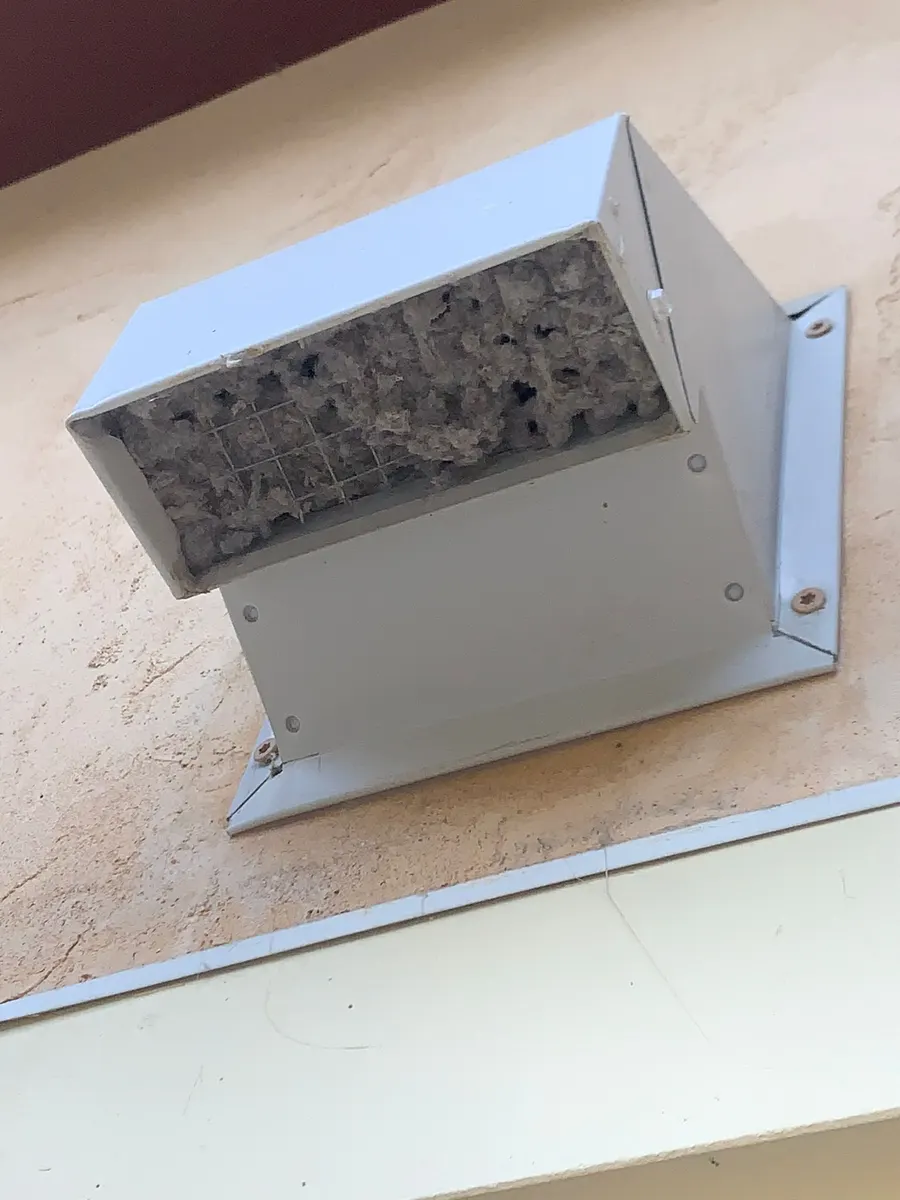
- The exterior flap barely opens, or airflow at the outside hood feels weak while the dryer is running
- Visible lint — or nesting material from birds — at the exterior termination
Long dry times are the symptom people live with the longest, and they are the expensive one: every extra cycle is wasted electricity and wear on the machine. The burning smell is the one you should never sit on — shut the dryer off and get the vent inspected. For a full breakdown of how vent fires start and how to prevent them, see our dryer vent fire safety guide.
Doesn’t the Lint Trap Catch All the Lint?
No — and this is the misunderstanding behind most clogged vents. The lint trap catches what falls away from your clothes at the drum, and cleaning it before every load genuinely matters for airflow. But some lint rides the moist exhaust air straight past the screen, and everything that gets past the trap has only one place to go: the duct.
Over months, that escaped lint settles along the full run — in the flexible transition hose behind the dryer, at every elbow, and at the exterior hood where warm air meets cold. Emptying the trap does nothing for any of that. Think of the trap as the first filter and the vent line as the part nobody can see. The yearly schedule in this article exists for the part nobody can see.
What Does a Professional Dryer Vent Cleaning Include?
A proper cleaning covers the entire path from the back of the dryer to the outside of your house — not just the few feet a hardware-store brush can reach. Here is what our dryer vent cleaning service includes on every visit:
- Video inspection first. We look inside the duct before any work, so you see the buildup we see — and so we catch problems like crushed hose, disconnected joints, or animal nesting before they become surprises.
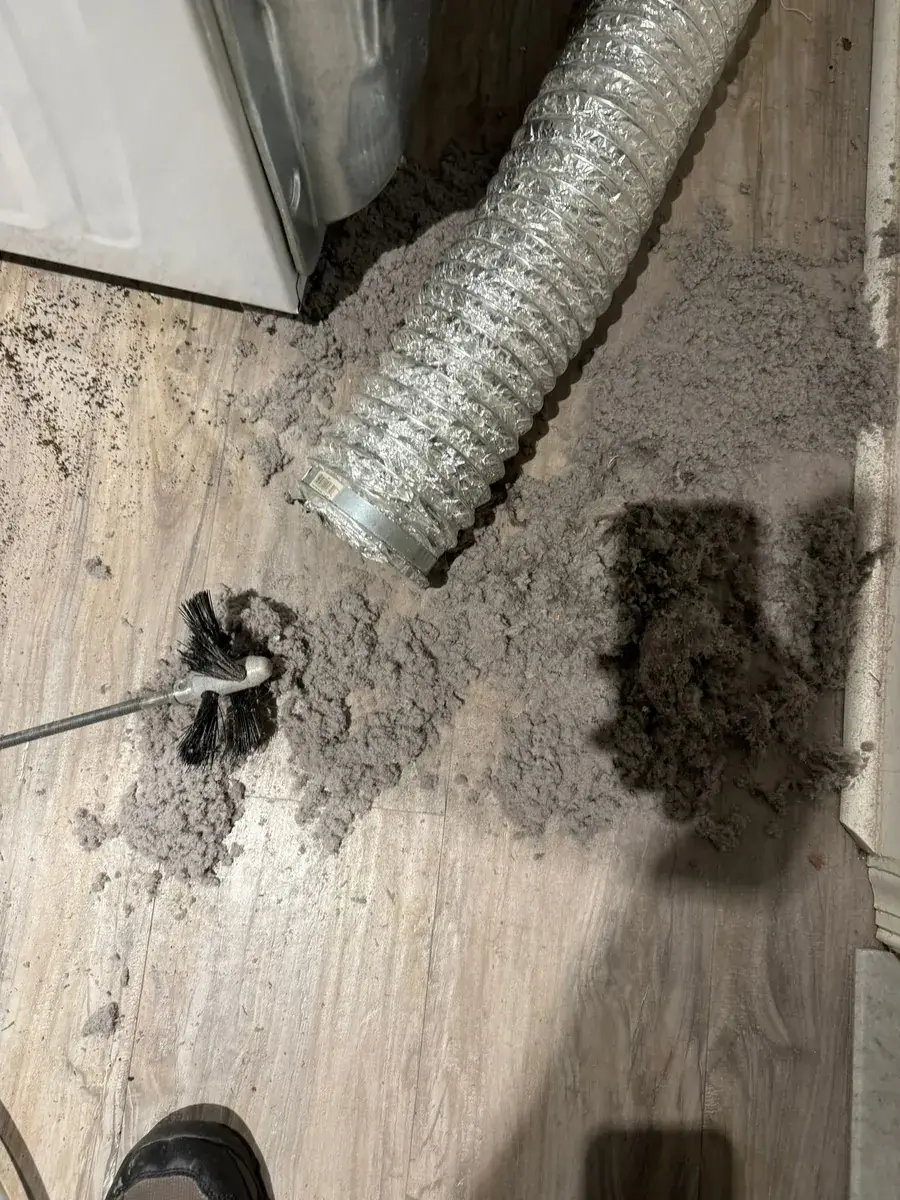
- Transition hose cleaning. The flexible hose behind the dryer is usually the most clogged section of the whole run, and the one most quick cleanings skip.
- Full-run brushing under vacuum. A rotary brush scrubs the duct walls along the entire length while a HEPA-filtered vacuum pulls the loosened lint out, so debris leaves your house instead of settling back into the line.
- Exterior hood service. We clear the termination, make sure the flap opens freely, and check the screen or guard for damage.
- Airflow verification and after-photos. We run the dryer, confirm strong exhaust at the exterior, and photograph the results.
The before-and-after documentation matters because vent cleaning is invisible work — you should not have to take anyone’s word for it. You can read exactly how we run every job on our process page. E Cleaning is a PA licensed contractor (PA 187935), insured up to $2 million, and Google Guaranteed, which backs qualifying jobs with money-back protection up to $2,000.
How Much Does Dryer Vent Cleaning Cost?
Every job starts with a free video inspection, and you get a flat, written quote before any work begins. The quote you approve is the invoice you pay — there is no “inspection fee” that turns into a bigger number once a technician is standing in your laundry room, no trip fees anywhere in our service area, and no door-step upsell. How our quoting works is spelled out on our pricing page.
An annual cleaning usually costs less over the year than the extra electricity of running every load twice — and far less than a service call for a heat-damaged dryer. Many customers pair it with air duct cleaning in the same visit, since the technician and the equipment are already in the house, and financing through Wisetack is available on larger projects.
Can You Clean a Dryer Vent Yourself?
Sometimes. If your dryer sits in the basement and vents straight out the rim joist a few feet away, a hardware-store rotary kit and a shop vacuum can do a reasonable job between professional cleanings. Cleaning the lint trap every load and vacuuming behind the dryer a few times a year are worth doing in every home, no matter who handles the duct.
DIY has hard limits, though. Cheap brush kits can dislodge lint without removing it and leave clumps mid-run — a vent that is half-cleaned and freshly disturbed can end up more restricted than one that was left alone. Long runs, multiple elbows, second-floor laundry rooms, and roof terminations are jobs for a professional with the reach, the vacuum power, and the ladder. If your vent goes up instead of out, put the brush kit down.
If you cannot remember the last time your dryer vent was cleaned, that is your answer: it is due. Call (484) 367-5944 or book online — most cleanings take under an hour, and you will see the before-and-after for yourself.
