
Dryer Vent Fire Safety: The Home Fire You Can Actually Prevent
Most dryer fires start the same way: lint builds up in the vent, airflow chokes, heat climbs, and the lint itself becomes the fuel. Failure to clean the vent is the leading factor — which means this fire is preventable with a simple annual cleaning. This guide covers how it happens, the warning signs, and exactly what to do about them.
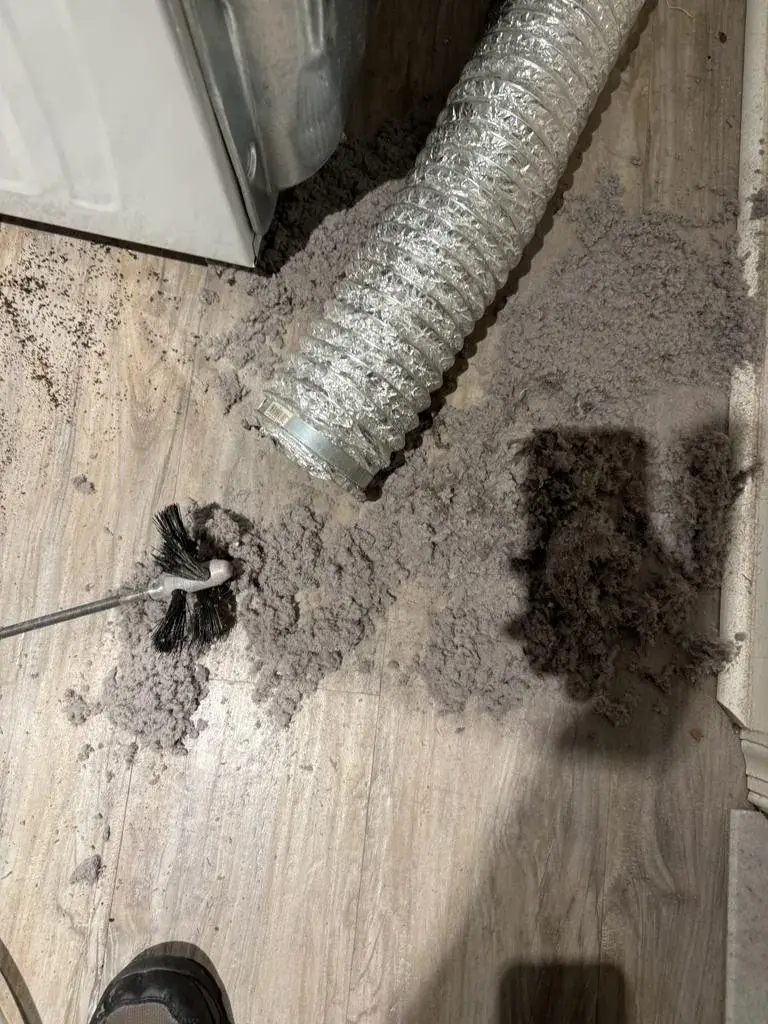
How common are dryer fires, really?
Dryer fires are one of the most common — and most preventable — home fires in the United States. The leading factor is not old machines or bad wiring: it is failure to clean the vent. A vent packed with lint puts a fuel supply directly in the path of your dryer's heat, and an annual cleaning removes it.
Read those two figures side by side and a pattern emerges. Dryer fires are not freak accidents — they happen thousands of times a year, in ordinary homes, with ordinary machines. And unlike electrical faults or lightning strikes, the leading cause is something a homeowner can see coming and fix on a schedule. One in three of these fires traces back to a vent that simply never got cleaned.
That is why fire departments, appliance manufacturers, and insurers all give the same advice: keep the lint screen clean, and have the full vent run cleaned regularly. The rest of this page explains why the fire starts, how to recognize a vent that is heading toward trouble, and what a proper cleaning involves.
Why does lint ignite inside a dryer vent?
A fire needs fuel, heat, and time — and a clogged dryer vent supplies all three. Lint is dry, fine, and highly flammable; a restricted vent traps the dryer's heat instead of exhausting it; and the buildup happens slowly, hidden inside walls, so nothing looks wrong until something is.
Fuel: lint that gets past the screen
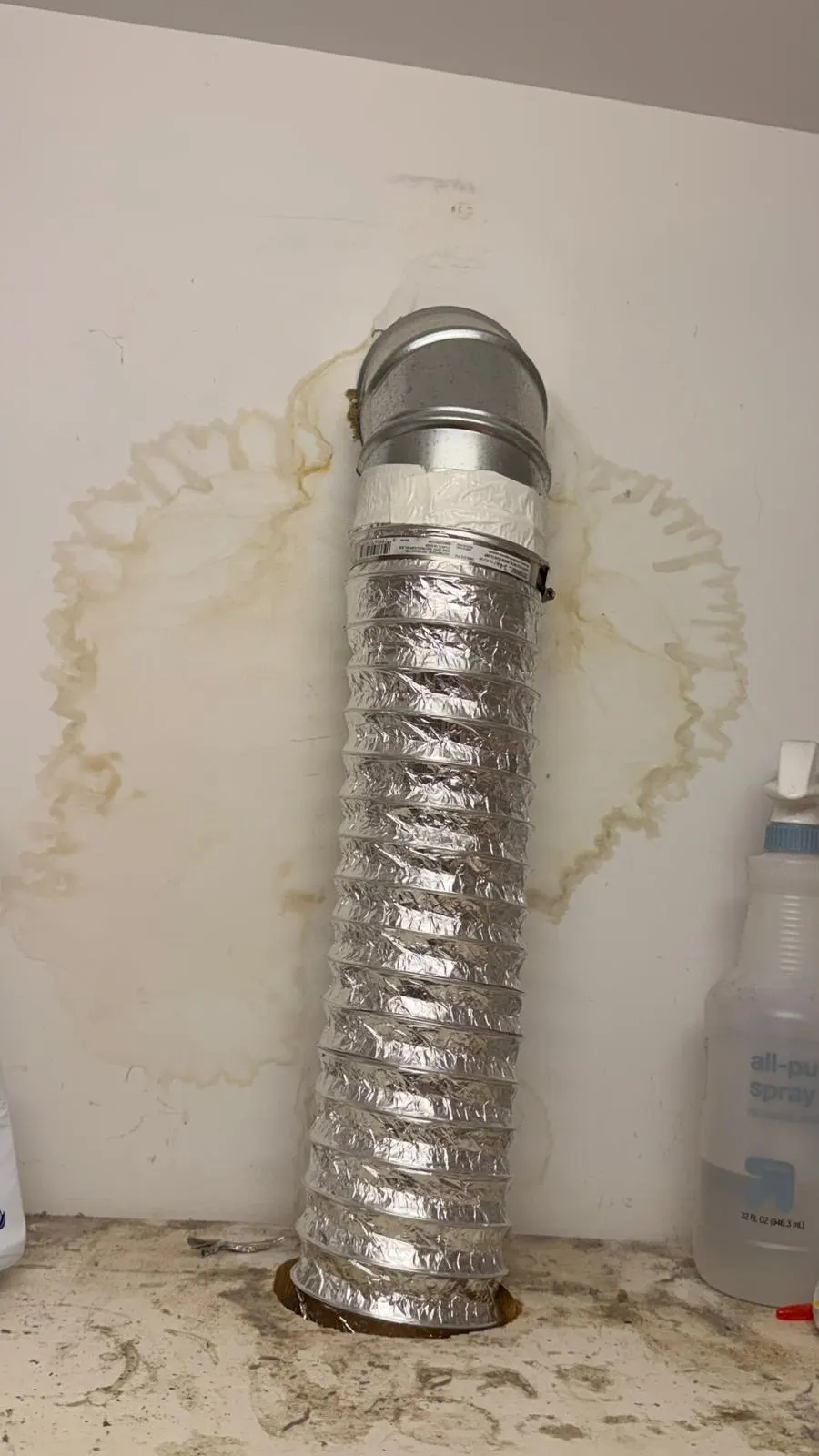
Every load of laundry sheds fabric fibers. Your dryer's lint screen catches the loose fluff, but a portion of the finest fibers blows straight past it into the vent duct. Those fibers settle on the duct walls — especially at elbows, sagging flexible sections, and long horizontal runs — and compact over months into dense mats. Dry, packed lint ignites easily and burns fast, which is why it is a popular fire starter for campers.
Heat: an exhaust system that cannot exhaust
A clothes dryer works by pushing hot, moist air out of the house. As lint narrows the vent, that air has nowhere to go. The temperature inside the drum and the duct climbs, the machine runs longer to dry the same load, and the heating element cycles harder. The safety thermostat is supposed to catch runaway heat, but it sits at the machine — not in the duct where the lint mat is quietly baking a few feet away.
Time: a problem nobody can see
Almost the entire vent run is hidden inside walls, ceilings, or a crawl space. The transition hose in this photo tells the story: heat staining and packed lint on a component the homeowner had never once seen. Buildup like this takes years — which is exactly why annual cleaning works. You remove the fuel before heat and time can finish the equation.
What are the warning signs — and what does each one actually mean?
The five signs below are your dryer telling you its vent is restricted. Any one of them is reason to stop and inspect; two or more together mean the vent should be cleaned before the next load runs.
1. Clothes take two or more cycles to dry
This is the earliest and most reliable sign, and it is pure physics. Drying works by moving moisture out of the drum and out of the house. When the vent is restricted, the moist air recirculates instead of escaping, so the same load needs far more time and heat. Homeowners often blame the machine and buy a new dryer — then watch the new one struggle the same way, because the problem was never the appliance.
2. The dryer, and the clothes, are hot to the touch
A healthy dryer exhausts its heat. When the top and sides of the machine feel hot, or clothes come out hot enough to be uncomfortable to hold, that heat is being trapped — which means it is also building inside the duct, right against the lint. This is the exact condition that starts vent fires, happening in slow motion.
3. A burning smell during a cycle
Treat this one as urgent. A scorched or hot-fabric odor while the dryer runs can mean lint is already smoldering on the heating element or inside the duct. Stop the cycle, turn off the dryer, and do not run it again until the vent has been inspected. Smoldering lint can flare long after the machine shuts off.
4. The exterior flap barely opens — or lint is bristling out of it
Run the dryer and go look at the outside vent hood. The flap should swing open with a strong stream of warm air behind it. A flap that flutters weakly, stays shut, or is matted over with grey fuzz means the run behind it is choked. Lint visibly backing out of the hood means the duct is full enough that it has nowhere left to pack.

5. Lint collecting where it should not be
Lint gathering behind the machine, around the transition hose connections, or on the floor of the laundry area means exhaust air is leaking out before it reaches the outside — usually because the duct is blocked and pressure is forcing air out at the joints. You are seeing the overflow from a full vent.
Noticed any of these? Stop using the dryer and have the vent inspected. The inspection is free and you get a flat, written quote before any work begins — and the risk quiz at the bottom of this page will help you gauge how urgent your situation is.
Why is winter the peak season for dryer fires?
The U.S. Fire Administration reports that home clothes dryer fires are more common in the fall and winter months, peaking in January. Winter stacks every risk factor at once: more laundry, heavier fabrics, longer run times, and exterior vents that can freeze or block over.
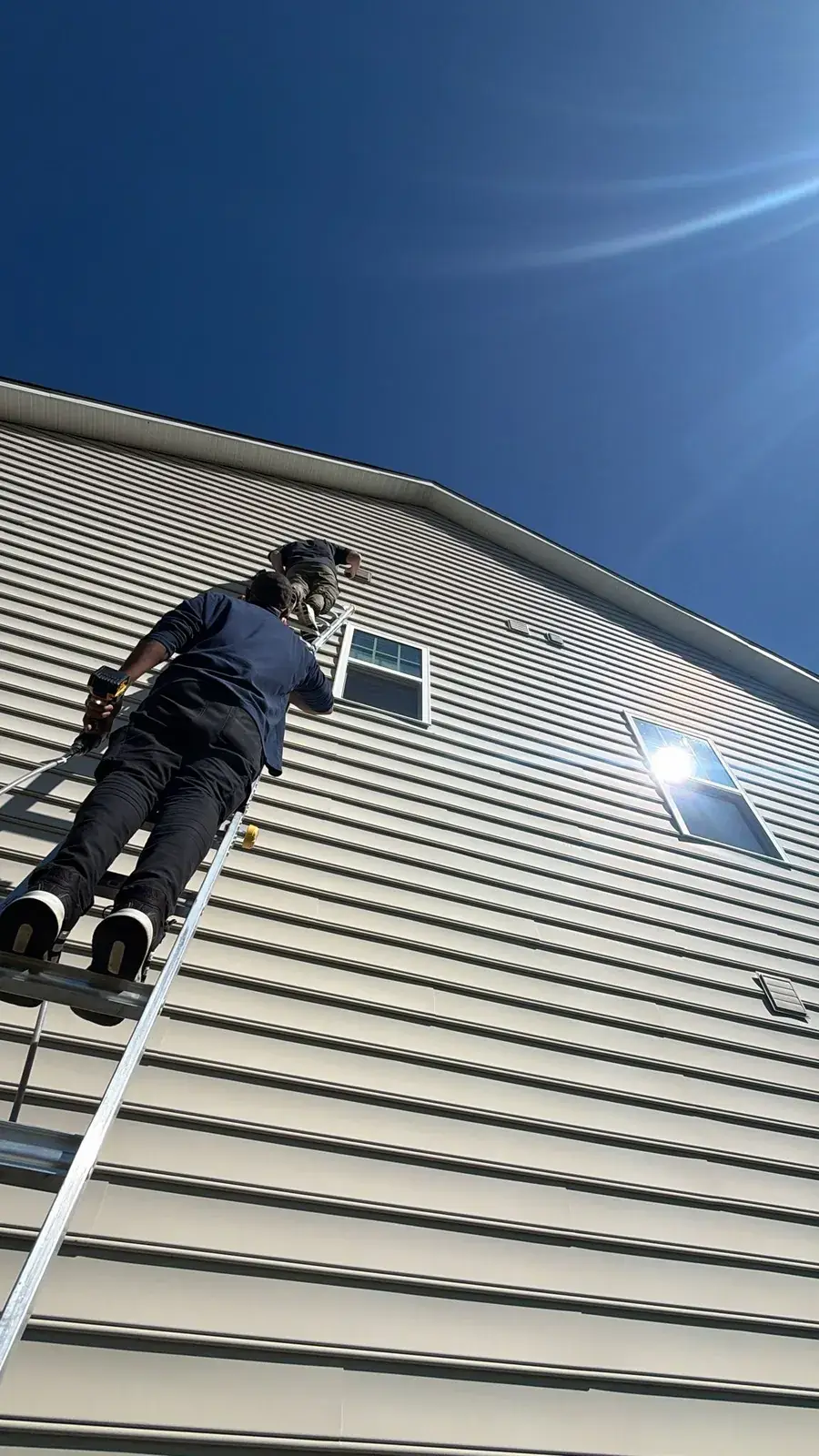
Heavier fabrics shed more lint
Sweaters, flannel sheets, blankets, hoodies, towels — cold-weather laundry sheds far more fiber per load than summer t-shirts. A vent that kept up fine in July can load up noticeably faster between November and February.
The dryer simply runs more
Nobody line-dries in a Pennsylvania January. Holiday guests, extra bedding, kids' winter gear — the machine works its hardest during the exact months the vent is filling fastest.
Cold terminations trap moisture and ice
When hot, moist exhaust meets a freezing vent hood, moisture condenses inside the duct. Damp lint packs harder and clings to duct walls, and in a hard freeze the flap itself can ice over or be blocked by drifted snow — turning a partial restriction into a full blockage overnight.
The smart move: clean in the fall
A late-fall cleaning means your vent enters its hardest-working season empty. If it has been more than a year — or you have never had it done — do not wait for spring.
What does a professional dryer vent cleaning include?
A professional cleaning starts with a free video inspection and a flat, written quote before any work begins. The visit takes about 45 to 75 minutes and clears the entire vent run — not just the ends — finishing with an airflow check so you know the fire risk actually left with the lint.
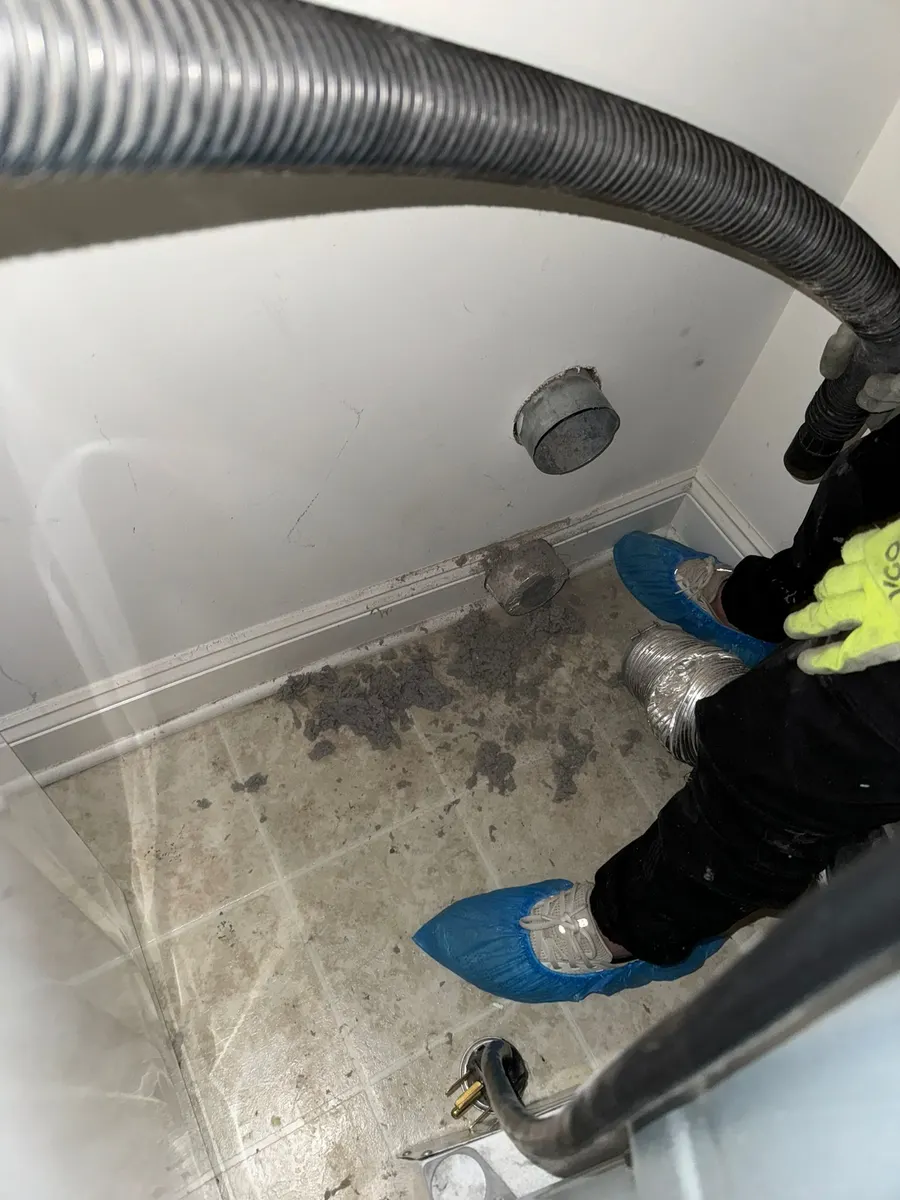
- Full-run cleaning from both ends — rotary brushes agitate packed lint off the duct walls from the dryer side and the exterior side while vacuum extraction captures it, so elbows and hidden sections get cleared, not bypassed
- Transition hose inspection — the flexible connector behind the dryer is checked for crushing, kinks, and heat damage, and reconnected properly
- Exterior termination cleared — the outside hood, flap, and screen are cleaned so exhaust exits freely and the flap seals against pests and weather
- Airflow verification — we run the dryer and confirm strong exhaust at the exterior before we leave; that check is the difference between a cleaning and a guess
- After-photos and honest findings — you see what came out, and if we find a nest, a disconnected joint, or unsafe plastic or foil duct, you get a straight price before any extra work
Full service details and booking are on our dryer vent cleaning page.
Dryer fire prevention checklist
Between professional cleanings, these habits keep your risk low. None of them cost anything, and together they address every major factor fire investigators find in dryer fires.
- Clean the lint screen before or after every load — a clogged screen pushes more lint into the vent and makes the dryer run hotter from the very first minute
- Have the full vent run professionally cleaned once a year — every 6 to 9 months for large households, pet owners, or long vent runs with multiple elbows
- Never run the dryer while you are asleep or away from home — most dryer fires start during operation, and minutes matter
- Use rigid or semi-rigid metal duct only — vinyl and thin foil hoses sag, trap lint in their ribs, and can burn through; if your dryer connects with white plastic, replace it now
- Keep the area around the dryer clear — no laundry piles, cardboard, or cleaning products against or behind a machine that produces heat
- Check the exterior flap monthly — with the dryer running, confirm the flap opens and warm air is flowing; after snow, make sure the termination is not buried or iced over
- Never machine-dry anything stained with oil, gas, or solvents — items that touched cooking oil, motor oil, or finishing products can self-ignite in a hot drum even after washing; line-dry them instead
- Do not overload the drum — oversized loads dry slower, shed more lint, and strain the motor and heating element
How high is your home's dryer fire risk?
Answer a few honest questions and find out. The quiz below walks through the same risk factors our technicians assess on-site — cleaning history, drying performance, laundry location, vent run length, and duct material — and gives you a plain answer about where your setup stands.
There are no email gates and no scare tactics. If your risk is low, the quiz will tell you that, along with what to keep doing. If it is elevated, you will know exactly which factor is driving it — and whether the fix is a habit change, a professional cleaning, or a repair. Either way, you will know more about the most fire-prone appliance in your house than most homeowners ever do.
What's your dryer fire risk?
Answer honestly — these are the warning signs fire investigators look for.
Dryer Fire Safety Questions, Answered
How many dryer fires happen each year in the U.S.?
U.S. fire departments respond to an estimated 15,970 home fires involving clothes dryers or washing machines each year, and failure to clean is the leading factor, contributing to one-third (33%) of dryer fires, according to NFPA (2010–2014 data). The U.S. Fire Administration (FEMA) separately estimates 2,900 home clothes dryer fires are reported each year. The consistent thread across both datasets: the leading cause is a vent that never got cleaned, which makes this fire largely preventable.
Is it safe to run the dryer overnight or while nobody is home?
No — fire-safety agencies consistently advise against it, and so do we. Most dryer fires start while the machine is operating, and an unattended smoldering fire has time to spread before anyone reacts. The habit costs nothing to change: run loads while you are home and awake, and if your dryer currently shows any warning signs — long dry times, heat, or a burning smell — do not run it at all until the vent is inspected.
My dryer smells like something is burning. What should I do right now?
Stop the cycle, turn the dryer off, and unplug it if you can safely reach the outlet. Do not open the door and walk away — stay nearby for a few minutes, because smoldering lint can flare after shutdown. If you see smoke or flames, get out and call 911. If the smell fades and nothing develops, leave the dryer off and have the vent and machine inspected before the next use. A burning smell means lint is contacting something hot; the vent is the most common culprit.
I just bought a new dryer. Does that eliminate the fire risk?
No. The fire hazard lives mostly in the vent duct, and a new machine exhausts into the same lint-packed run the old one did. In fact, homeowners often replace a dryer because of long dry times, only to see the new machine struggle immediately — the vent was the problem all along. New dryers do have modern thermostats and moisture sensors, which help, but no sensor removes the fuel sitting in the duct. If you are installing a new dryer, that is the perfect moment to have the vent cleaned.
Are white vinyl or foil dryer hoses really dangerous?
Yes, enough that we flag them on every visit. White vinyl hose is plastic — it can soften and burn through, and its ribbed interior traps lint aggressively. Thin foil hose is better than vinyl but still sags between supports, creating low spots where lint and moisture collect. Current standards call for rigid or semi-rigid metal duct, which stays smooth inside, resists crushing, and does not add fuel to a fire. If we find vinyl or foil on your run, we can replace it with code-compliant metal duct, usually in the same visit, with a straight price before any work.
Why are townhomes and second-floor laundry rooms higher risk?
Because of vent run length and geometry. A basement laundry room often vents through a short, straight run to a ground-level wall. An upper-floor or townhome laundry typically vents through a long run with multiple elbows, ending high on a wall or at a roof cap — and every extra foot and every elbow is another place for lint to pack. Long runs also lose exhaust velocity, so lint settles instead of blowing clear. These are exactly the homes where annual cleaning matters most — and why we scope every job with a free video inspection and a flat, written quote before work begins, so a long run never turns into a surprise on the invoice.
How often should I have my dryer vent cleaned to stay safe?
Once a year for most households — and every 6 to 9 months if you have a large family, pets, lots of towel and bedding loads, or a long vent run with several elbows. NFPA data identifies failure to clean as the leading factor in dryer fires, so the interval matters less than actually having it done on a schedule. A smart rhythm for Pennsylvania homes is a fall cleaning, so the vent enters the winter peak season clear. Every job starts with a free video inspection and a flat, written quote before any work begins — details on our dryer vent cleaning page.
Does cleaning the lint screen after every load make professional cleaning unnecessary?
No — the screen and the vent are two different problems. The lint screen catches the loose fluff inside the drum, and cleaning it every load is essential. But the finest fibers pass through the screen into the vent duct, where they compact into mats over months and years, completely out of sight. No amount of screen cleaning removes what is already in the duct. The screen is daily maintenance; the full-run cleaning is annual maintenance. A safe dryer needs both.
Remove the Fire Risk — Free Video Inspection First
Full-run lint extraction with verified airflow and a flat, written quote before any work begins, from a licensed and Google Guaranteed local company. Call (484) 367-5944 or book online — before the busy season does its worst.
