
Dryer Vent Cleaning That Prevents Fires — Flat Written Quote, No Surprises
Every dryer vent cleaning starts with a free video inspection, and you get a flat, written quote before any work begins. The service covers full-run lint extraction from the dryer connection to the exterior vent, plus airflow verification when we finish. One visit removes the single leading cause of dryer fires: lint that never got cleaned out.

How does dryer vent cleaning pricing work?
Every dryer vent cleaning starts with a free video inspection. Once we have seen your actual vent run — its length, location, and condition — you get a flat, written quote before any work begins. The quote covers the entire vent run, not just the first few feet, and the job includes an airflow check before we leave.
Why we quote in person instead of over the phone: upper-floor laundry rooms usually have longer vent runs with more elbows, and the exit point is often high on an exterior wall or on the roof, which takes more time and ladder work to clean properly. Seeing the run first is how the quote stays flat — no add-ons appear on the invoice, and there are no trip fees anywhere in our service area.
| Laundry location | What it typically involves |
|---|---|
| Basement or first floor | Shorter run, ground-level exterior vent |
| Second floor or higher | Longer run, more elbows, wall- or roof-exit vent |
What every cleaning includes
- Full-run lint extraction — we clean from the transition hose behind the dryer all the way to the exterior termination, using rotary brushes and vacuum extraction, not a quick pass at one end
- Airflow verification — after cleaning, we confirm air is actually moving through the vent and exiting the house the way it should
- Exterior vent hood cleaning — the outside flap and screen get cleared so the flap opens freely when the dryer runs
- Transition hose check — we inspect the flexible connector behind the dryer for crushing, kinks, or foil damage and reconnect it properly
- Cleanup and after-photos — you see what came out of your vent, and we leave the laundry area the way we found it
Why is dryer vent cleaning a fire-safety issue?
Because lint burns, and a clogged vent traps the heat that ignites it. A dryer vent packed with lint forces the machine to run hotter and longer while surrounding that heat with one of the most flammable materials in your house.
Read those two numbers together and the takeaway is clear: dryer fires are common, and the leading cause is not faulty machines or bad wiring — it is vents that never got cleaned. That makes this one of the few home fires that is almost entirely preventable with a single routine service visit.
Here is how it happens. Every load of laundry sheds lint. Your dryer's lint screen catches some of it, but a meaningful amount blows past the screen into the vent duct. Over months and years it builds up on the duct walls, especially at elbows and long horizontal runs. As the passage narrows, hot moist air cannot escape, the dryer's internal temperature climbs, and the heating element sits closer and closer to a fuel supply of dry, packed lint. Most homeowners never see any of this — the entire vent run is hidden inside walls, ceilings, or crawl spaces until something goes wrong.
What are the warning signs of a clogged dryer vent?
The most reliable warning signs are clothes taking more than one cycle to dry, a dryer that is hot to the touch, and a burning smell while it runs. If you notice any of these, stop using the dryer until the vent has been inspected and cleaned.
Clothes take two or more cycles
The clearest sign. A healthy dryer dries a normal load in one cycle. When moist air cannot escape through the vent, it stays in the drum and your clothes stay damp — no matter how new the machine is.
The dryer is hot to the touch
The top or sides of the dryer, and even the clothes at the end of a cycle, feel unusually hot. Trapped heat is exactly the condition that ignites lint.
Burning smell while running
A hot, scorched odor during a cycle can mean lint is smoldering on the heating element or inside the duct. Turn the dryer off and get the vent checked before running it again.
Weak or no airflow outside
Run the dryer and look at the exterior vent hood. The flap should open and you should feel a strong stream of warm air. A flap that barely moves means the run is choked with lint.
Lint around the dryer or vent
Lint collecting behind the machine, around the transition hose, or bristling out of the exterior hood means the duct is full enough that lint is backing out at both ends.
Humid, musty laundry room
Moisture that should be leaving the house is condensing in the room or inside the duct instead. Damp lint packs harder, clogs faster, and can grow mildew.
What do we actually pull out of a dryer vent?
Pounds of packed lint, and sometimes more — bird nesting material, plastic screen fragments, and years of debris. These photos are from real cleanings: this is what was sitting between a running heating element and the outside of the house.
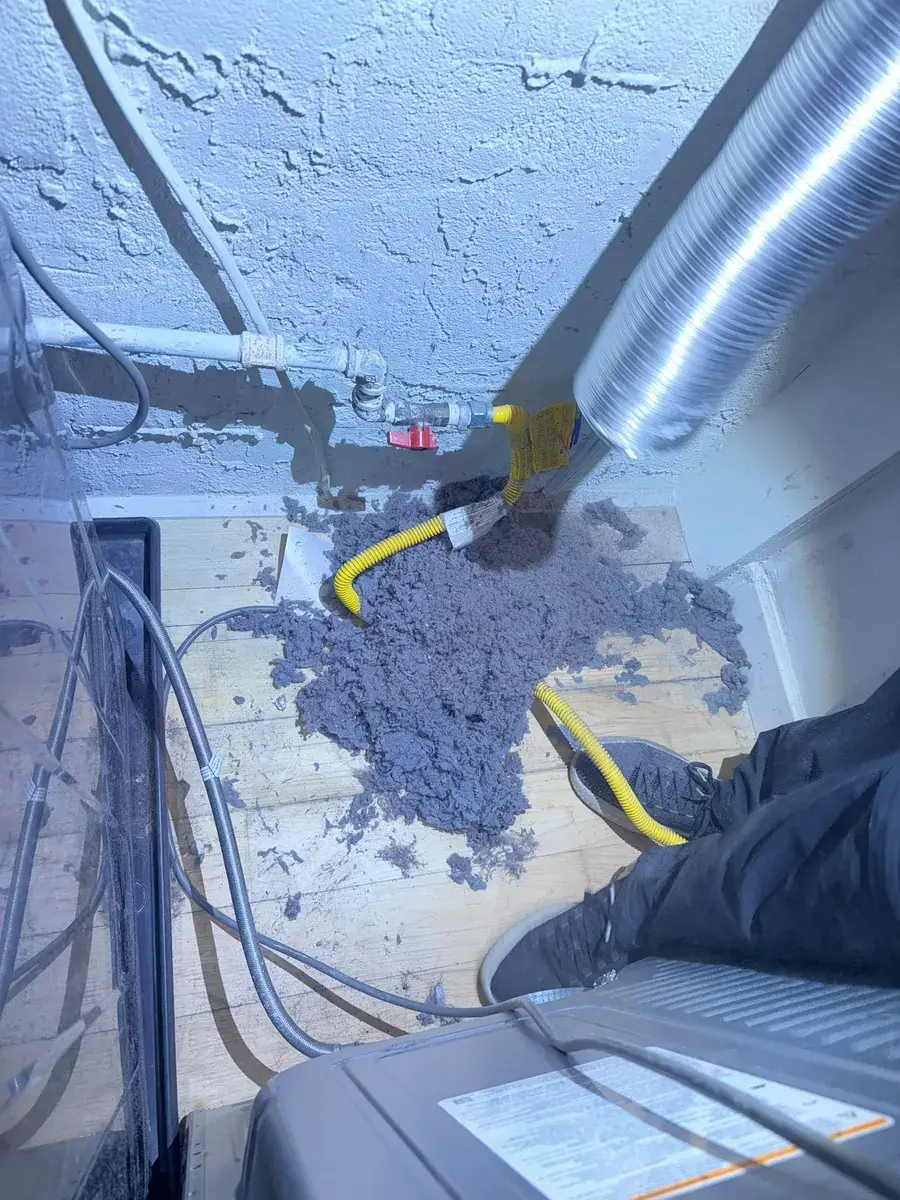
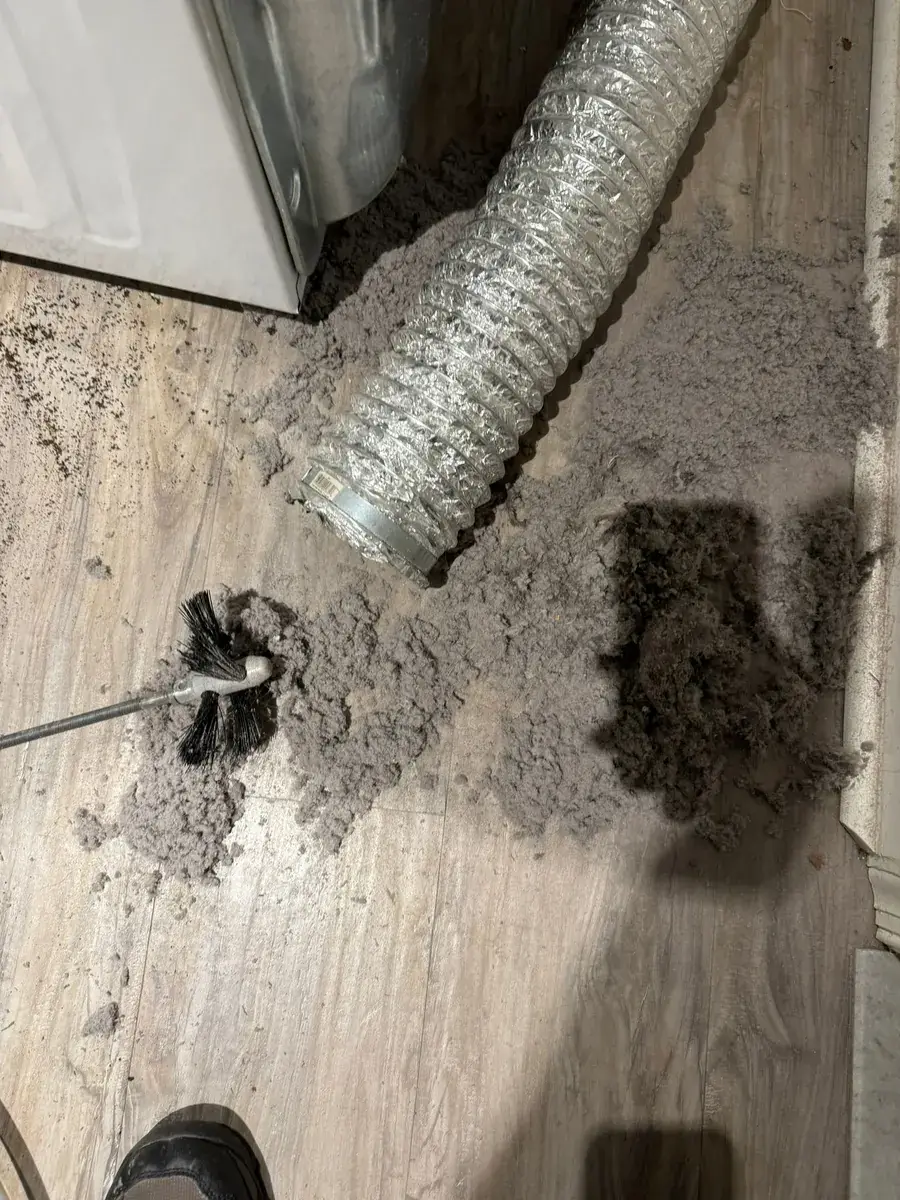
Homeowners are consistently surprised by the volume. The lint screen inside your dryer catches the loose fluff, but the fine fibers that pass through it compact into dense mats inside the duct — and dense, dry lint mats are excellent fuel. Every one of these piles came out of a home where the dryer was still being used daily.
What does the exterior vent look like before and after?
Before cleaning, the exterior hood is often matted shut with grey lint — the flap physically cannot open. After cleaning, the termination is clear, the flap swings freely, and hot air leaves the house instead of backing up into the duct.
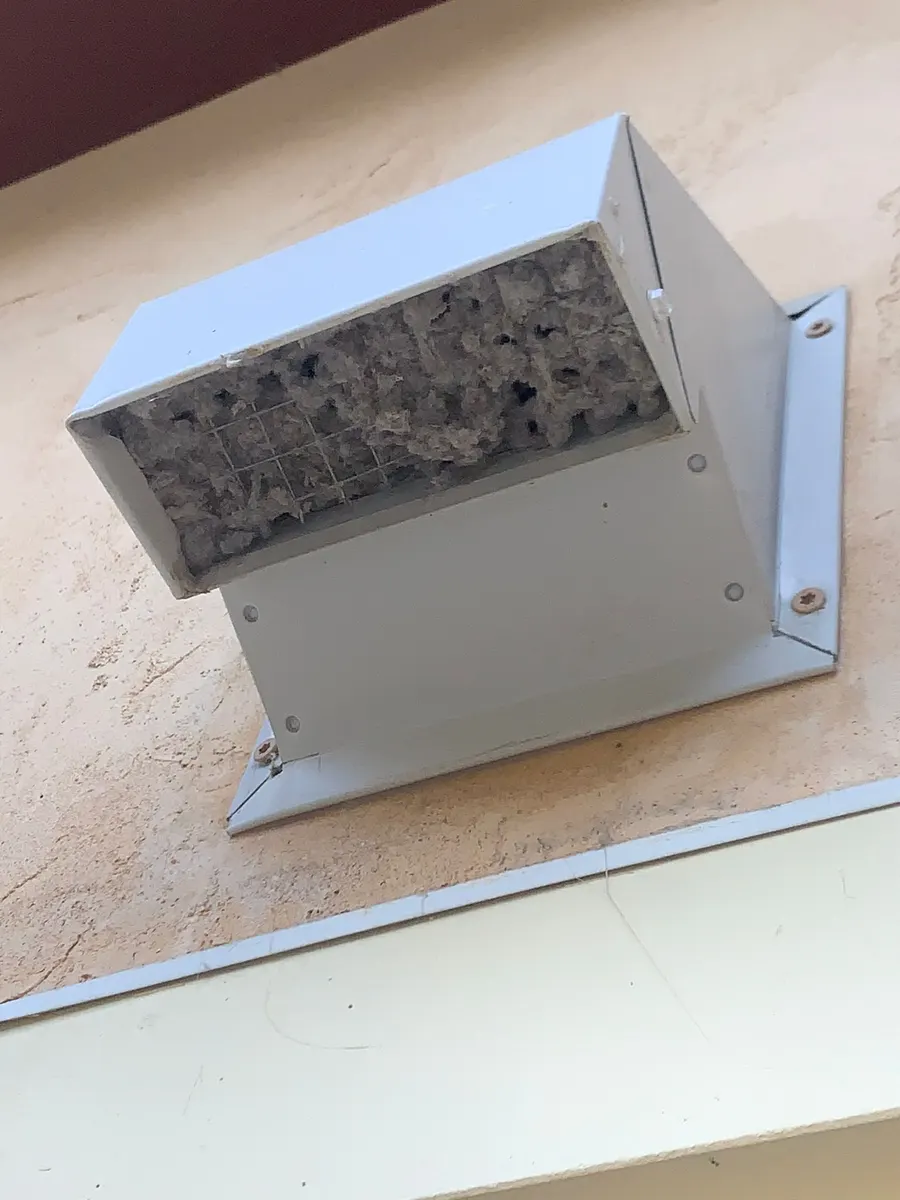
Before: the vent your dryer cannot push through
This is what we find on a large share of first visits. Lint has matted over the flap and screen until the opening is effectively sealed. Every cycle, the dryer pushes hot, moist, lint-laden air against a closed door — the heat and the fuel stay inside the duct.
The exterior hood is also the most common entry point for birds and rodents. A flap that cannot close properly, or a hood clogged with soft lint, is an open invitation for nesting in spring.
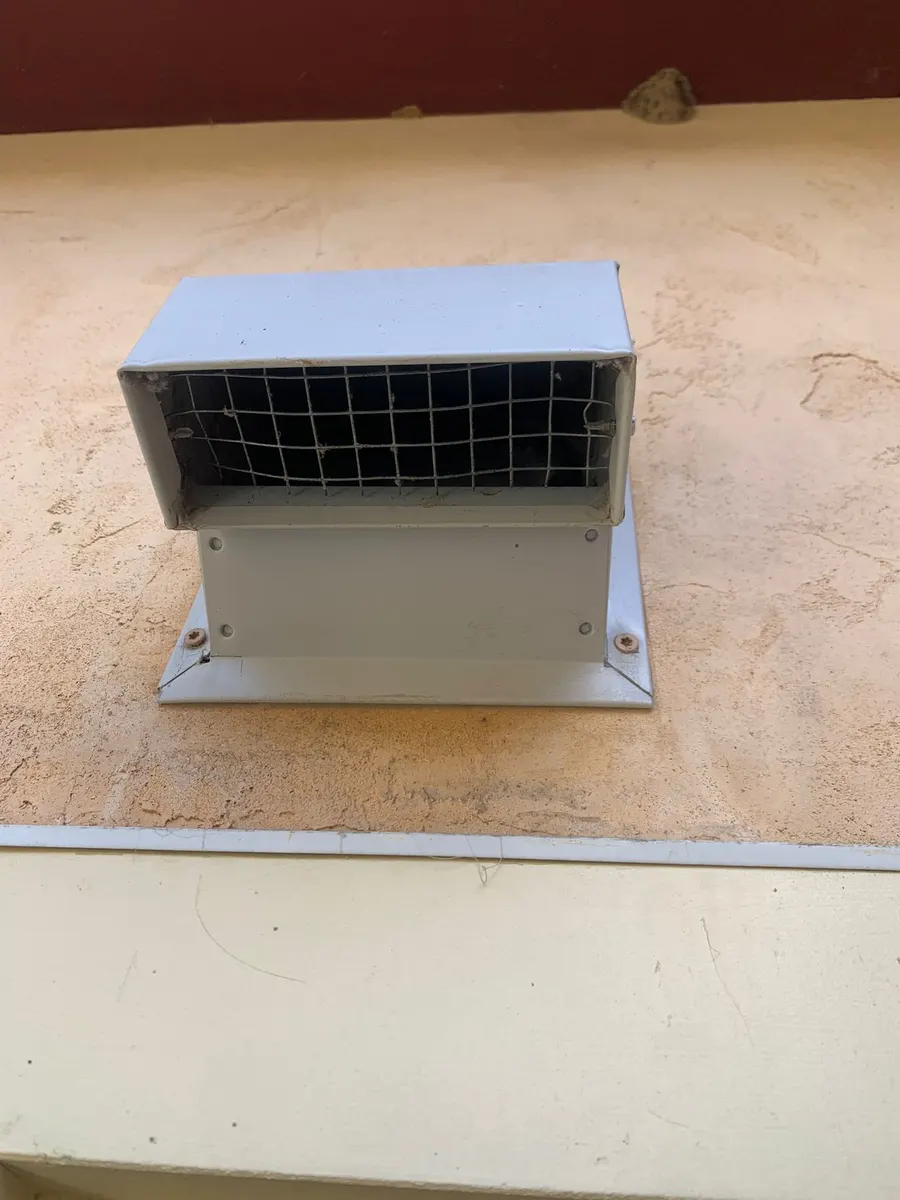
After: clear termination, verified airflow
After a full-run cleaning, the hood is clear and the flap moves freely. We run the dryer and verify airflow at the exterior — you can feel the difference by holding a hand near the vent. That verification step is how you know the whole run is open, not just the ends.
What happens during a professional dryer vent cleaning?
A thorough dryer vent cleaning takes about 45 to 75 minutes. We clean the entire run from both ends with rotary brushes and vacuum extraction, then prove the result with an airflow check — you see the lint that came out and photos of the finished work.
Inspect the full run
We locate the vent path from the dryer to its exit point — wall, soffit, or roof — check the transition hose behind the machine, and note any crushed sections, disconnected joints, or code problems like plastic or foil duct.
Disconnect and protect
We pull the dryer, disconnect the transition hose, and set up so lint ends up in our vacuum, not on your floor.
Clean from both ends
Rotary brushes agitate the packed lint off the duct walls through the entire run while vacuum extraction captures it. We work from the dryer side and the exterior side so elbows and long horizontal sections get fully cleared.
Clear the exterior termination
The outside hood, flap, and any screen are cleaned so exhaust air exits freely and the flap closes properly against pests and weather.
Reconnect and verify airflow
We reconnect the dryer, run it, and verify strong airflow at the exterior vent. You get after-photos and see exactly what we removed before we leave.
Need a repair or a new vent line? If we find a crushed transition hose, a disconnected joint in a wall or ceiling, or old plastic or foil duct that should not be carrying dryer exhaust, we can repair or replace it — usually in the same visit. We also install new code-compliant rigid metal vent lines and pest guards. You will always get a written quote before any extra work begins — nothing is added to the invoice without your sign-off.
How do you know if your home is at risk?
If your dryer vent has not been cleaned in over a year, if loads take longer than they used to, or if your laundry is on an upper floor with a long vent run, your risk is elevated. Two minutes of honest questions will tell you where you stand.
We built a short dryer vent fire-safety quiz that walks through the warning signs and risk factors — vent length, laundry location, dryer age, cleaning history — and gives you a plain answer about whether your setup needs attention. No email required, no scare tactics; just the same questions our technicians ask on-site.
- Family-owned and serving King of Prussia and the Philadelphia suburbs since 2016
- PA licensed contractor PA 187935, insured up to $2 million
- Google Guaranteed — money-back protection up to $2,000 on qualifying jobs
- Free video inspection and a flat written quote before any work begins — no bait-and-switch, no door-step upsell
- Serving Montgomery, Chester, Bucks, Delaware, Berks, and Philadelphia counties, Open 24 hours · Sun–Fri
Skip the phone tree. We call you.
Drop your number and a real person from our King of Prussia office calls you back — usually within minutes, day or night (we run 24 hours, Sunday–Friday).
No robocalls, no spam — one call from us about your ducts, that's it.
Dryer vent cleaning prices
| Service | Starting price |
|---|---|
| Routine cleaning — basement or first-floor laundry | $129.99 |
| Routine cleaning — second floor and above | $149.99 |
| Deep cleaning — heavy blockage, long or packed runs | $299.99 |
| Nest removal from dryer vent | from $250 |
| Bird guard installation | from $150 |
| Dryer vent inspection | FREE |
Prefer monthly payments? Bigger jobs like deep cleaning can be paid over time with Wisetack — check your options in about a minute with no impact to your credit score.*
Three promises. In writing. On every job.
Price Match Guarantee
Bring a competitor's written quote for the same scope of work — we'll match it. You never overpay for doing it right.
6-Month Warranty
Every job carries a 6-month workmanship warranty. If a problem traced to our work shows up, we come back and make it right — free.
Google Guaranteed
Booked through Google Local Services, qualifying jobs carry Google's own money-back protection up to $2,000, administered by Google.
Backed by a real license and $1M/$2M insurance — see the actual documents
Don't put off air you breathe — finance it with Wisetack
Check your options in about a minute with no impact to your credit score, choose terms that fit your budget, and pay over time instead of all at once.
*All financing is subject to credit approval. Your terms may vary. Wisetack loans are issued by Hatch Bank. See additional terms at wisetack.com/faqs.
Dryer Vent Cleaning Questions, Answered
How often should a dryer vent be cleaned?
Once a year for most households. Clean more often — every 6 to 9 months — if you do heavy laundry (large family, pets, lots of towels and bedding), if your vent run is long with multiple elbows, or if your laundry is on an upper floor. The NFPA identifies failure to clean as the leading factor in dryer fires, so an annual cleaning is the single most effective prevention step.
Does upper-floor laundry cost more to clean?
It can, because upper-floor laundry rooms almost always have longer vent runs with more elbows, and the exterior termination is often high on a wall or on the roof. That means more brushing distance, more sections where lint packs in, and ladder or roof work to clear the exit. That is exactly why we quote after a free video inspection instead of guessing over the phone: your written quote reflects your actual run, and the scope of the cleaning is identical either way — full run, both ends, airflow verified.
Can I clean my dryer vent myself?
You can and should keep the lint screen clean after every load, and a hardware-store brush kit can help with the first few feet of duct. What DIY kits cannot do well is clear packed lint through a full run with elbows, vertical sections, or wall and ceiling cavities — and a partial cleaning can actually push a lint mat deeper and compact it. Professional rotary brush and vacuum extraction cleans the entire run and finishes with an airflow check, so you know it worked.
How long does a dryer vent cleaning take?
Most cleanings take 45 to 75 minutes. Ground-floor hookups with short, straight runs are on the faster end; upper-floor or roof-exit vents take longer because of access and run length. If we find a bird nest, a disconnected joint, or a repair need, we will show you the problem and quote any extra work before touching it.
Do you clean dryer vents that exit through the roof?
Yes. Roof-terminated vents are common in townhomes and homes with second-floor laundry, and they are among the most clog-prone setups because the long vertical run gives lint plenty of places to accumulate and the roof cap often has a screen that mats over. Roof-exit cleanings include clearing the cap itself, and the ladder and access work is scoped into your flat written quote up front — nothing gets added at the door.
What if there is a bird nest in my dryer vent?
We remove it — nests are one of the most common blockages we find, especially in vents with damaged flaps or missing guards. A nest is both a total airflow blockage and highly flammable material sitting in a hot exhaust duct. After removal we clean the full run, and we can install a pest guard on the exterior hood so it does not happen again.
My dryer suddenly takes two cycles to dry — will cleaning the vent fix it?
If the cause is a clogged vent — and it usually is — yes, and the difference is often dramatic: loads that took two or three cycles go back to drying in one. If drying times do not improve after a verified cleaning, the problem is likely the machine itself (heating element, thermostat, or blower), and you will know that with certainty because we confirmed the vent is clear with an airflow check.
Can I book dryer vent cleaning together with air duct cleaning?
Yes, and many customers do — one visit covers both. Both services start with the same free video inspection, and you get one flat, written quote covering everything before any work begins. Booking them together means one appointment window and one crew. Call (484) 367-5944 or book online and note both services.
Book Your Dryer Vent Cleaning
Full-run lint extraction, airflow verified, after-photos included. Licensed PA 187935 and Google Guaranteed — call (484) 367-5944 or book online in two minutes.
