
9 Signs Your Air Ducts Need Cleaning (With Real Photos)
Ductwork is hidden inside walls, floors, and ceilings, so most homeowners only think about it when something feels off — a smell, a sneeze, a bedroom that never cools down. The good news: dirty ducts almost always announce themselves if you know what to look for. Below are the nine signs our technicians see most often on real jobs across Montgomery, Chester, Bucks, and Delaware counties, with photos taken inside actual customer systems.
What are the most common signs your air ducts need cleaning?
Nine warning signs cover nearly every dirty-duct situation we walk into. Some are cosmetic clues you can spot from the couch; others, like pests or visible mold, mean the system clearly needs attention.
- Dust rings and dark streaks around supply registers and ceiling diffusers
- Visible debris when you lift a register and look inside the duct
- A musty or stale smell in the first minutes after the heat or AC kicks on
- Allergy or asthma flare-ups that seem worse indoors than outside
- Uneven airflow — one room blows strong while another barely whispers
- Grit and fine dust everywhere after a renovation or drywall project
- Signs of pests — droppings, nesting material, or insects near vents
- Filters loading up fast — grey and matted within a few weeks
- No cleaning history — the home is older or new to you and the ducts have never been opened
Each sign has a specific cause, and some are more urgent than others. Here is what each one actually tells you about your system.
Sign 1: Why are there dark rings around your vents?
Dark halos or streaks around a supply register mean dust-laden air is blowing past the grille and depositing fine particles on the surrounding paint or drywall. Wipe the ring away and watch what happens: if it comes back within a few weeks, the dust is coming from inside the duct run, not from the room.
Ceiling diffusers show the same pattern as grey, feathered streaks radiating outward from the vanes. On floor registers, the giveaway is usually a matted layer of dust, hair, and crumbs sitting just below the grille — floor returns in particular act like slow-motion vacuum cleaners for everything that crosses them.
Sign 2: What does visible debris inside a duct look like?
If you can see buildup, you no longer need to guess. Lift a floor register or unscrew a wall grille and point a flashlight down the duct. A light film of dust is normal; a carpet of grey fuzz, pet hair, drywall crumbs, or construction debris is not.
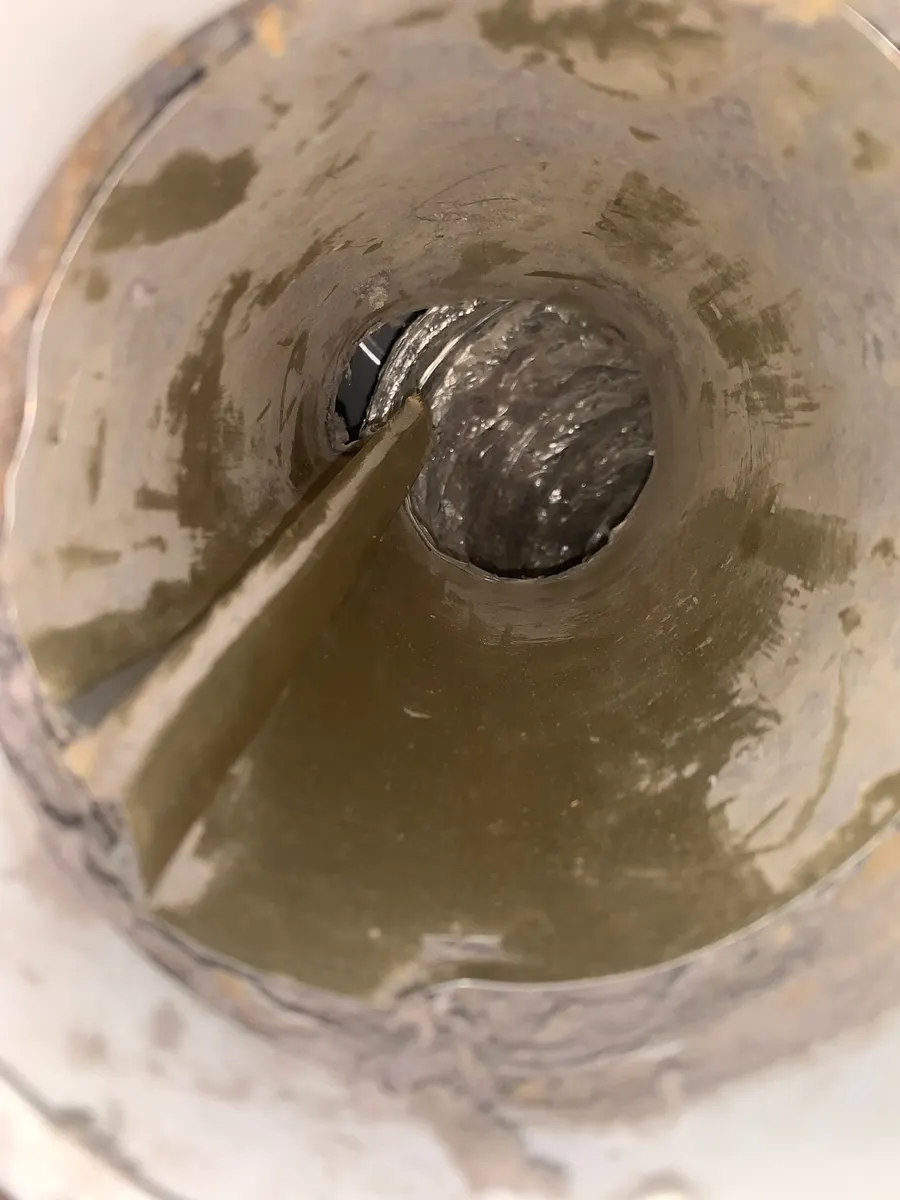
The photo above shows a round supply duct from a real job — the interior walls are caked with years of compacted dust. Buildup like this does not stay put. Every time the blower starts, moving air scours loose particles off the pile and pushes some of them into your rooms. This is exactly the condition our free video inspection is designed to document before any work begins: you see the inside of your own ducts on camera, not a stock photo. You can read how that works on our process page.
Sign 3: Why does the house smell musty when the heat or AC turns on?
A musty smell in the first few minutes of a heating or cooling cycle usually means the air is picking up odor from settled dust, damp buildup, or microbial growth somewhere in the air path. Dust itself holds odor, and when it sits on a cool, damp surface — an AC coil, a supply boot in a crawl space, a diffuser sweating with condensation — it can develop that stale, old-basement character.

Dark spotting on diffusers and registers, like the unit above, is a sign worth acting on rather than repainting over. Visible growth in the air path is one of the cases where duct cleaning is clearly warranted — not a judgment call. For systems with confirmed growth or persistent odor, we offer sanitization with EPA-registered products as an add-on after the physical cleaning is done — scoped and included in the same written quote as everything else.
Sign 4: Can dirty ducts make allergies worse?
They can contribute. Ducts collect dust, pollen, pet dander, and other particles, and a loaded system recirculates a portion of them every time the blower runs. Many homeowners with allergies notice symptoms are worse at home, first thing in the morning, or right after the system cycles on — all moments when duct-borne dust is most likely to be in the air.
An honest note: the EPA does not endorse routine duct cleaning as a proven fix for indoor air quality, and no reputable company should promise it will cure allergies. What cleaning does is remove the reservoir of settled dust and dander so the system stops redistributing it — which can help reduce the particle load your filter, and your lungs, have to deal with. When there is visible mold, heavy debris, or pest activity, the case for cleaning is not controversial at all.
Sign 5: Why is one room hotter or colder than the rest?
Uneven airflow is often a duct problem before it is an HVAC problem. Buildup narrows the effective diameter of branch lines the way plaque narrows an artery, and the rooms at the end of the longest runs feel it first. If a bedroom register barely moves a tissue while the hallway blasts, the run feeding that room may be partially blocked with compacted debris — or, in flex duct, the liner may be crushed or torn.
This is one sign where a camera settles the question quickly. Before we quote anything, we run a video inspection through the ducts and show you what we find. If the airflow issue turns out to be a closed damper, a crushed section, or a disconnected run rather than dirt, cleaning alone will not fix it — and we will tell you that instead of selling you a cleaning you do not need.
Sign 6: Do air ducts need cleaning after a renovation?
Almost always, yes — renovation dust is the single most predictable reason ducts need cleaning. Drywall sanding produces enormous amounts of fine gypsum dust, and if the HVAC system ran at any point during the work, the returns pulled that dust straight into the ductwork, where it settled through every run in the house.
You will recognize the aftermath: a fine white film that keeps reappearing on furniture days after the final cleanup, and grit around the registers nearest the work area. Construction debris also ends up inside open duct boots during projects more often than anyone would like — cut-offs, screws, sawdust, and drink bottles are all common finds in ducts after a remodel. If you just finished a renovation anywhere in the Philadelphia suburbs, a post-construction duct cleaning is the last step of the cleanup, not an optional extra.
Sign 7: What if pests have been in the ductwork?
Droppings, chewed nesting material, insect casings, or a dead-animal smell near vents mean the duct system has been hosting wildlife, and that is an unambiguous reason to clean. Mice and birds in particular treat ductwork as a sheltered highway and nesting spot, especially where runs pass through crawl spaces, attics, and garages.
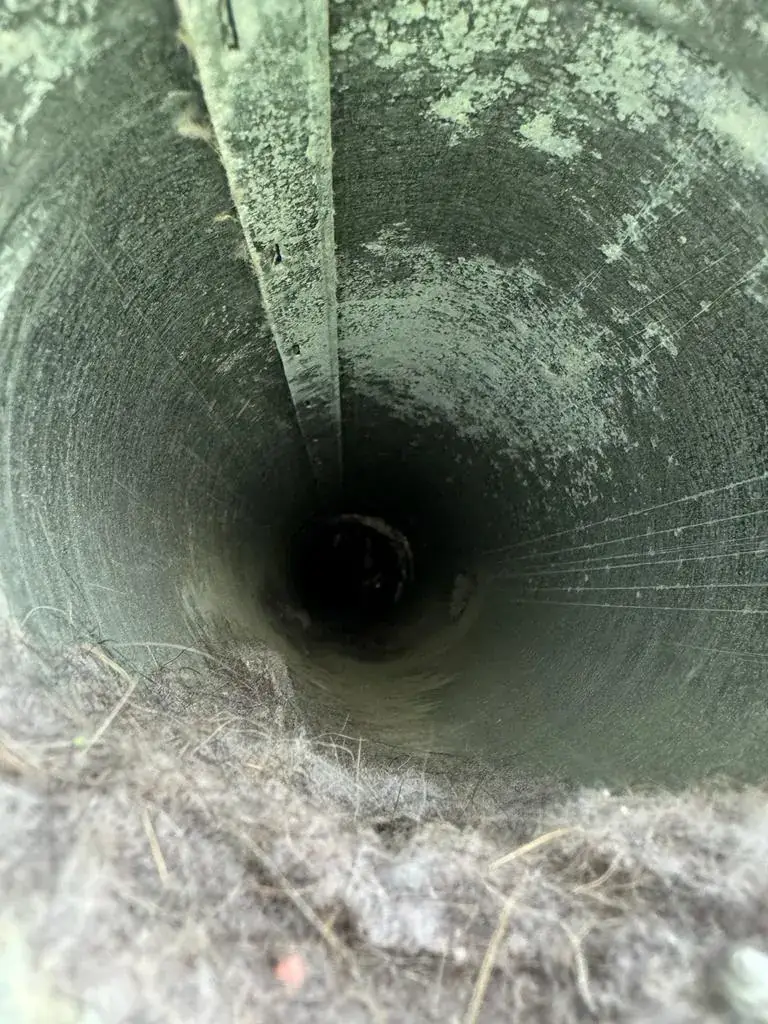
The material in the photo above came out of a customer's duct during a cleaning. Beyond the odor, pest debris in the air path is a hygiene issue — droppings dry out, break down, and become airborne particulate that rides the airflow into living spaces. After removal, this is another situation where the EPA-registered sanitization add-on earns its keep. If pests got in, we will also show you where, so you can have the entry point sealed and keep them from coming back.
Sign 8: Why does the filter get dirty so fast?
A standard one-inch filter should last roughly one to three months in a typical home. If yours turns grey and matted in two or three weeks, the return side of your system is carrying far more dust than it should — and the filter is only catching the portion that made it that far.
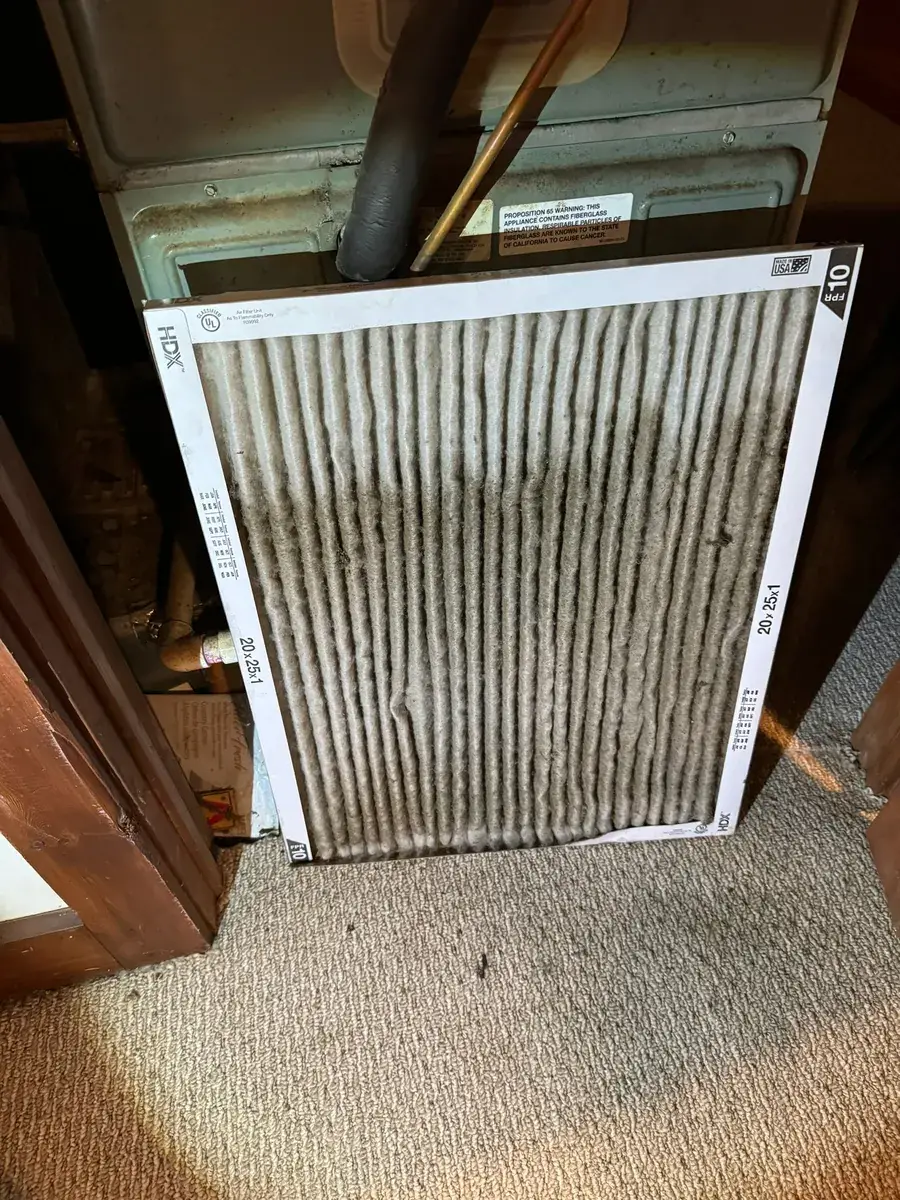
Filters like the one above are a symptom, not the disease. The dust loading them is coming from somewhere: loaded return ducts, leaky return joints pulling in unfiltered basement or attic air, or a house-wide reservoir of settled dust that the blower keeps stirring up. Fast-loading filters cost you money in the meantime, too — a choked filter makes the blower work harder and drags down the efficiency of the whole system.
Sign 9: What if the ducts have never been cleaned?
If your home is more than a decade old and nobody can remember the ducts ever being opened, assume there is buildup — decades of it in many cases. We regularly open systems that have not been touched since the house was built, including plenty of mid-century and 1980s–90s housing stock across the Philadelphia suburbs.
The math is straightforward. Industry sources such as Stanley Steemer estimate the average six-room home can accumulate 40 pounds of dust in a year. Even if only a fraction of that settles in the ductwork, twenty or thirty years without a cleaning adds up to the caked, felt-like lining we find in never-cleaned systems. A new-to-you home is the classic case: you do not know the previous owners' pets, smoking habits, or renovation history, and a one-time cleaning gives you a documented clean baseline.
How many signs mean it is time to book a cleaning?
One sign from the urgent rows below is enough on its own. For the milder signs, two or more appearing together is the practical threshold — a returning dust ring plus fast-loading filters, for example, is a strong signal the system is carrying a real dust load.
| Sign | What it usually means | How urgent |
|---|---|---|
| Dust rings around registers | Dust blowing from inside the duct run | Moderate — confirm with a look inside |
| Visible debris in ducts | Established buildup in the runs | High — cleaning is warranted |
| Musty smell on startup | Settled dust or microbial growth in the air path | High — inspect for mold |
| Indoor allergy flare-ups | Possible recirculating dust and dander | Moderate — pair with other signs |
| Uneven airflow | Blocked, crushed, or disconnected run | Moderate — camera inspection first |
| Post-renovation grit | Drywall dust throughout the system | High — clean once the work ends |
| Pest evidence | Nesting or droppings in the ductwork | Urgent — clean and sanitize |
| Filters loading in weeks | Heavy dust load on the return side | Moderate — check the ducts |
| Never cleaned | Years of accumulated buildup | Moderate — one-time baseline cleaning |
What does professional air duct cleaning cost?
We do not quote air duct cleaning over the phone or from a script — every job starts with a free video inspection, and you receive one flat, written quote before any work begins. The invoice matches that quote, with no trip fees anywhere in our service area. The quote covers source-removal cleaning with professional Nikro negative-pressure equipment and agitation tools — the approach NADCA sets as the industry standard — plus after-photos when we finish. Routine cleaning and a genuine deep cleaning are different services, and the camera footage decides which one your system actually needs. How we build the quote is explained on our pricing page.
Be careful with the $49–$99 "whole house special" ads. That price does not cover the cost of doing the job properly; it exists to get a salesperson into your home, where the quote grows room by room. A legitimate source-removal cleaning takes hours of labor and serious equipment, which is why honest pricing in our area starts in the hundreds, not the tens.
While the crew is on site, most customers add dryer vent cleaning — it goes into the same written quote, and handling it on the same visit means no second appointment. If your dryer runs hot or needs two cycles to dry a load, read our guide to dryer vent fire safety; lint is a genuinely dangerous fuel, not just a nuisance.
E Cleaning is family-owned, PA licensed (PA 187935), insured up to $2 million, and Google Guaranteed with money-back protection up to $2,000 on qualifying jobs. Wisetack financing is available if you would rather split the cost into monthly payments. If the camera shows your ducts are actually clean, we will tell you so — the video inspection is free either way.
