
Air Duct Cleaning in Lower Gwynedd, PA
E Cleaning provides professional air duct cleaning across Lower Gwynedd Township — Spring House, Penllyn, Gwynedd Valley, and every wooded lane between them. Every job begins with a free video inspection inside your ducts, and you approve a flat written quote before any work starts. We are family-owned since 2016, a licensed PA contractor (187935), insured to $2 million, and rated 4.8 stars across 144 Google reviews.
Air duct cleaning for a township of villages, estates, and wooded lots
Lower Gwynedd sits near the center of eastern Montgomery County, a green, largely residential township with Ambler borough and Upper Dublin on its eastern side, Whitpain to the southwest, Upper Gwynedd to the west, and Montgomery and Horsham townships to the north. There is no single downtown here. Life organizes instead around a handful of historic villages: Spring House, where Bethlehem Pike meets Sumneytown Pike; Penllyn and Gwynedd Valley, strung along the SEPTA Lansdale/Doylestown regional rail line; and the old Gwynedd crossroads on the township's western edge, where Sumneytown Pike meets US 202.
The township's roots go back to Welsh Quaker settlers in the 1690s — Gwynedd is a Welsh name — and its modern character was shaped by the railroad era, when Philadelphia families built country houses near the Gwynedd Valley and Penllyn stations. Much of that green, estate-like feel survives today because the township has deliberately preserved open space, and because the Wissahickon Creek winds through on its way toward Ambler and Fort Washington, keeping stream corridors and mature woods threaded between the neighborhoods.
For a duct cleaning company, all of that adds up to a specific kind of work. Lower Gwynedd is a township of long driveways and large lots rather than a tight borough grid, and its houses tend to be big, old, or both — which usually means more ductwork, more zones, and more places for thirty years of dust to hide. We bring the same process to every one of them: a free video inspection first, a flat written quote before any work, and no trip fee anywhere in the township. We are in this part of Montgomery County constantly, with regular work in neighboring Ambler, Whitpain, and Upper Gwynedd.
From pike-front farmhouses to attic air handlers: what sits behind Lower Gwynedd's walls
The oldest layer of housing here is the stone farmhouses and pike-front homes scattered along Bethlehem Pike, Sumneytown Pike, and the smaller roads between the villages. These houses were built generations before central air existed, and the forced-air systems inside them were threaded through fieldstone walls and low basements decades later. Retrofit ductwork like that follows whatever path the installer could find — long horizontal trunk runs, branch lines boxed into closets and chases, returns cut into whichever joist bay was open. Every low spot and dead end in a layout like that collects debris, and many of these systems have never been opened since installation. A number of them also carry residue from the oil-heat era, when a furnace conversion left fine soot sitting in runs nobody could see.
The next layer is the railroad-era and early-twentieth-century homes near the Penllyn and Gwynedd Valley stations — larger footprints, generous ceilings, and often several additions built over the decades. Each addition is a splice point in the duct system: a new run tied into an old trunk, a transition fitting where two eras of sheet metal meet. Those joints are exactly where our camera finds the heaviest settled debris, and larger homes like these frequently run two or even three separate HVAC systems, each with its own supply and return network.
The late twentieth century filled in much of the township with two-story colonials on wooded lots, many of them running the classic split setup: a basement furnace serving the first floor and an attic air handler serving the bedrooms. Attic systems almost always mean flex duct, which cleans well but needs gentler, adjusted agitation so the inner liner is never damaged. The newest layer — carriage homes, townhomes, and age-qualified communities built in recent decades — is constructed far tighter than anything older. Tight construction is great for heating bills, but it also means the same indoor dust passes through the ductwork more times before it ever leaves the house, and high-efficiency equipment is noticeably sensitive to the restricted airflow a dirty return system creates.
Why ducts fill up here: canopy pollen, corridor traffic, and renovation dust
Lower Gwynedd's tree cover is one of its defining features, and it is also the single biggest seasonal contributor to what we vacuum out of duct systems. Spring tree pollen and fall ragweed and leaf debris ride in through open windows and on clothes, shoes, and pets, and the return side of a forced-air system inhales whatever settles on the floors. Homes near the Wissahickon corridor and the township's preserved open space get the heaviest organic load — the same greenery that makes those streets desirable keeps the pollen count high twice a year.
Traffic dust is the second, quieter source. Bethlehem Pike and Sumneytown Pike carry steady local traffic through the heart of the township, US 202 clips its western edge, and the Route 309 expressway runs just past the eastern boundary. Fine road dust from busy corridors works indoors year-round and is exactly the particle size that slips past cheap filters and settles inside supply runs.
The third source is the biggest one-time offender: renovation. A large share of Lower Gwynedd's housing is at the age where kitchens get opened up, basements get finished, and additions go on. Drywall sanding dust is the heaviest duct polluter we ever see, and if the HVAC system ran during the project, a good portion of that dust is now coating the runs — re-entering the household air a little at a time with every heating and cooling cycle.
Industry sources such as Stanley Steemer estimate the average six-room home can accumulate 40 pounds of dust in a year. We keep the health claims honest, though: the EPA does not endorse routine duct cleaning as a proven fix for indoor air quality, and we will not promise it cures allergies. Cleaning is clearly warranted when there is visible mold, heavy debris, evidence of pests, or renovation dust — and many homeowners simply notice less dusting and steadier airflow afterward. The free video inspection shows you which situation your home is actually in before you spend a dollar.
Source removal with Nikro negative pressure — and you watch it happen
Source removal means the debris leaves your house instead of getting stirred around inside it. We connect a professional Nikro negative-pressure machine to your duct system, seal the system off, and then agitate every individual run so the loosened buildup travels toward the machine and is captured in HEPA filtration. It is the approach NADCA sets as the industry standard, and it is the opposite of the quick "blow-and-go" visits that fluff the dust around and leave.
Here is the job from start to finish:
- Free video inspection inside your supply and return runs — you watch the screen with us and see the real condition before anything else happens
- A flat written quote covering the exact scope, in your hands before any work begins — approve it, sleep on it, or decline it
- The Nikro machine sealed to your main trunk line, putting the whole system under negative pressure with HEPA capture
- Every supply and return branch worked with air whips and agitation brushes, vent by vent, so buildup breaks loose and travels out
- Registers and grilles removed, cleaned individually, and re-installed
- Plenum connections at the furnace or air handler cleaned where the ductwork meets the equipment
- After-photos of the same duct interiors when the work is done — you keep them
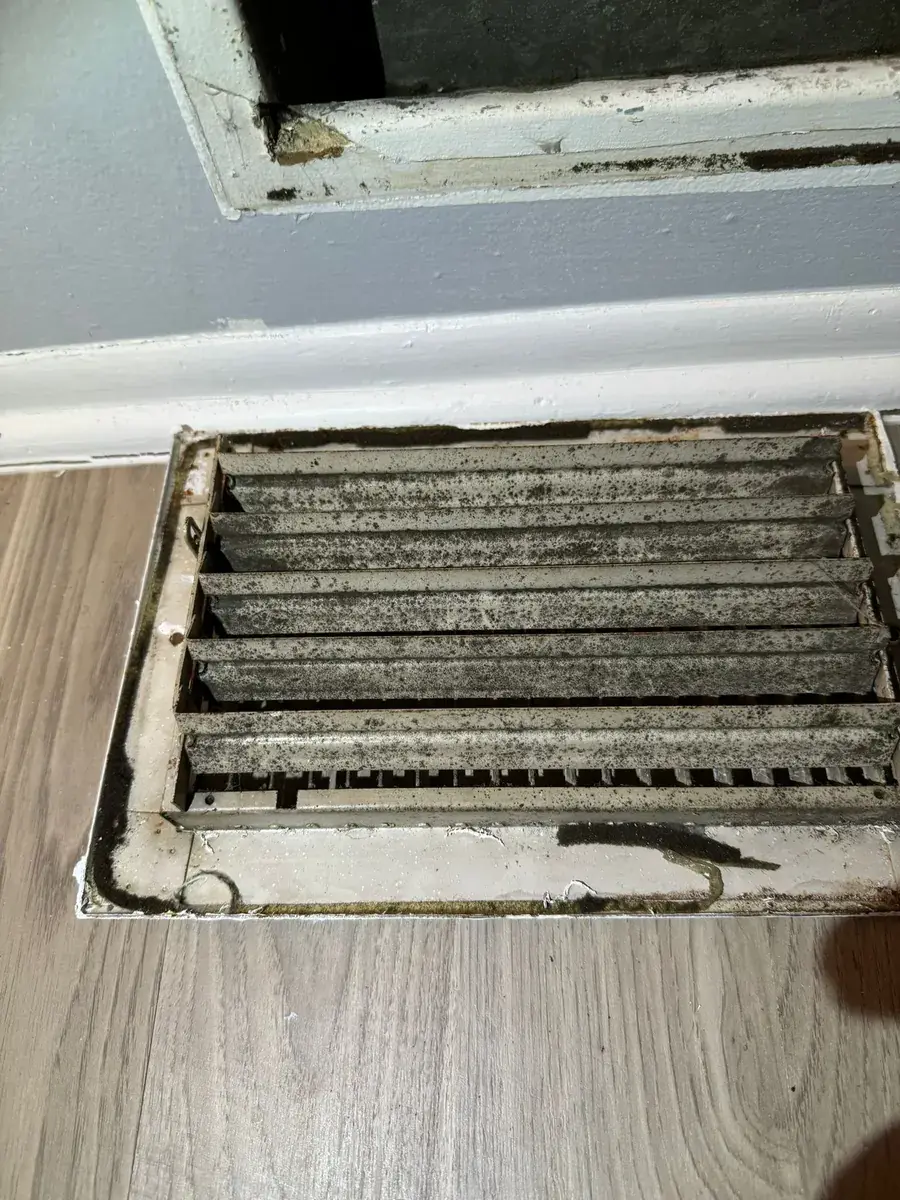
What the camera typically finds
In homes that have never been cleaned, the inspection camera regularly shows a gray blanket of matted dust, pet hair, drywall powder, and construction debris lining the bottom of every horizontal run — and floor returns, common in older ranches and farmhouse retrofits, act like dustpans for everything that crosses the floor above them.
Most single-system Lower Gwynedd homes take a few hours. Larger homes running a basement furnace plus an attic air handler are scoped as what they are — two full systems — and both can usually be inspected, quoted, and cleaned in a single visit. Flex duct in attic systems gets adjusted agitation so the liner comes clean without damage, floors and corners are protected, and we leave the work areas the way we found them.
Routine or deep cleaning? The inspection decides — and the quote is in writing
Routine cleaning and deep cleaning are genuinely different services, not a pricing trick. A system that was professionally cleaned within the last few years needs a maintenance pass; a system that has never been opened — or that lived through a renovation — needs substantially more hours and heavier debris capture. The video inspection determines which one your home actually needs, and sometimes the honest answer is that your ducts are fine and you should not pay for anything yet. We say that when it is true.
| Routine cleaning | Deep cleaning | |
|---|---|---|
| When it applies | System professionally cleaned within roughly the last three years | Never cleaned, not cleaned in 3+ years, or carrying renovation debris, heavy buildup, pest evidence, or visible mold |
| What it involves | A full source-removal maintenance pass over every supply and return run | Longer agitation on every run, heavier debris capture, and extra attention at trunk joints, transitions, and returns |
| Add-ons | Sanitizing with EPA-registered products only where genuinely warranted — mold or odor situations — always scoped in the written quote, never sprung at the door | |
That written quote exists because of what this industry has become. The "$49–$99 whole-house special" you see on flyers and social ads is a door-opener: once the crew is inside, the price climbs per vent, per "mold treatment," per invented problem, and homeowners across Montgomery County have paid several times the advertised figure under pressure. Our answer is structural, not rhetorical — you see your own ducts on camera first, you get one flat number in writing, and only then does any work begin. The number does not move after you approve it.
Three real commitments stand behind every job. A Price Match Guarantee: bring a competitor's written quote for the same scope of work and we match it. A 6-month workmanship warranty: if a problem traced to our work appears within six months, we come back and make it right free. And Google Guaranteed status, which adds Google's money-back protection up to $2,000 on qualifying jobs, administered by Google. We are a licensed PA contractor (PA 187935), insured to $2 million — the actual documents are viewable on that page. Financing is available through Wisetack, and we are open 24 hours a day, Sunday through Friday — closed Saturdays. Many Lower Gwynedd customers pair duct work with dryer vent cleaning in Lower Gwynedd in the same visit, since the equipment is already on site.
How much does air duct cleaning cost?
Routine and deep cleaning are different services — the free inspection determines which one your system actually needs. Prices vary house to house; your exact price comes as a flat written quote before any work begins.
| Air duct routine cleaning (per HVAC unit) | $299.99 |
| Air duct deep cleaning (per HVAC unit) | $650 |
| Multi-unit homes | Discount available |
| Dryer vent routine add-on | from $129.99 |
Three promises. In writing. On every job.
Price Match Guarantee
Bring a competitor's written quote for the same scope of work — we'll match it. You never overpay for doing it right.
6-Month Warranty
Every job carries a 6-month workmanship warranty. If a problem traced to our work shows up, we come back and make it right — free.
Google Guaranteed
Booked through Google Local Services, qualifying jobs carry Google's own money-back protection up to $2,000, administered by Google.
Backed by a real license and $1M/$2M insurance — see the actual documents
Don't put off air you breathe — finance it with Wisetack
Check your options in about a minute with no impact to your credit score, choose terms that fit your budget, and pay over time instead of all at once.
*All financing is subject to credit approval. Your terms may vary. Wisetack loans are issued by Hatch Bank. See additional terms at wisetack.com/faqs.
4.8 stars from 144 Google reviews — and easy to find
E Cleaning Duct & Vent Cleaning is based at 555 S Goddard Blvd, King of Prussia, and serves Lower Gwynedd and all of Montgomery County from right here. Check our Google profile: real jobs, real photos, and a rating our crew protects on every visit.
- Google Guaranteed business — screened, licensed and insured (see the documents)
- Read every review on our Google profile — we don't cherry-pick what you can verify
Air Duct Cleaning questions from Lower Gwynedd homeowners
Do you charge a trip fee to come out to Lower Gwynedd?
No. Lower Gwynedd is a short drive from our King of Prussia base up US 202 and Sumneytown Pike, and we do not charge travel or trip fees anywhere we work. The video inspection is free, and the flat written quote you receive before any work begins is the same kind of quote every Montgomery County customer gets.
Can you clean the retrofit ductwork in older stone homes along the pikes?
Yes. Farmhouses and pike-front homes around Spring House, Penllyn, and the Gwynedd crossroads often have forced-air systems that were added long after the house was built, with long basement trunk runs and boxed-in chases. Source removal works well on that ductwork — we inspect it on camera first, work carefully around older joints and transitions, and put the exact scope in your written quote before starting.
My house has a basement furnace and a separate attic system. Can you do both in one visit?
Yes. Two-system setups are extremely common in Lower Gwynedd's larger colonials — a basement furnace for the first floor and an attic air handler for the bedrooms. We inspect both on camera, quote both in one flat written number, and clean both in the same visit. Attic flex duct gets adjusted agitation so the liner is never damaged.
How often should a Lower Gwynedd home have its air ducts cleaned?
Every three to five years is a reasonable rhythm for most homes. Move sooner if you have just finished a renovation, if the system has never been cleaned, if you see visible mold or evidence of pests, or if dust and allergies stay bad despite regular filter changes. The free video inspection settles it honestly — if your ducts are clean, we tell you so and you pay nothing.
Do you cover the whole township — Spring House, Penllyn, and Gwynedd Valley?
Yes, all of Lower Gwynedd Township, including every village and the streets between them. We also work daily in the surrounding towns — Ambler, Whitpain, Upper Gwynedd — and across Montgomery County.
Do you also clean dryer vents in Lower Gwynedd?
Yes — dryer vent cleaning in Lower Gwynedd is one of our core services, and many customers book it together with duct cleaning in the same visit. The dryer vent is the one duct in the house with a genuine fire-safety clock on it, so if it has been more than a year, have it done.
Ready for honest air duct cleaning in Lower Gwynedd?
Free video inspection, a flat written quote before any work, and real before/after proof — call (484) 367-5944 or book online now.
