
Dryer Vent Cleaning in Bridgeton, PA
E Cleaning clears clogged dryer vents across Bridgeton Township and Upper Black Eddy — the entire run, from the connection behind the dryer to the exterior hood. A free video inspection comes first, you get a flat written quote before any work begins, and there is no trip fee to reach the river townships.
Why dryer vents deserve real attention in a township like Bridgeton
A clogged dryer vent is the one piece of household maintenance that doubles as a fire hazard. Lint is fuel, a blocked vent traps the heat that ignites it, and the numbers behind that are not small.
Bridgeton is a spread-out river township — homes strung along Route 32, tucked behind the Delaware Canal towpath, and scattered up long driveways in the woods, often well out of sight of the nearest neighbor. In a place like this, prevention does the heavy lifting. Nobody wants to find out how a laundry-room fire plays out at the end of a half-mile drive; keeping the vent clear is the simplest way to never run that experiment.
The laundry setups themselves are the real story here. In the township's old stone and frame farmhouses, the laundry usually lives in the basement, and the vent exits through a rim joist — sometimes after a long horizontal run just to reach daylight on the right side of the house. In the winterized river cottages along the water, laundry was squeezed in wherever a renovation could fit it, and we find vents improvised through crawlspaces, snaked around foundations, or sent up through the roof because no exterior wall was close enough. In the mid-century homes on the roads that climb away from the river, the dryer has often migrated over the decades — basement to mudroom to a first-floor closet — while the vent path quietly grew longer and picked up another elbow with every move. And newer houses on wooded acreage frequently put the laundry room on the second floor, which means a long concealed run through framing that nobody has looked inside since the drywall went up. Every added foot and every elbow slows airflow and gives lint another place to settle.
One honest note about density: unlike lower Bucks, Bridgeton has very little attached housing. Nearly everything here is detached, so the concern isn't a shared townhome wall — it's age and improvisation. Decades-old duct runs, plastic or foil flex hose behind the dryer, and terminations that were never designed for the airflow a modern dryer pushes.
The river and the woods each add a complication of their own. Valley humidity makes lint damp, so it clumps and clings inside the duct instead of blowing free. And wildlife treats an exterior vent hood as a ready-made nest box — birds and mice both. The common well-meaning fix, a screen over the hood, actually makes things worse: screens catch lint and build a blockage faster than most nests do. A proper bird guard is the right answer, and we'll tell you if yours isn't one.
What upper Bucks weather and housing do to a dryer vent
Three things about this stretch of upper Bucks quietly undo a clean vent: the seasons, the second-home rhythm, and the wildlife. Planning the cleaning around them is the difference between a run that stays clear and one that clogs again by next winter.
Winter is the hard season. The cold sets in early along the river, and that is when a dryer works hardest — heavier fabrics, more loads, wet coats and boots, and no clothesline weather for months. It is also when a marginal vent tips over the edge: a run that coped all summer clogs under the added volume, and the exterior flap can freeze part-way shut after a thaw-then-freeze cycle, choking airflow further. Peak dryer use and peak dryer-fire season arrive together, which is why late fall is the smart time to have the run checked. Distance matters here, too — the river townships lean on volunteer fire companies responding from farther away, so the fire you prevent counts for even more than it would in town.
Many homes here sit quiet midweek. A good share of the cottages along Route 32 and the canal towpath are weekend and seasonal places. A vent that only sees laundry on holiday weekends can go a year or more without anyone noticing it has slowed, then gets hit with four straight loads of guest towels. These conversions from summer cabin to year-round house are also where we most often find improvised venting — a run snaked wherever it could fit rather than routed the short way out.
Spring belongs to the birds. An exterior hood under the eaves of a wooded lot is prime nesting real estate, and the pressure out here is heavy every spring — birds building, and mice hunting a warm cavity. Nesting material locks a blockage into place fast, often faster than lint alone would. It accounts for a big share of the badly clogged vents we clear once warm weather arrives.
One point specific to rural properties: many have no natural-gas main and run the dryer on propane or electric. If yours burns gas or propane, a blocked vent stacks a second hazard on top of the fire risk — combustion byproducts, carbon monoxide among them, can back up into the laundry area instead of leaving through the hood. And where the vent has to pass through a thick stone or masonry foundation wall, the termination tends to be long, awkward to reach, and exactly where old lint hides. None of this is unusual for the township; it is simply what a thorough cleaning has to account for.
Six signs your Bridgeton dryer vent is overdue
- Towels and jeans need a second cycle to dry
- The laundry area gets hot and humid while the dryer runs
- A faint burning or scorched-lint smell during a cycle
- The exterior flap barely moves — little or no air at the hood while the dryer is on
- Lint collecting around the connection behind the dryer
- The dryer shuts itself off mid-cycle on thermal overload
Any one of these is reason enough for an inspection — and ours is free, with a camera, so you see the actual condition of the run instead of taking anyone's word for it. Longer drying times alone quietly cost you in energy and in wear on the dryer long before anything dramatic happens.
We cover the whole river corridor on the same routes: see dryer vent cleaning in Nockamixon, Tinicum, and Riegelsville, or the full list on our Bucks County service hub. Many Bridgeton homeowners pair this service with air duct cleaning in Bridgeton on a single visit — one crew, one appointment, both systems documented on camera.
What a professional dryer vent cleaning includes
A proper cleaning covers the full run — not just the few feet you can reach behind the machine. That distinction is most of the difference between a professional service and a hardware-store brush kit, especially in Bridgeton homes where the run may cross half a basement or climb through two stories of framing.
First, we look: the free video inspection
A technician inspects the run with a camera and checks the whole path — length, number of elbows, the type of termination (wall hood, foundation, or roof), and the condition of the transition hose behind the dryer. You see the footage yourself: how much lint is in there, where it's packed, and whether anything is nesting at the hood.
Then, the quote: flat and in writing
Before any tool comes out, you get one flat price in writing. A routine maintenance cleaning and the deep restoration of a badly clogged or bird-nested vent are different jobs, and we scope them honestly as different services — you'll know which one your vent actually needs and why. The number in the quote is the number on the invoice.
Then, the cleaning: the entire run
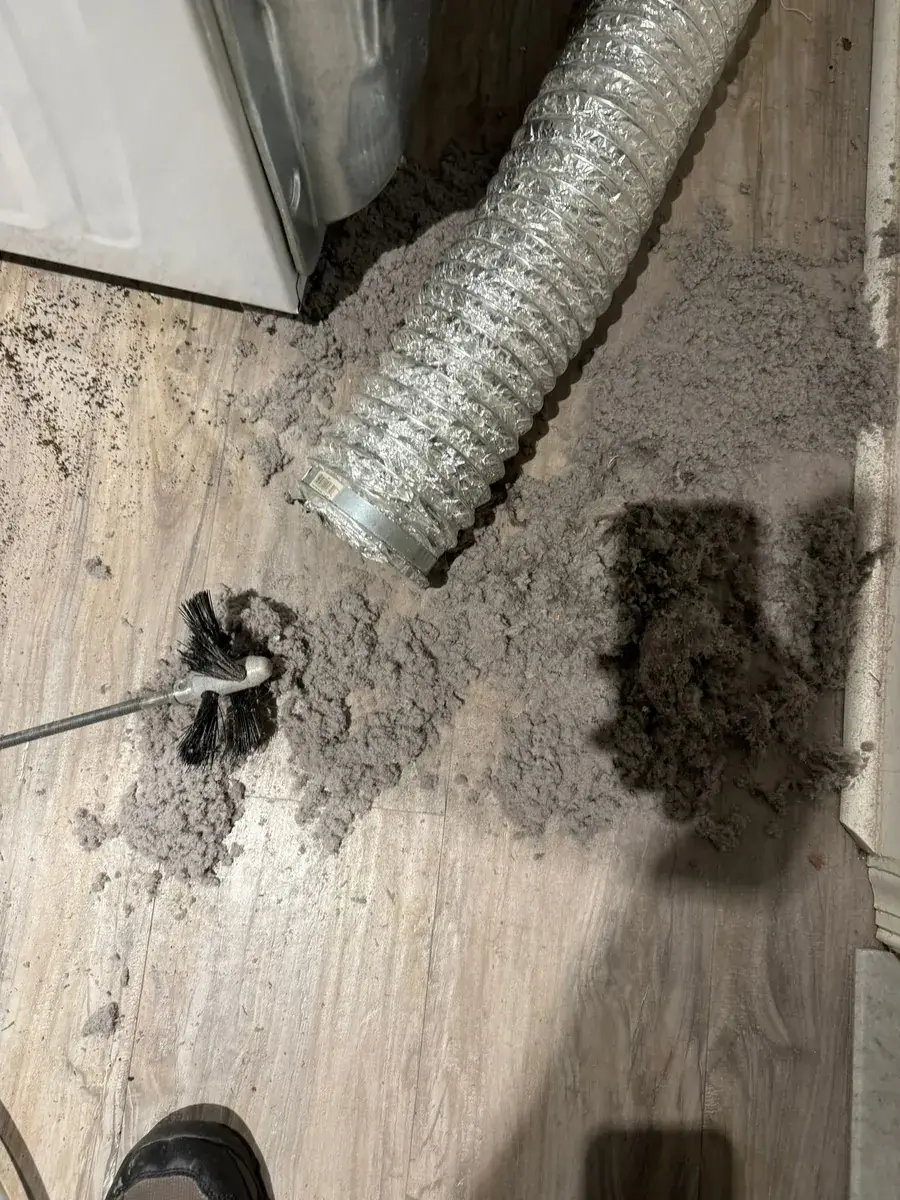
We work rotary brush agitation through every foot of the duct while HEPA-filtered vacuum extraction pulls the loosened lint out of the line, so it ends up in our equipment rather than redistributed inside the run. We clear the exterior hood, free the flap, and remove any nesting material. We check the transition duct behind the dryer — if it's plastic or foil flex, we'll show you and recommend replacing it with semi-rigid metal. Then we verify airflow at the termination and photograph the results, so you have proof the run is open end to end.
Roof terminations are handled too — common in the river cottages — with the same start-to-finish scope. Financing is available through Wisetack for larger combined jobs, we work around the clock, Sunday through Friday, and a 24-hour emergency line is there for the after-hours situations, like a dryer that overheated mid-cycle.
Routine or deep? The camera decides, honestly
A routine cleaning and a deep restoration are not the same job at two prices — they are genuinely different services, and we will not sell you the bigger one when the smaller one is what your vent needs. A routine cleaning is maintenance: a run cleaned within the last few years, carrying a normal season or two of lint. A deep cleaning is for the vent that has never been done, is packed solid, holds a bird nest, or has years of damp valley lint caked to its walls — it takes longer, can mean opening a section of the run, and is the story behind most of the badly clogged vents we find out here. The free camera inspection is what tells us, and shows you, which one you are actually looking at.
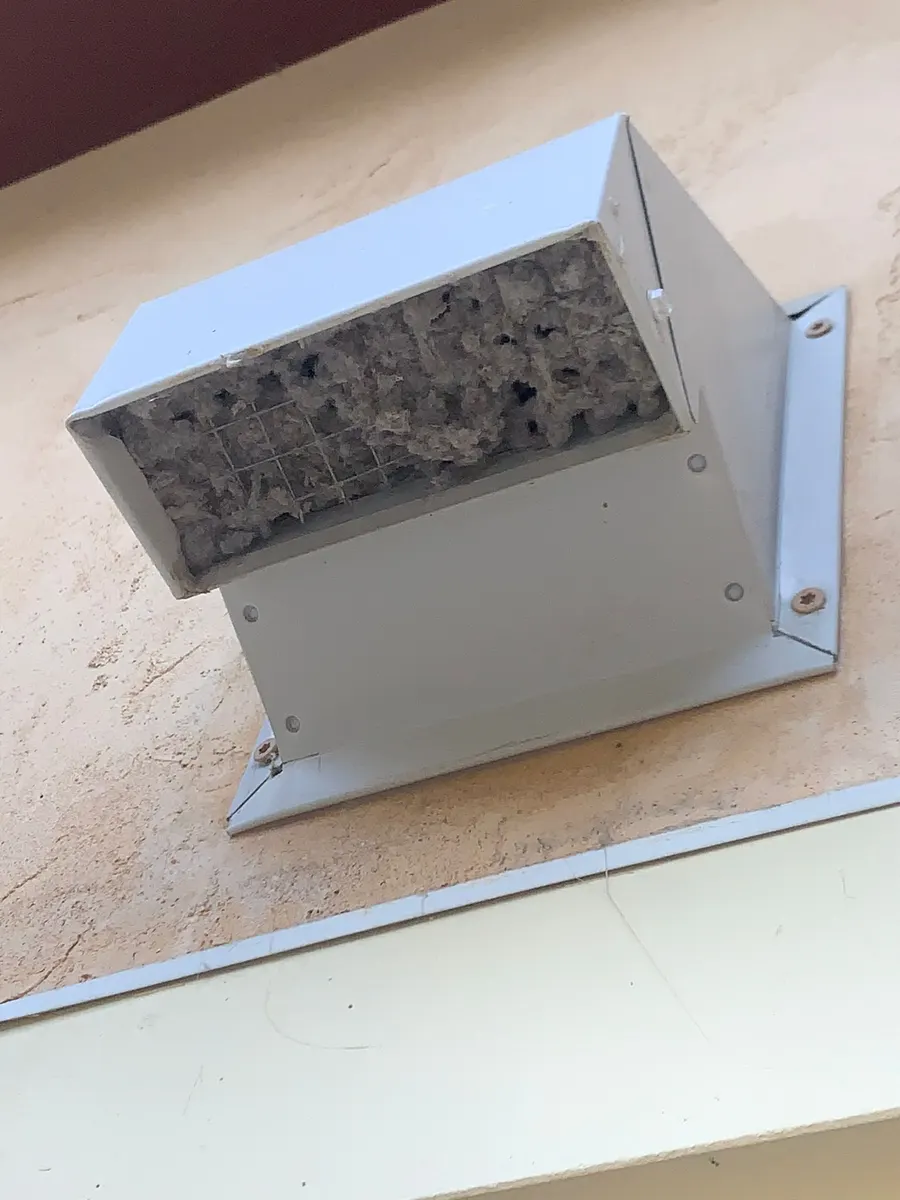
What the free video inspection shows you
- The true length of the run and every elbow slowing it down
- Where lint sits — and whether it is loose or caked hard from humidity
- The termination type: wall hood, foundation, or roof cap
- Any bird or rodent nesting at the exterior hood
- The condition of the transition hose behind the dryer
- Whether a long or upper-floor run hides an inline booster fan of its own
We measure airflow at the hood before and after, so the improvement is a reading rather than an opinion. If the inspection turns up old white plastic or foil transition hose behind the dryer, we flag it on camera and explain why most manufacturers now specify rigid or semi-rigid metal instead.
Keeping it clear between visits
Once a year suits most Bridgeton homes, and a few habits stretch that clean run further. Wash the lint screen with soap and water a couple of times a year — dryer-sheet residue leaves an invisible film that restricts airflow even when the screen looks empty. Pull the dryer out and vacuum behind and under it now and then. Treat any sudden jump in drying time as the early warning it is. And time the professional cleaning for late fall, ahead of heavy winter use, or right after spring nesting season, so you stay ahead of the two things most likely to clog a vent out here.
Local, licensed, and accountable
E Cleaning is family-owned and has been doing this work since 2016 from our King of Prussia base. We're a PA licensed contractor (PA 187935), insured up to $2 million, and Google Guaranteed — money-back protection up to $2,000 on qualifying jobs, a program administered by Google. We're rated 4.8 stars across 144 Google reviews. Every visit ends with after-photos, and every quote is flat and written before work starts, whether the address is in a borough or at the end of a gravel drive off River Road.
If you bring a written quote from another company for the same scope, our Price Match Guarantee meets it. Every job also carries a 6-month workmanship warranty: if a problem traced to our work shows up within six months, we come back and make it right free. Upper Bucks gets the same treatment as everywhere else we work: no trip fees, no mileage line items, no "rural surcharge." The free inspection and the flat written quote are the deal, township-wide.
How much does dryer vent cleaning cost?
Routine and deep cleaning are different services — the free inspection determines which one your system actually needs. Prices vary house to house; your exact price comes as a flat written quote before any work begins.
| Dryer vent routine — basement / 1st floor | $129.99 |
| Dryer vent routine — 2nd floor & up | $149.99 |
| Dryer vent deep cleaning | $299.99 |
| Nest removal · bird guard installation | from $250 · from $150 |
Three promises. In writing. On every job.
Price Match Guarantee
Bring a competitor's written quote for the same scope of work — we'll match it. You never overpay for doing it right.
6-Month Warranty
Every job carries a 6-month workmanship warranty. If a problem traced to our work shows up, we come back and make it right — free.
Google Guaranteed
Booked through Google Local Services, qualifying jobs carry Google's own money-back protection up to $2,000, administered by Google.
Backed by a real license and $1M/$2M insurance — see the actual documents
Don't put off air you breathe — finance it with Wisetack
Check your options in about a minute with no impact to your credit score, choose terms that fit your budget, and pay over time instead of all at once.
*All financing is subject to credit approval. Your terms may vary. Wisetack loans are issued by Hatch Bank. See additional terms at wisetack.com/faqs.
4.8 stars from 144 Google reviews — and easy to find
E Cleaning Duct & Vent Cleaning is based at 555 S Goddard Blvd, King of Prussia, and serves Bridgeton and all of Bucks County from right here. Check our Google profile: real jobs, real photos, and a rating our crew protects on every visit.
- Google Guaranteed business — screened, licensed and insured (see the documents)
- Read every review on our Google profile — we don't cherry-pick what you can verify
Dryer Vent Cleaning questions from Bridgeton homeowners
How often should a Bridgeton home have its dryer vent cleaned?
Once a year is the standard guideline, and it's a good one for most households. Clean more often if the run is long — second-floor laundry rooms and farmhouse basements with long horizontal runs both qualify — or if you have a large household, pets that shed, or a vent that has clogged before. The free video inspection will tell you where your run actually stands.
Do you charge extra to drive out to Upper Black Eddy?
No. There are no trip fees anywhere we serve, including the far reaches of Route 32. The free video inspection and the flat written quote work exactly the same way in Bridgeton Township as they do anywhere else in Bucks County.
Our dryer vents through the roof. Can you still clean it?
Yes. Roof terminations are common in older river cottages and in homes where no exterior wall was near the laundry, and we clean them from both ends — the full run plus the roof cap itself, where lint and nests tend to accumulate. The inspection confirms the routing before we quote.
Can a bird nest in the vent really cause a fire?
Yes. A nest blocks airflow, the trapped heat has nowhere to go, and the lint packed behind the blockage is exactly the fuel that heat needs — NFPA identifies failure to clean as the leading factor in dryer fires. Out here, exterior hoods invite birds and mice every spring. We remove nesting material and can recommend a proper bird guard; avoid mesh screens, which trap lint and create the same blockage themselves.
Should I replace the white plastic or foil hose behind my dryer?
In almost every case, yes. Plastic and thin foil flex hoses sag, trap lint in their ridges, and are the first thing to burn in a vent fire. Semi-rigid metal is the safe replacement. We check the transition hose during every inspection and will show you its condition on camera before recommending anything.
How long does the visit take?
Most routine cleanings are done in about an hour once the inspection and quote are settled. Long concealed runs, roof terminations, and deep restorations of badly clogged vents take longer — and because the quote is written before we start, you'll know the scope and the time commitment up front.
Ready for honest dryer vent cleaning in Bridgeton?
Free video inspection, a flat written quote before any work, and real before/after proof — call (484) 367-5944 or book online now.
