
Dryer Vent Cleaning in Salford, PA
E Cleaning cleans dryer vents across Salford Township — basement laundries in old farmhouses, second-floor laundry closets in newer builds, and every setup in between. We inspect the full vent run first, free of charge, then hand you a flat written quote before any work begins. Family-owned since 2016, PA-licensed, insured to $2 million, and rated 4.8 stars across 144 Google reviews.
Where your laundry room is decides what your dryer vent looks like
Salford is spread-out country in upper Montgomery County — a rural township along the Bucks County line where houses sit on acreage rather than borough lots. Unlike the rowhomes and twins of nearby Souderton or Telford, the challenge here is almost never a shared wall or a cramped utility closet. It is distance: bigger footprints mean longer dryer vent runs, and every extra foot of duct and every added elbow is another place for lint to settle and pack.
The laundry setups we see in the township sort roughly by the age of the house. Old farmhouses almost always put the laundry in the basement, which means the vent has to climb a full story inside a wall or chase before it can even start its horizontal run to daylight — a long, mostly vertical path that is hard to reach with the brush kits sold at hardware stores. Homes built from the 1980s onward often moved laundry to a first-floor mudroom, which can mean a mercifully short run to a sidewall hood, or an interior laundry room whose vent snakes under the floor for twenty feet or more before it exits. The newest construction frequently puts a laundry closet on the second floor near the bedrooms, and those vents commonly terminate through the roof — convenient for the architect, inconvenient for anyone trying to clean it without the right equipment.
The township's housing stock spans well over a century, and the older the house, the more likely its laundry has moved at least once. A nineteenth-century stone or plank farmhouse was never designed with a laundry room at all; when one was added — often in a basement corner or a converted pantry — the vent got routed wherever it could reach an outside wall, sometimes through thick masonry, sometimes the long way around a finished room. Mid-century ranches and split-levels put laundry on the main floor but frequently vent it under a slab or through a crawlspace. Colonials from the building boom of the 1990s and 2000s tend to have the longest interior runs of all, because the laundry got tucked into the middle of the house near the kitchen or upstairs by the bedrooms, far from any exterior wall. Knowing which era your house belongs to tells us a lot before we even arrive — but we still inspect, because additions and remodels rewrite the rules on any given property.
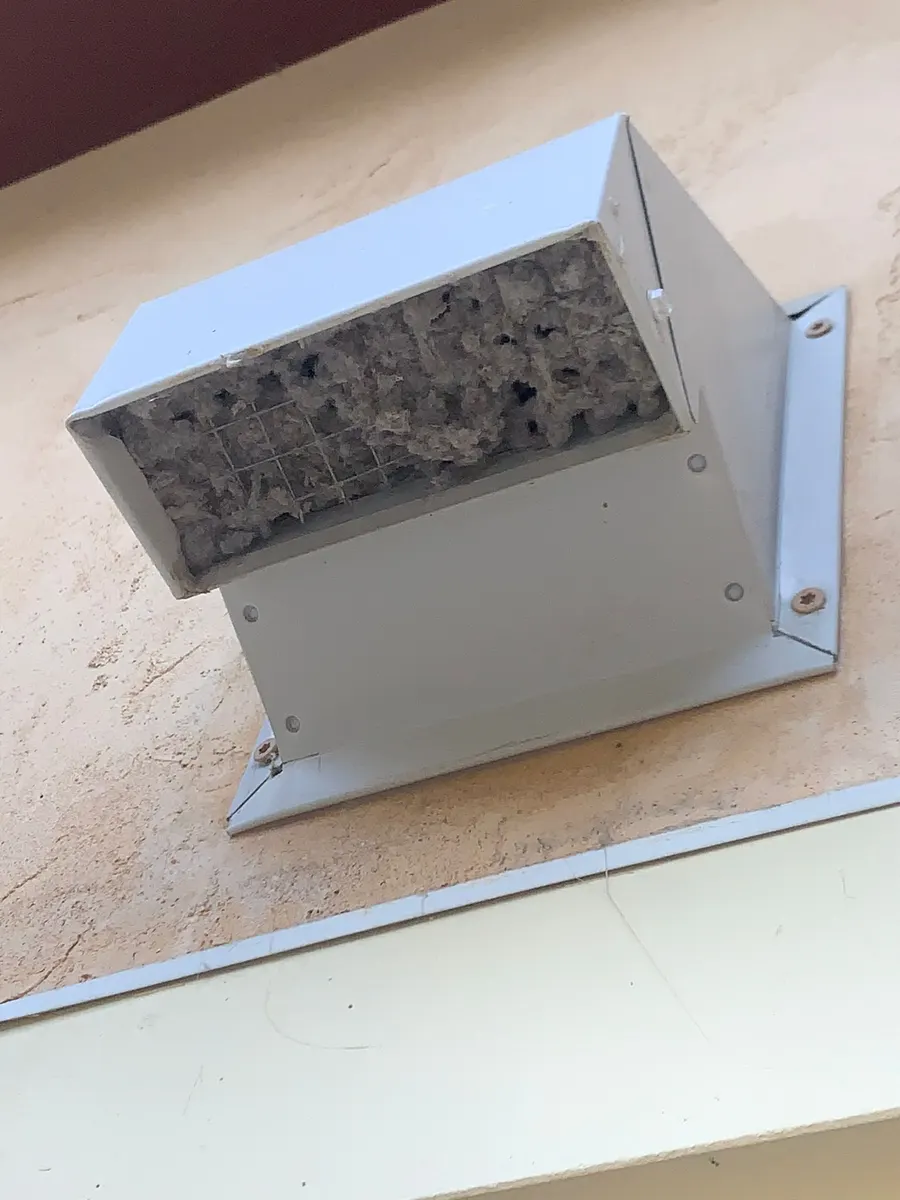
Country properties add one more wrinkle that borough homes rarely deal with: wildlife. Exterior vent hoods on a wooded lot are a favorite nesting spot for birds and small rodents, especially when the flapper is worn or missing. We regularly open up hoods in this part of the county and pull out nesting material sitting on top of years of lint — a double blockage the homeowner never sees, because the hood is behind a shrub line or high on a gable end. Part of every Salford inspection is walking to the termination point, wherever it is, and actually looking.
Because the setups vary this much, we never quote blind. The inspection comes first and costs nothing; then the flat written quote reflects your actual run — its length, its elbows, its termination — before any work begins. A short mudroom run and a three-story roof termination are not the same job, and we will not pretend otherwise in either direction.
Why lint is a bigger deal on a rural Salford property
A clogged dryer vent is a fire hazard anywhere, but the math changes on a rural property. Like most of upper Montgomery County's rural townships, Salford is protected largely by volunteer fire companies, and homes sit far apart on long driveways and back roads. Response takes longer than it does in a borough — which makes prevention worth proportionally more out here. The cheapest fire to fight is the one that never starts, and dryer fires are among the most preventable fires there are.
Laundry habits in the township feed the problem. Rural households run heavy loads — work clothes, muddy gear, pet bedding, towels, winter blankets — and heavy fabrics shed far more lint than office wear. A house heated with a wood stove tends to wash more throws and blankets all winter. And where the dryer runs on propane, as many do out here, a restricted vent is more than a lint problem: a gas dryer exhausts moisture and combustion byproducts through that same duct, so a blockage pushes heat, humidity, and exhaust back toward the laundry room instead of outside.
The warning signs show up in the laundry itself long before anything dangerous happens — if you know what to look for.
Signs a Salford dryer vent is choking
- Towels or jeans need a second cycle to dry
- The top of the dryer is hot to the touch after a load
- A faint burning or hot-lint smell while the dryer runs
- The laundry room turns humid mid-cycle
- The exterior flapper barely opens, or lint is scattered around the hood
- It has been more than a year since the vent was professionally cleaned
Any one of these is reason enough to have the run inspected — and since our inspection is free with no obligation, the cost of finding out is zero.
What a professional dryer vent cleaning includes
A complete cleaning covers the whole path lint travels — from the lint trap housing behind the dryer to the exterior termination — not just the first few reachable feet. That distinction is the difference between a vent that stays clear and one that clogs again in three months.
Inspection first, always free
We start by scoping the full run — the transition hose behind the dryer, the in-wall or under-floor duct, every elbow, and the exterior hood — so you see the real condition before a dollar is discussed. The inspection is where the useful information lives: whether the lint is loose or packed hard, whether a bird or rodent has nested in the hood, whether a section is crushed, kinked, or pulled apart at a joint, how long the run is, and how many turns it makes. You see what we find, and the flat written quote is in your hands before any work begins — no guessing, no surprise invoice at the door.
Routine cleaning versus a deep clean — and how we tell which you need
Dryer vent cleaning comes in two honest forms, and the inspection decides which one your vent actually needs. A routine cleaning is maintenance: a vent that was professionally cleaned within the last year or two, with a sensible run and no surprises, gets brushed, vacuumed, and verified. A deep cleaning is a genuinely different job — it is for a vent that has never been done, has gone many years untouched, is packed hard with compressed lint, holds nesting material, or runs long with multiple elbows or a roof termination. A deep clean takes more time, more passes, and sometimes disassembly at a joint to reach a blockage a brush cannot push through. We do not decide which one you are before we look, and we never quietly bill a routine job at a deep rate or the reverse — the free inspection shows exactly what is in the duct, and the written quote names the service that matches it.
Rotary brush and HEPA extraction
We clean the run with rotary brushes matched to the duct diameter, working the full length while a HEPA-filtered vacuum captures everything the brush breaks loose. Packed lint, bird nesting, and construction debris come out of the duct — they do not get pushed toward the middle and left there.
The parts everyone else skips
The flexible transition hose behind the dryer collects lint faster than any other section and hides kinks that strangle airflow; we clean it, and if it is crushed or made of flimsy plastic, we tell you plainly. At the other end, the exterior hood and flapper get cleared and checked so the vent can actually exhale — a spotless duct behind a lint-caked hood is still a blocked vent.
Roof and high terminations, handled
Second-floor laundry closets in newer Salford homes often vent through the roof, and those terminations clog worse than sidewall hoods because nobody ever sees them. We clean roof-terminated vents with the ladder work and equipment they require — it is a routine part of the job for us, not an add-on surprise.
Airflow verified, photos in hand
Before we leave, we run the dryer and confirm strong, steady exhaust at the termination, and you get after-photos of the cleaned run and hood. If we spot a problem beyond cleaning — a crushed section, a disconnected joint in a ceiling, a missing flapper inviting the next bird — you hear about it straight, in writing, with no pressure.
How often should a Salford home have its dryer vent cleaned?
Once a year for most households. Large families, heavy laundry habits, long or roof-terminated runs, and homes with pets should consider every six to nine months, because those factors all accelerate lint buildup. If you cannot remember the last time your vent was cleaned — a common answer in houses out here — start with the free inspection and let the camera settle the question.
Timing helps, too. Spring is when birds go looking for nesting spots in exterior hoods, so a late-winter or early-spring cleaning — paired with a sound flapper — heads off a blockage before it starts. Fall is the other natural checkpoint, right before the winter stretch when the dryer runs hardest and heavy blankets, coats, and flannel shed the most lint of the year. On a propane dryer especially, going into winter with a clear vent is worth the small effort, since a restricted run backs heat and combustion exhaust toward the laundry room exactly when the dryer is working overtime.
The way we price the work never changes: free inspection first, flat written quote before any work, no trip fee to Salford or anywhere else we serve. Our shop is in King of Prussia, about half an hour away, and the quote is the same whether you are in Tylersport or at the end of a gravel drive near the county line. Behind every job stands our guarantee stack — a price match if you bring a competitor's written quote for the same scope, a 6-month workmanship warranty, and Google Guaranteed protection up to $2,000 on qualifying jobs. We are a PA-licensed contractor (PA 187935) and insured to $2 million; the actual documents are viewable at our licensed & insured page. Financing is available through Wisetack, and we work around the clock, Sunday through Friday — we're closed Saturdays.
Many Salford customers pair this service with air duct cleaning in Salford on the same visit — one appointment, one crew, and both of the lint-and-dust systems in the house handled at once. We cover the neighboring communities the same way, including Souderton, Telford, and Upper Salford, along with the rest of Montgomery County.
How much does dryer vent cleaning cost?
Routine and deep cleaning are different services — the free inspection determines which one your system actually needs. Prices vary house to house; your exact price comes as a flat written quote before any work begins.
| Dryer vent routine — basement / 1st floor | $129.99 |
| Dryer vent routine — 2nd floor & up | $149.99 |
| Dryer vent deep cleaning | $299.99 |
| Nest removal · bird guard installation | from $250 · from $150 |
Three promises. In writing. On every job.
Price Match Guarantee
Bring a competitor's written quote for the same scope of work — we'll match it. You never overpay for doing it right.
6-Month Warranty
Every job carries a 6-month workmanship warranty. If a problem traced to our work shows up, we come back and make it right — free.
Google Guaranteed
Booked through Google Local Services, qualifying jobs carry Google's own money-back protection up to $2,000, administered by Google.
Backed by a real license and $1M/$2M insurance — see the actual documents
Don't put off air you breathe — finance it with Wisetack
Check your options in about a minute with no impact to your credit score, choose terms that fit your budget, and pay over time instead of all at once.
*All financing is subject to credit approval. Your terms may vary. Wisetack loans are issued by Hatch Bank. See additional terms at wisetack.com/faqs.
4.8 stars from 144 Google reviews — and easy to find
E Cleaning Duct & Vent Cleaning is based at 555 S Goddard Blvd, King of Prussia, and serves Salford and all of Montgomery County from right here. Check our Google profile: real jobs, real photos, and a rating our crew protects on every visit.
- Google Guaranteed business — screened, licensed and insured (see the documents)
- Read every review on our Google profile — we don't cherry-pick what you can verify
Dryer Vent Cleaning questions from Salford homeowners
Do you charge extra to drive out to Salford Township?
No. There are no trip or travel fees anywhere we work, including the rural roads of upper Montgomery County. The process is identical everywhere: free inspection of the full vent run, then a flat written quote before any work begins.
My laundry is in the basement and the vent runs up through the wall. Can you clean that?
Yes. Long vertical runs from basement laundries are one of the most common setups in Salford's older homes, and they are exactly what professional rotary brush equipment is built for. We clean the full length — the vertical climb, the horizontal run, and the exterior hood — and verify airflow at the termination before we leave.
Our dryer vent goes through the roof. Is that a problem?
Not for us. Roof-terminated vents are standard in newer homes with second-floor laundry closets, and we clean them routinely with the ladder work and equipment they require. They actually need attention more often than sidewall vents, because the termination is out of sight and blockages go unnoticed until drying times crawl.
There is a bird nest in our exterior vent hood. Do you remove it?
Yes. Nesting material in vent hoods is common on Salford's wooded lots, and we remove it along with the lint packed behind it, then check the flapper. If the flapper is damaged or missing — usually how the birds got in — we tell you plainly so the fix goes in the written scope rather than becoming next spring's repeat problem.
Can you replace the flexible hose behind the dryer too?
Yes. The transition hose is the fastest-clogging section of the whole run, and the thin foil or plastic types kink easily and hold lint. If yours is crushed, torn, or made of the wrong material, we can replace it as part of the same visit — scoped in the written quote before we start, never sprung on you afterward.
Can you do the dryer vent and air ducts in one appointment?
Yes, and many Salford customers book exactly that — see our air duct cleaning in Salford page. One visit covers both systems, each with its own inspection and a single flat written quote. We serve the entire township, including Tylersport, plus neighboring Souderton, Telford, and Upper Salford.
Ready for honest dryer vent cleaning in Salford?
Free video inspection, a flat written quote before any work, and real before/after proof — call (484) 367-5944 or book online now.
