
Dryer Vent Cleaning in Trappe Borough, PA
E Cleaning cleans dryer vents throughout Trappe Borough — basement laundries in the old Main Street homes, second-floor laundry rooms in the newer subdivisions, and the tucked-away laundry closets in the townhome communities around the borough. Every visit starts with a free video inspection of the vent run and ends only after we verify airflow, and you get a flat written quote before any work begins. Licensed PA contractor (PA 187935), insured to $2 million, rated 4.8 stars across 144 Google reviews.
In Trappe, the floor your laundry sits on decides how your dryer vent behaves
Trappe Borough is a small community, but its laundry setups span the whole range we see across Montgomery County — because the housing does. Where the washer and dryer landed in each era of construction determines how long the vent run is, how many bends it takes, where it terminates, and ultimately how fast it loads up with lint.
Basement laundries in the older borough homes. In the older houses along and around Main Street, laundry almost always lives in the basement, because that is where the plumbing was when machines arrived generations after the house was built. A basement dryer typically vents horizontally — through the rim joist or up and out a foundation wall — and in a deep or oddly shaped old house that horizontal run can be long, with elbows added wherever the original stone or framing forced a detour. Every elbow is a lint trap. These are also the runs most likely to have been assembled from whatever duct was on hand over the years, including sagging sections and slack transition hose that hold lint instead of shedding it.
Second-floor laundry in the subdivision homes. The single-family developments built around Trappe from the 1990s through the 2000s often put the laundry room upstairs, near the bedrooms — convenient for the household, demanding for the vent. Upper-floor dryers usually vent vertically through the attic to a roof cap, or take a long concealed path through framing to a sidewall. Vertical runs fight gravity: moist, lint-laden air has to climb the full height of the house, and whatever falls back or snags on a screw tip stays in the duct. Roof terminations also collect lint at the cap itself, where homeowners never see it.
Laundry closets in townhomes. The townhome communities in and around the borough and neighboring Upper Providence tend to place the dryer in a mid-level closet, with the vent snaking through shared framing to wherever the builder could reach an exterior wall or the roof. These concealed runs can be surprisingly long for the size of the home, and because the duct is invisible for its entire length, problems announce themselves only as symptoms — long dry times, a hot laundry closet, a musty smell — never as something you can see.
The point is simple: in Trappe, "dryer vent cleaning" is not one standard job. The free video inspection at the start of every visit maps your actual run — length, bends, termination, and condition — and that is what your flat written quote is based on.
One small borough, four generations of dryer runs
Trappe is one of Montgomery County’s older communities — a compact borough with roots reaching back to the colonial era, wrapped by Upper Providence Township and sharing its Main Street spine with neighboring Collegeville. That long history is written into its housing, and the era your home was built in usually tells us, before we ever run the camera, what kind of dryer vent to expect.
The historic core. The oldest layer sits along and behind Main Street — homes from the 19th century and the early 1900s, some older still, built long before anyone planned for a clothes dryer. Laundry was retrofitted into basements, and the vent was run wherever the stone foundation and original framing allowed. Generations of additions and remodels mean these runs are often improvised, patched together from mismatched duct, and longer than they look.
Mid-century infill. Ranches and split-levels filled in the borough through the middle of the last century. These keep laundry on the main floor or in the basement with shorter, simpler runs — but "simpler" does not mean clean, and plenty have never had the duct touched since the house was built.
The subdivisions. The single-family developments that grew along the borough’s edges and out into Upper Providence from the 1990s into the 2000s brought the two-story colonial plan, with laundry moved upstairs near the bedrooms and vents routed the long way to a roof cap or a distant sidewall.
The townhomes. The newest layer is attached living, where dryers sit in mid-level closets and vent through shared framing. As a compact borough near the Route 422 corridor, Trappe packs all four eras into a small footprint — and southeastern Pennsylvania’s genuine winters mean every one of them runs its dryer hard from November through March.
Lint is fuel — and in attached housing, it is your neighbor's problem too
A clogged dryer vent is not a laundry inconvenience; it is a fire hazard sitting inside your walls. Lint is fine, dry, and flammable, and a restricted vent traps exactly the heat that can ignite it.
That risk profile matters more in a borough like Trappe than the raw numbers suggest, for two reasons. First, density: boroughs are compact by nature, and the townhome communities around Trappe and Upper Providence mean shared walls and shared rooflines. A dryer fire in an attached home is never only one household's emergency. Second, the housing extremes cut both ways — the oldest homes have improvised vent runs that predate any code, and the newer upper-floor laundries have the longest, most concealed runs in the borough. Both extremes clog faster than the simple short run a dryer was designed for.
Seasonality plays a role too. Pennsylvania winters push laundry loads up — heavier fabrics, more towels, sports gear washed year-round, and no line-drying for months. A vent that was marginal in September is often struggling by February, and cold-weather symptoms like condensation in the duct make lint stick harder. If your dry times crept up over the winter, the vent is the first suspect.
We clean dryer vents across the valley — Collegeville next door along Main Street, Upper Providence surrounding the borough, Schwenksville up the Perkiomen, and the rest of Montgomery County — always with no trip fees and the same written-quote-first process.
End to end means the exterior hood, the full run, the transition hose, and proof of airflow
A complete dryer vent cleaning covers every inch between the back of your dryer and the outside air. Anything less leaves lint behind, and leftover lint is the seed the next clog grows from. On a Trappe visit, our scope is:
- Video inspection first — we camera the run and show you the lint load before quoting anything
- The full duct length — rotary agitation through every foot and every elbow, whether the run is six feet through a rim joist or thirty feet up through an attic to a roof cap
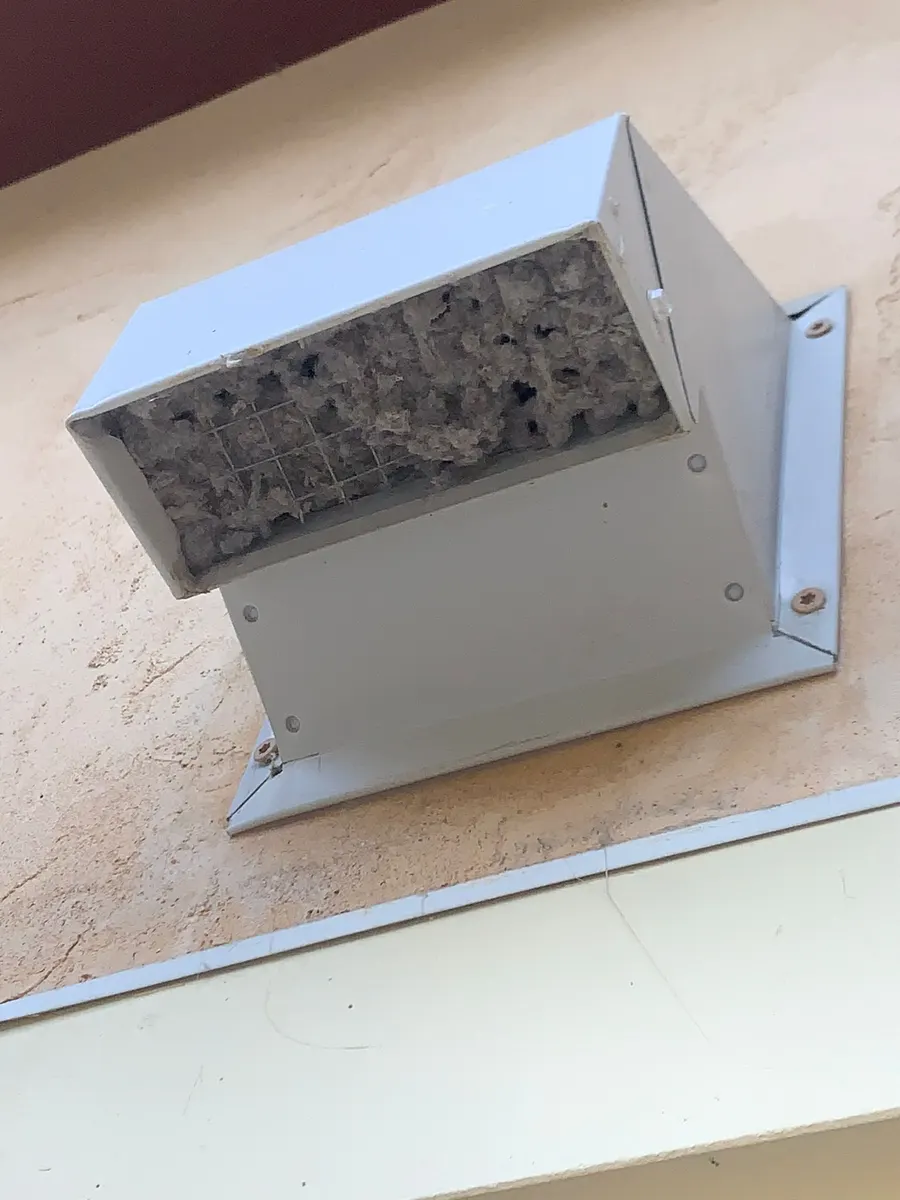
- The exterior termination — hood, flapper, or roof cap cleared and checked, since a blocked or lint-matted termination chokes the whole system
- The transition hose — the short flexible section behind the dryer, which is often the most clogged piece of all, plus the dryer's own lint housing area
- Extraction, not redistribution — dislodged lint is captured with HEPA-filtered vacuum equipment, not blown into your basement or attic
- Airflow verification and after-photos — we confirm the vent actually breathes before we leave, and you get photos of the result
The clog you can't see from the laundry room
Most homeowners judge their dryer vent by the lint screen, but the screen only catches a fraction of what a dryer sheds. The rest travels down the duct and accumulates where you will never look — at elbows mid-run, in sagging hose sections, and matted against the exterior hood. That is why every job here starts with a camera and ends with airflow verification: you see the problem before you pay for anything, and you see it gone before we leave.
If the inspection turns up damaged duct — crushed sections, disconnected joints in a wall cavity, plastic or foil hose where code calls for rigid metal — we tell you plainly and put any recommended fix in the same written quote. No mid-job discoveries, no doorstep math.
Routine and deep dryer vent cleaning are two different jobs — the inspection tells us which you need
We scope every Trappe dryer vent as one of two genuinely different services, and the free video inspection — not a guess over the phone — decides which one applies.
Routine cleaning is maintenance: a vent cleaned within the last few years that still carries a normal lint load. The run is clear enough that rotary agitation and HEPA-filtered extraction restore full airflow in a single straightforward pass. Homes kept on an annual schedule usually stay in routine territory.
Deep cleaning is for runs that have gone years — sometimes decades — without attention, or were never cleaned at all. Lint in these vents is not loose; it is packed and matted at every elbow, glazed onto the duct wall by years of heat and moisture, and often mixed with debris or an animal nest at the termination. A deep clean takes more agitation, more passes, and more time, and it is the honest scope for a vent a routine pass simply would not clear.
The transition hose tells the story
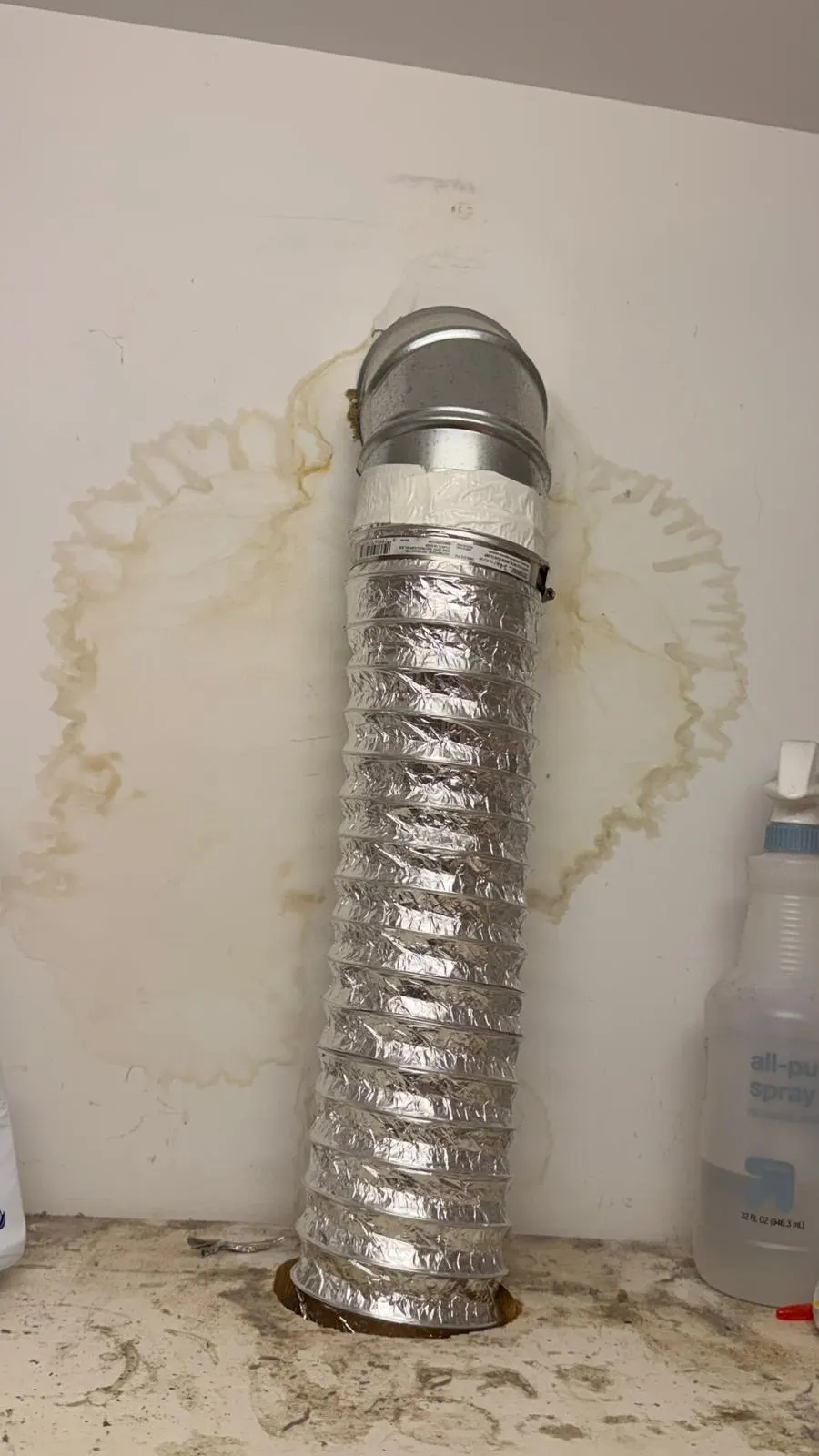
The short flexible hose behind the dryer is almost always the most clogged piece in the system, and on the camera it is the first thing we check. Crushed against the wall, kinked into a tight loop, or made of the old foil or plastic that code long ago replaced with rigid metal, it turns a healthy run into a bottleneck no amount of exterior cleaning can fix.
The inspection shows exactly which service you need. On screen you will see the lint load at each bend, the condition of that transition hose, whether the exterior flapper or roof cap still moves freely, and any red flags — crushed sections, joints pulled apart inside a wall cavity, or a bird’s nest packed into the hood. Whatever it finds goes into one flat written quote before any work starts, including nest removal or a bird guard if the termination needs one. The method never changes: source removal — agitate the full run, capture the lint with HEPA-filtered vacuum, and verify airflow before we leave — never a leaf blower aimed down the pipe.
How often should a Trappe home have its dryer vent cleaned?
Once a year is the right baseline for most households, and that guidance tightens with the factors common in Trappe: long or vertical runs to a roof cap, townhome runs through concealed framing, big laundry loads from a full house, and pets whose hair rides along with every load. A short, straight basement run in a one- or two-person home can sometimes stretch longer between cleanings — the video inspection gives you an honest answer for your run rather than a one-size answer.
Between cleanings, watch for the signals of a restricting vent:
Longer dry times
Loads needing a second cycle are the classic early sign — the moist air has nowhere to go, so clothes stay wet.
Heat where it shouldn't be
A hot dryer top, a hot laundry room or closet, or clothes that come out scorching all point to trapped exhaust heat.
Smell and residue
A burning odor during cycles, musty-smelling laundry, or visible lint around the exterior hood mean the run is loading up.
If any of those sound familiar, have the vent looked at now rather than after the utility bills and the fire risk compound. The inspection is free, the quote is flat and written before any work begins, and the work is backed the same way everything we do is backed: a 6-month workmanship warranty, a Price Match Guarantee against any competitor's written quote for the same scope, and Google Guaranteed protection up to $2,000 on qualifying jobs. Our license and insurance documents are viewable online. Financing through Wisetack is available, and we schedule 24 hours a day, Sunday through Friday (we're closed Saturdays).
Many Trappe homeowners pair this service with air duct cleaning in Trappe Borough in a single visit — same technician, same truck, one flat written quote covering both scopes.
How much does dryer vent cleaning cost?
Routine and deep cleaning are different services — the free inspection determines which one your system actually needs. Prices vary house to house; your exact price comes as a flat written quote before any work begins.
| Dryer vent routine — basement / 1st floor | $129.99 |
| Dryer vent routine — 2nd floor & up | $149.99 |
| Dryer vent deep cleaning | $299.99 |
| Nest removal · bird guard installation | from $250 · from $150 |
Three promises. In writing. On every job.
Price Match Guarantee
Bring a competitor's written quote for the same scope of work — we'll match it. You never overpay for doing it right.
6-Month Warranty
Every job carries a 6-month workmanship warranty. If a problem traced to our work shows up, we come back and make it right — free.
Google Guaranteed
Booked through Google Local Services, qualifying jobs carry Google's own money-back protection up to $2,000, administered by Google.
Backed by a real license and $1M/$2M insurance — see the actual documents
Don't put off air you breathe — finance it with Wisetack
Check your options in about a minute with no impact to your credit score, choose terms that fit your budget, and pay over time instead of all at once.
*All financing is subject to credit approval. Your terms may vary. Wisetack loans are issued by Hatch Bank. See additional terms at wisetack.com/faqs.
4.8 stars from 144 Google reviews — and easy to find
E Cleaning Duct & Vent Cleaning is based at 555 S Goddard Blvd, King of Prussia, and serves Trappe Borough and all of Montgomery County from right here. Check our Google profile: real jobs, real photos, and a rating our crew protects on every visit.
- Google Guaranteed business — screened, licensed and insured (see the documents)
- Read every review on our Google profile — we don't cherry-pick what you can verify
Dryer Vent Cleaning questions from Trappe Borough homeowners
Do you charge extra to come out to Trappe Borough?
No — no trip fees, ever. Trappe is an easy run from our King of Prussia base via the Route 422 corridor, and the terms are identical everywhere we work: a free video inspection of the vent run first, then a flat written quote before any work begins.
My laundry room is on the second floor and the vent goes out the roof — can you clean that?
Yes. Roof-terminating vertical runs are common in the newer subdivision homes around Trappe, and they are among the runs that need cleaning most, because lint has to climb the full height of the house and the roof cap collects what falls back. We clean the entire run including the roof termination and verify airflow when we are done.
I'm in a townhome near Trappe — is dryer vent cleaning different for attached housing?
The method is the same, but the stakes and the runs differ. Townhome vents often take long concealed paths through shared framing, and in attached housing a dryer fire is never just one home's problem. The video inspection maps your actual run before we quote, and if your HOA needs proof of insurance, our license and $2 million insurance documents are viewable online.
How often should I have my dryer vent cleaned in Trappe?
Annually for most households. Failure to clean is the leading factor in dryer fires, contributing to one-third of them per NFPA data, and the long vertical or concealed runs common in Trappe's newer homes and townhomes clog faster than short basement runs. Big households and pet owners should hold firmly to the yearly schedule.
What will dryer vent cleaning cost for my Trappe home?
We quote it the honest way: a free video inspection of your specific run — its length, bends, and termination — followed by a flat written quote before any work begins. The number is locked in writing, there are no doorstep upsells, and if a competitor gave you a written quote for the same scope, our Price Match Guarantee applies.
Can you clean my air ducts on the same visit?
Yes, and it is the most common combination we do in Trappe. One visit covers both systems — the dryer exhaust run end to end, and the HVAC ductwork by source removal — with a single written quote itemizing both scopes. See our air duct cleaning in Trappe Borough page for how that side of the job works.
Ready for honest dryer vent cleaning in Trappe Borough?
Free video inspection, a flat written quote before any work, and real before/after proof — call (484) 367-5944 or book online now.
