
Dryer Vent Cleaning in West Nottingham, PA
E Cleaning cleans dryer vents end to end — transition hose, concealed run, and exterior termination — for homes across West Nottingham Township in Chester County's far southwestern corner. The inspection that starts every job is free, the flat written quote comes before any work begins, and the drive to the Maryland line never adds a trip fee.
Dryer Vent Cleaning at the Bottom Corner of Chester County
West Nottingham Township is where Chester County runs out of Pennsylvania: the Mason-Dixon Line closes off its southern edge, the Octoraro Creek and Lancaster County bound it on the west, and U.S. Route 1 takes its last Pennsylvania exit here at PA 272 before dropping toward Rising Sun, Maryland. Oxford is the nearest borough, a short drive northeast past Lower Oxford Township; East Nottingham lies immediately east. Out here the housing is overwhelmingly detached — farmhouses, ranches, and newer two-stories on acreage — and that shapes the dryer vent problem in a way most people never consider.
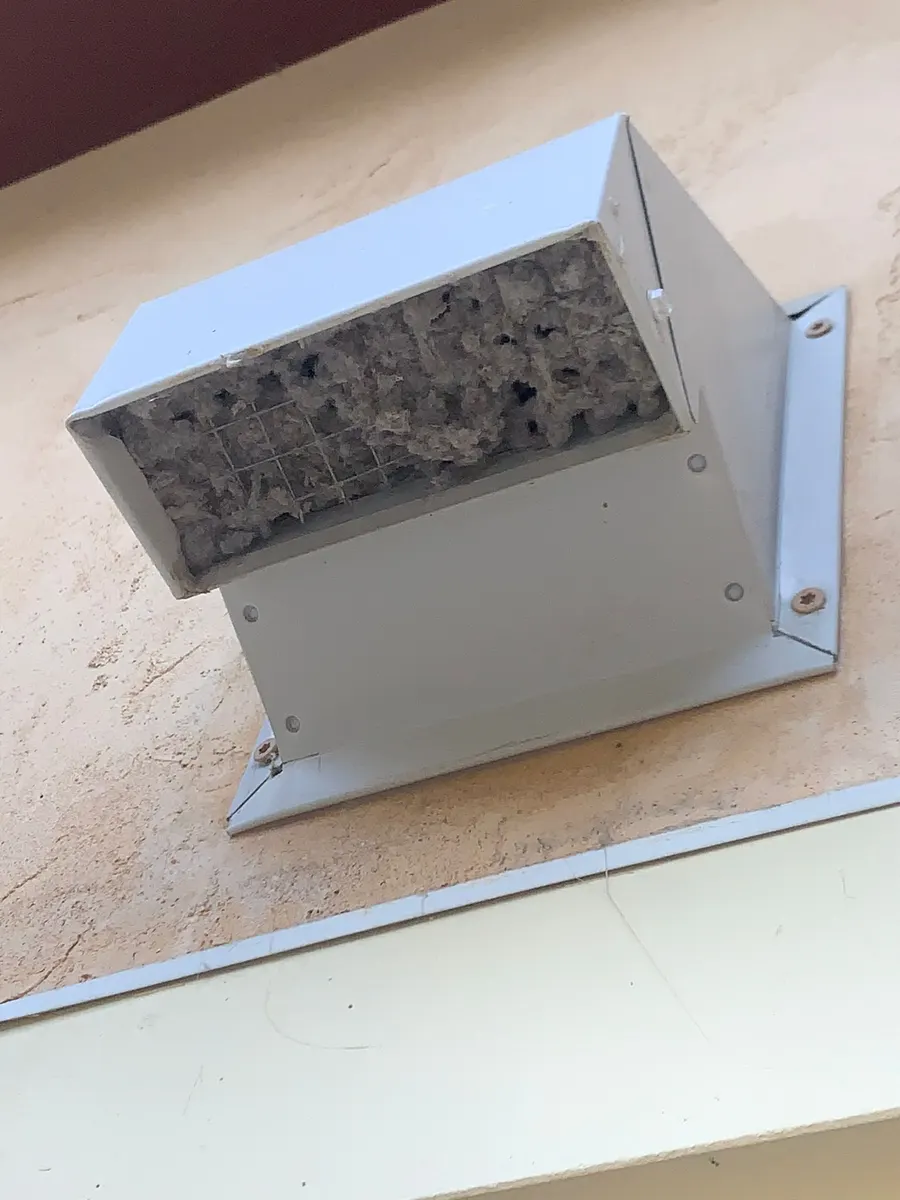
In a tight borough block, a failing dryer vent announces itself to the whole street: a lint beard growing on an exterior hood, a damper flap that never moves, a hot exhaust smell on the sidewalk. On a West Nottingham parcel, the nearest neighbor may be a field away, and the only person positioned to notice any of those signs is you. Blockages out here do not get caught early by accident — they get caught by inspection or by symptom, and the symptom stage is the one worth avoiding.
There is a second rural reality worth stating plainly. Like most of far-southern Chester County, this area is protected by volunteer fire companies covering large territories, and response distances are simply longer than in a town with a station on the main street. That is no knock on the crews — it is geography, and it means prevention counts for more out here than almost anywhere else we work. A clean, free-flowing vent is the cheapest fire prevention a laundry room can buy.
E Cleaning is family-owned and has worked Chester County since 2016. The bottom corner of the county is on our normal routes, not at the edge of them — no trip fee, no reluctance about the drive, and the same inspection-first, written-quote discipline we bring to our largest jobs.
Where the Laundry Sits Decides What the Vent Run Looks Like
The floor your washer and dryer occupy is the single most important fact about your dryer vent: it sets the length of the run, the number of elbows, where the vent terminates, and how the run fails. Around West Nottingham, four setups cover nearly every house we see.
| Laundry location | Typical vent run | What tends to go wrong |
|---|---|---|
| Farmhouse basement | Long, mostly horizontal run across the stone foundation to a side wall | Lint settles along every flat foot; damp basement air mats it into a dense layer; older sagging duct traps pockets |
| First-floor closet or mudroom | Short run through a nearby exterior wall | Crushed or kinked transition hose behind the dryer; hood damper stuck with paint, rust, or packed lint |
| Second-floor laundry room | Long concealed run through framing to a gable or roof termination | Every elbow drops lint out of the airstream; roof caps collect lint where nobody ever looks |
| Addition or relocated laundry | Rerouted run, often longer than the dryer was designed to push | Extra splices and elbows; booster fans that trap lint inside their own housings |
The farmhouse basement is the classic West Nottingham case. Many of the township's older homes have grown wings and additions over two centuries, and when the laundry migrates — from the basement to a mudroom, from a mudroom to an upstairs hall — the vent gets rerouted along with it, sometimes into runs far longer than any appliance manufacturer intended. Spliced sections and booster fans are the usual patches, and a booster fan is one of the most common hidden blockage points we open up.
The second-floor laundry room belongs to the newer two-stories built as the Route 1 corridor grew from the 1990s onward. It is the most convenient setup to live with and the hardest one on airflow: the exhaust has to travel through framing, turn several corners, and exit high on a gable or through the roof, which puts the dirtiest part of the run in the least visible place in the house.
The township's rural roads also carry a share of manufactured homes, where the dryer often vents low to grade or beneath the home itself. Those terminations sit out of sight and close to the ground, they clog quietly, and they are well worth a look on an annual cycle.
Lint Fires: The Numbers, and Why They Land Harder Out Here
U.S. fire departments respond to an estimated 15,970 home fires involving clothes dryers or washing machines each year, and failure to clean is the leading factor, contributing to one-third (33%) of dryer fires — NFPA figures from 2010–2014 data. The U.S. Fire Administration (FEMA) separately estimates 2,900 home clothes dryer fires reported each year. The mechanism is not mysterious: a restricted vent traps heat in exactly the place where the fuel — lint — has been accumulating for years.
Rural households load the odds further. Farm and garden clothing, animal bedding, shop rags, and heavy winter loads all shed far more lint than office wear, and the dryer works hardest through the cold months — precisely when moisture inside a long, cold vent run is most likely to bond lint into a dense mat instead of letting it blow through. A household that line-dries all summer and then leans on the dryer from November to March concentrates a year of wear into the riskiest season.
Wildlife adds a seasonal problem of its own. An exterior vent hood is warm, dry, and sheltered — everything a nesting bird is looking for in early spring. Every year we open hoods packed with nesting material sitting on top of old lint, which is the worst blockage a vent can carry. If the inspection finds a nest, the removal is scoped honestly on your written quote, and we can fit a proper bird guard on the termination afterward — one that keeps wildlife out without strangling the airflow.
Between cleanings, watch for the warning signs: loads that need a second cycle, a dryer top too hot to rest a hand on, a faint scorched smell in the laundry room, and no flap movement at the hood while the dryer runs. Any one of them justifies the free inspection. We also provide air duct cleaning in West Nottingham, and we cover the neighboring communities — Nottingham, Oxford, and East Nottingham — along with the rest of the county, listed on our Chester County service page.
What "Full-Run" Means When We Say It
Plenty of companies sell a dryer vent cleaning that amounts to a shop vacuum at the wall and a brush pushed a few feet into the duct. Ours means the entire path your dryer's exhaust travels: the flexible transition hose behind the machine, every foot of concealed duct through basement, wall, or attic framing, and the termination where it exits the house — wall hood, gable, or roof cap. Rotary brushes sized to the duct diameter travel the full length of the run while a HEPA-filtered vacuum captures what the brush frees, and we work the line from both ends so no section gets skipped because it was inconvenient to reach.
The free inspection that opens the job determines what the vent actually needs, because routine and deep dryer vent service are different jobs — not different prices for the same one. A vent on a regular maintenance cycle needs routine service: full-run brushing and extraction, hardware checks, airflow verification. A vent that has never been serviced, is blocked solid, or holds nesting material needs deep service — more time, mechanical clearing of compacted lint, disassembly where the blockage demands it, and complete removal of nesting debris rather than pushing it through toward the hood. You will know which service you are approving and why before we start, and the job is never "upgraded" halfway through.
Every West Nottingham dryer vent job includes the following, at either service level:
- Free end-to-end inspection before any number is put in writing
- The full run cleaned, from the dryer connection to the exterior termination
- Transition hose cleaned, checked for kinks and crush damage, and reconnected correctly
- Exterior hood cleared and its damper freed to swing properly
- Airflow verified at the termination with the dryer running
- Lint bagged and removed, and the laundry area left the way we found it
- After-photos of the cleared run, inside and out
Ladder work, gable terminations, and roof caps are part of the job, not an excuse to skip the last ten feet — the newer two-stories in the township make sure we get regular practice at all three. Time on site depends on what the inspection found: a routine service on a short first-floor run is often done within the hour, while a deep service on a packed second-floor run with roof access, or a nest removal, takes meaningfully longer. Because the inspection comes first, the window we give you reflects your actual vent rather than a dispatcher's guess, and the crew arrives with the ladder, the full-length tooling, and the vacuum the job calls for — no second appointment to finish what the first one should have.
There is a performance case alongside the safety one. A restricted vent lengthens every cycle, and the extra minutes are pure waste — the dryer burns energy fighting backpressure instead of drying clothes. Heat that cannot leave the drum also punishes the machine itself: thermal fuses trip, heating elements cycle harder, and moisture sensors misread, which is why a "dying" dryer often turns out to be a healthy dryer pushing against a blocked run. Clearing the vent restores the airflow the manufacturer designed around, and the difference is usually obvious on the first load out of the machine.
The Quote, the Guarantees, and Getting on the Schedule
We do not quote dryer vents over the phone, and the reason is the table above: a six-foot basement run and a thirty-foot concealed run ending at a roof cap are not the same job, and pretending they are is how homeowners end up with surprise invoices. The free inspection establishes the run your house actually has — its length, the floor it starts on, the termination type, and the condition inside — and the flat written quote follows from that. Once you approve it, that is the invoice. The drive to the bottom corner of Chester County adds nothing to it.
The commitments behind the work are the same three we stake the company on. The Price Match Guarantee: bring a competitor's written quote for the same scope of work and we match it. The 6-month workmanship warranty: any problem traced to our work within six months gets corrected free. And Google Guaranteed status: qualifying jobs carry money-back protection of up to $2,000 through Google's program, administered by Google. We are a licensed Pennsylvania contractor (PA 187935) and insured — the documents are viewable here — and we are rated 4.8 stars across 144 Google reviews.
A few habits stretch the time between professional cleanings, and we share them freely because they make our work last: clean the lint screen every single load; never run the dryer against a crushed or foil-accordion transition hose — smooth or semi-rigid metal is the safe standard, and we replace bad transitions on the spot when you want it handled; and once a month, step outside while the dryer runs to confirm the flap is swinging and the exhaust is actually moving. None of that replaces a full-run cleaning — the screen catches only part of the lint, and the rest travels into the duct regardless — but it slows the buildup, and it turns you into the early-warning system that a spread-out West Nottingham property otherwise lacks.
Financing is available through Wisetack. We are open 24 hours a day, Sunday through Friday, and closed Saturdays — which, for most working households, means the vent can be cleaned on a weekday evening or a Sunday without anyone burning a day of leave. Book the free inspection, watch what the camera finds, and decide with the written number in your hand.
How much does dryer vent cleaning cost?
Routine and deep cleaning are different services — the free inspection determines which one your system actually needs. Prices vary house to house; your exact price comes as a flat written quote before any work begins.
| Dryer vent routine — basement / 1st floor | $129.99 |
| Dryer vent routine — 2nd floor & up | $149.99 |
| Dryer vent deep cleaning | $299.99 |
| Nest removal · bird guard installation | from $250 · from $150 |
Three promises. In writing. On every job.
Price Match Guarantee
Bring a competitor's written quote for the same scope of work — we'll match it. You never overpay for doing it right.
6-Month Warranty
Every job carries a 6-month workmanship warranty. If a problem traced to our work shows up, we come back and make it right — free.
Google Guaranteed
Booked through Google Local Services, qualifying jobs carry Google's own money-back protection up to $2,000, administered by Google.
Backed by a real license and $1M/$2M insurance — see the actual documents
Don't put off air you breathe — finance it with Wisetack
Check your options in about a minute with no impact to your credit score, choose terms that fit your budget, and pay over time instead of all at once.
*All financing is subject to credit approval. Your terms may vary. Wisetack loans are issued by Hatch Bank. See additional terms at wisetack.com/faqs.
4.8 stars from 144 Google reviews — and easy to find
E Cleaning Duct & Vent Cleaning is based at 555 S Goddard Blvd, King of Prussia, and serves West Nottingham and all of Chester County from right here. Check our Google profile: real jobs, real photos, and a rating our crew protects on every visit.
- Google Guaranteed business — screened, licensed and insured (see the documents)
- Read every review on our Google profile — we don't cherry-pick what you can verify
Dryer Vent Cleaning questions from West Nottingham homeowners
How often should a dryer vent be cleaned in West Nottingham?
Once a year is the honest baseline for a typical household. Shorten it if you dry heavy loads — barn and garden clothing, animal bedding, big winter laundry — if the laundry sits on the second floor with a long or roof-terminated run, or if loads already need a second cycle. The free inspection tells you where your vent actually stands, and if it does not need cleaning yet, we say so and leave it alone.
Our laundry moved upstairs during a remodel. Anything special to watch for?
Yes — relocated laundry usually means a rerouted vent, and rerouted vents collect elbows, splices, and sometimes a booster fan, all of which shed lint out of the airstream. Second-floor runs also tend to terminate high on a gable or through the roof, where lint builds unseen. We clean the full rerouted run with full-length rotary tools, including ladder or roof access, and show you the after-photos.
Can you service the vent on a manufactured home?
Yes. Manufactured homes on the township's rural roads often vent low to grade or beneath the home, and those terminations clog quietly because nobody ever sees them. The free inspection covers the full run wherever it goes, and the flat written quote reflects the actual configuration — the same inspection-first rule as every other house.
How much does dryer vent cleaning cost in West Nottingham?
It is quoted flat and in writing after a free inspection, never over the phone. Run length, the floor the laundry sits on, the termination type, and the condition inside the vent set the scope, and one number cannot honestly cover all of that sight unseen. The written quote you approve is exactly what you pay, and there is no trip charge for the drive to the state line.
Something is nesting in our exterior vent. Is that a bigger job?
Usually yes — a nest packed on top of old lint is the worst blockage a vent can carry, and clearing it completely is deep service rather than routine. Stop running the dryer, and book the free inspection. The removal is scoped honestly on the written quote, and we can install a proper bird guard on the termination afterward so the vent stays protected without restricting airflow.
What are the warning signs of a clogging vent?
Loads that need a second cycle, a dryer top too hot to touch, a faint burnt smell in the laundry room, lint collecting on the exterior hood, and a damper flap that does not move while the dryer runs. On spread-out properties like West Nottingham's, no neighbor is close enough to spot the outside signs for you — so any one of these is reason enough for the free inspection.
Ready for honest dryer vent cleaning in West Nottingham?
Free video inspection, a flat written quote before any work, and real before/after proof — call (484) 367-5944 or book online now.
