
Can Air Duct Cleaning Help With Allergies? An Honest Answer
Search this question and you will find two kinds of answers: duct cleaning companies promising allergy relief, and skeptics insisting it does nothing at all. The truth sits in between, and it is documented well enough that nobody needs to guess. Here is the honest version — what ductwork actually holds, what the EPA does and does not say, who tends to notice a difference after a cleaning, and the two or three things that matter even more than clean ducts if allergy symptoms are the problem you are trying to solve.
What does the EPA actually say about duct cleaning and allergies?
The EPA's position is the most useful starting point because the agency has no stake in selling you anything. In plain terms: the EPA has never established that routine duct cleaning prevents health problems, and it does not recommend cleaning your ducts on a fixed schedule. Research has not conclusively shown that particle levels in homes rise simply because ducts are dirty, partly because much of the dust in ductwork adheres to the duct surfaces and never reaches your living space.
That is the part duct cleaning advertisements tend to leave out, and we would rather put it in the second paragraph than bury it. But the EPA's guidance is not "never clean your ducts." The same guidance identifies situations where cleaning makes obvious sense: visible mold growth inside the ducts, vermin infestation, and ducts clogged with excessive dust and debris that is actually being released into the home. So the real question is never whether duct cleaning helps allergies in the abstract. It is whether your particular ducts are holding a meaningful reservoir of the material you react to — and that is a question a camera can answer.
That statistic is why the question matters at all. If you react to dust mites, dander, or pollen, the bulk of your exposure happens inside your own home — and the HVAC system touches every cubic foot of that air many times a day. Whether the ducts are adding to the problem depends entirely on what is inside them.
What allergens actually collect inside air ducts?
Ductwork behaves like a settling chamber. Air slows down inside the runs, heavier particles drop out of the stream, and over years the system accumulates a felt-like lining of whatever the household produces. On real jobs across Montgomery, Chester, Bucks, and Delaware counties, we find the same short list of allergy-relevant material again and again:
- Pet dander — microscopic skin flakes from dogs and cats, among the stickiest and most persistent of common indoor allergens
- Dust-mite debris — the allergenic fragments and droppings mites leave behind, which travel with house dust and settle wherever dust settles
- Pollen — carried in on clothes, shoes, and pets or pulled through open windows and leaky returns, then stored in the duct lining season after season
- Mold spores — a concern mainly where ducts have been damp: near AC coils, in condensation-prone runs, and in humid basements and crawl spaces
- Insect and rodent debris — droppings and nesting material that dry out, break down, and become airborne particulate
- Fine dust itself — the carrier for everything above, plus fabric fibers, skin cells, and leftover renovation grit

The photo above shows the interior of a duct from one of our Pennsylvania jobs — years of settled material lining the metal. The honest framing is that buildup like this is a reservoir, not an active geyser. Much of it stays put most of the time. But every time the blower kicks on, moving air scours some particles loose, and return ducts in particular re-entrain settled dust with every cycle. Homes with shedding pets restock the reservoir continuously.
Removing that reservoir is the one mechanism a duct cleaning company can honestly claim: after a proper source-removal cleaning, the system stops redistributing what it had stockpiled. It cannot remove the allergens already in your carpet or bedding, and it cannot stop new pollen from walking in the front door. Anyone who promises otherwise is overselling.
Who tends to notice a difference after duct cleaning?
Not everyone does, and anyone who guarantees symptom relief is selling, not informing. Across our jobs, the customers who report noticing a difference cluster into predictable groups — and the pattern makes sense, because these are the homes where the duct reservoir was largest to begin with.
| Situation | Why the ducts are likely a factor | Odds you notice a change |
|---|---|---|
| Shedding pets, no cleaning in years | Dander loads the returns and duct lining continuously | Higher |
| Recently finished a renovation | Drywall and sanding dust pulled through the whole system | Higher |
| Visible mold or pest evidence | An active allergen and odor source sitting in the air path | Higher — cleaning is warranted regardless |
| Just moved into an older home | Unknown history: previous owners' pets, smoking, dust | Moderate |
| Newer, tight home cleaned recently | Little reservoir to remove in the first place | Lower — cleaning may not be worth it yet |
What people in the first groups typically describe is less visible dust — registers staying clean longer, less film on furniture, filters loading more slowly — and many homeowners say the house smells fresher when the system runs. Some with allergies report their symptoms feel better at home afterward. We pass those reports along for what they are: consistent, believable, and still anecdotal. Allergies have many sources, and no duct cleaning company can promise your nose a specific outcome.
If you recognize your home in the bottom row of the table, we will say the quiet part plainly: a cleaning probably is not worth your money yet. Our guide to how often ducts actually need cleaning covers the condition-based way to decide.
What matters more than duct cleaning for allergy control?
Honest answer: for most allergy sufferers, three cheaper levers deliver more day-to-day relief than any one-time cleaning, because they work continuously instead of once. A good duct cleaning company should tell you about them anyway.
Better filtration, changed on time
Your filter is the only component that actively removes particles from the airstream every hour the system runs. Upgrading to the highest-efficiency filter your blower can handle without choking airflow — and actually replacing it every one to three months — does more for airborne allergen levels over a year than any single service visit. A top-tier filter in a system that never gets a fresh one is just a dust dam.
Humidity control
Dust mites are the most common year-round indoor allergy trigger, and they thrive when relative humidity stays high. Keeping indoor humidity roughly in the 30 to 50 percent range makes the whole house less hospitable to them. In our area that usually means running a dehumidifier in the basement through Pennsylvania's muggy summers — which also protects any ductwork down there from the dampness that lets mold get started.
Source control where you sleep
You spend a third of your life with your face against a pillow. Allergen-proof mattress and pillow encasements, weekly hot-water washing of bedding, and vacuuming with a HEPA-equipped machine attack the largest dust-mite reservoirs in the house directly. None of this involves your ducts at all — which is exactly the point of an honest ranking.
Where does duct cleaning fit? It is the reset button. Cleaning empties the reservoir the system has accumulated; filtration and humidity control keep it from refilling quickly. Customers who pair a cleaning with a filter upgrade get far more mileage out of the job than those who treat cleaning as a standalone cure.
When is duct cleaning clearly the right call?
Some situations take the guesswork out entirely. Visible mold growth in the air path, pest droppings or nesting material in the runs, and ducts loaded with heavy debris are the cases where even the EPA's cautious guidance says cleaning is warranted. Renovation dust is the fourth: drywall sanding fills a duct system with exactly the kind of fine, irritating particulate that allergy-prone lungs notice, and it does not clear on its own.
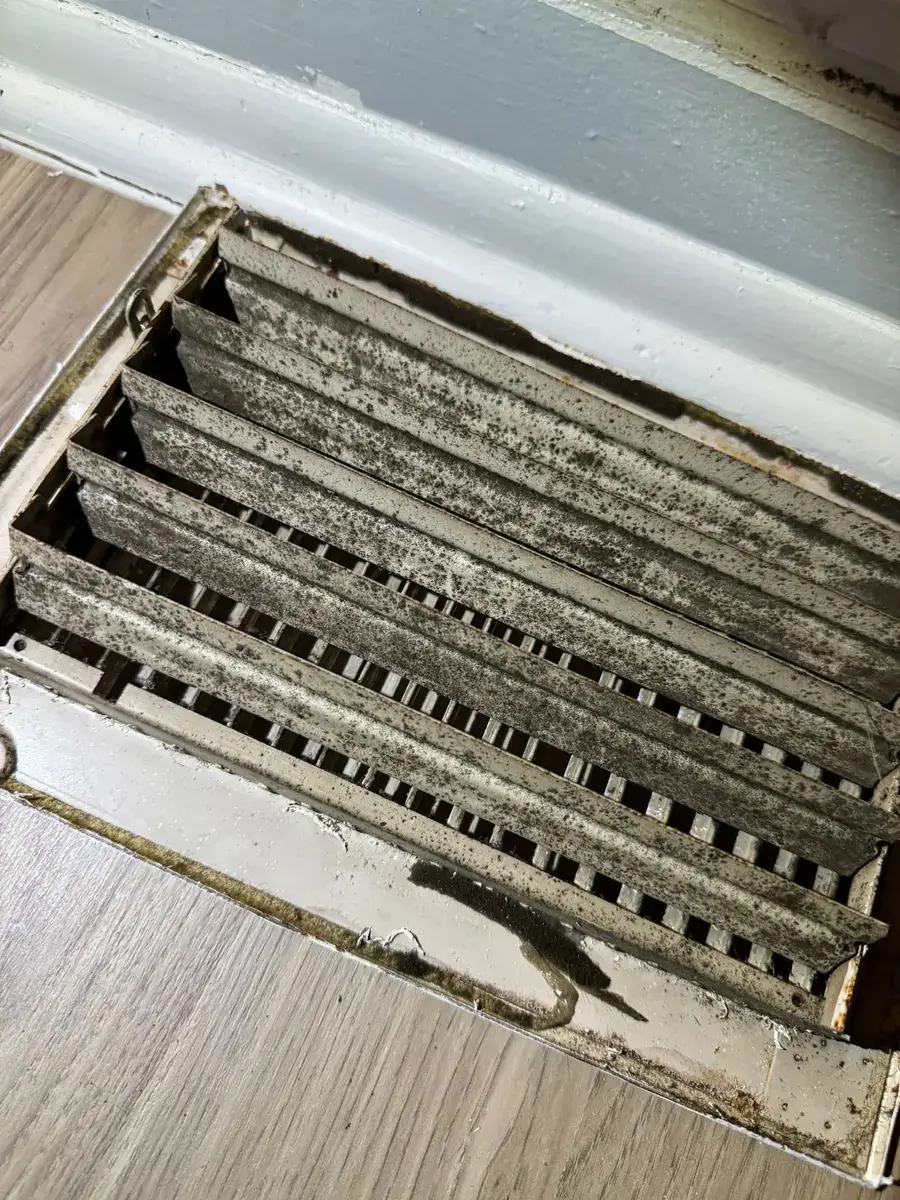
Floor returns like the one above are the honest middle ground — not an emergency, but a genuine collection point for dander, hair, and dust that gets pulled back through the system every cycle. If you are seeing recurring dust rings around registers, filters that grey out in weeks, or musty smells at startup, our rundown of the nine signs your ducts need cleaning shows each one with photos from real jobs and explains which are urgent.
How do you find out what is actually in your ducts?
Look, instead of guessing. Before we quote any work, we run a free video inspection inside your ductwork and show you the footage of your own system — not a stock photo of somebody else's worst-case duct. If the camera shows a meaningful reservoir of dust, dander, or debris, you will see it. If it shows your ducts are reasonably clean, we will tell you that too, and the inspection costs you nothing either way. You can read exactly how a visit unfolds on our process page.
The cleaning itself is source removal — the approach NADCA sets as the industry standard. Professional Nikro negative-pressure machines put the entire duct system under vacuum while air whips and agitation tools knock the buildup loose, so debris travels into the collection unit instead of into your rooms. HEPA filtration on the equipment keeps what we capture captured. When the job is done, you get after-photos of the same runs the camera saw before.
What does allergy-motivated duct cleaning cost?
It starts with looking, not with a number. Every air duct cleaning job begins with a free video inspection inside your ductwork, and you receive a flat, written quote before any work begins — based on what the camera actually finds in your system, not on what a phone script guesses. Routine cleaning and deep cleaning are scoped honestly as different services, so you are never sold one under the name of the other. If the inspection turns up confirmed microbial growth or pest contamination, sanitization with EPA-registered products is available as an add-on — applied after the physical cleaning, never instead of it, and spelled out on the same written quote.
One warning, because allergy sufferers are a favorite target: be skeptical of the $49–$99 "whole-house special" ads that lean hard on health promises. That price cannot cover hours of labor and truck-mounted equipment; it exists to get a salesperson into your home where the quote grows room by room, and the health claims grow with it.
Most customers have the crew handle dryer vent cleaning during the same visit, added to the same written quote. Lint is less an allergy issue than a fire one, but while the equipment is set up it is the cheapest insurance in the house. There are no trip fees anywhere in our service area, no surprise invoice, and no door-step upsell — the written quote is what you pay — and financing is available through Wisetack. E Cleaning is family-owned since 2016, PA licensed (PA 187935), insured up to $2 million, and Google Guaranteed with money-back protection up to $2,000 on qualifying jobs.