
Birds, Nests and Pests in Your Vents: Removal and Prevention
Every spring the same calls come in: a flapping sound inside a wall, a dryer that suddenly stopped venting, twigs poking out of an exterior hood. Cavity-nesting birds treat the vents on the side of your house as ready-made birdhouses — warm, dry, elevated, and safe from predators. This guide covers why it happens, how to confirm what is living in the vent, how removal actually works, the timing rules that keep it legal and humane, and how to fit a guard so it never happens again without strangling your airflow.
Why do birds nest in exterior vents?
Because a vent hood is nearly identical to the tree cavity these birds evolved to nest in — except better. A four-inch dryer vent opening is almost exactly the size a starling or house sparrow looks for, the duct behind it is dark and enclosed, and a dryer vent adds something no tree hollow offers: a steady flow of warm air every time you run a load. To a bird scouting nest sites in March, it is prime real estate.
The only thing standing between the bird and the duct is the damper flap, and flaps fail constantly. Plastic hoods crack and lose their flaps after a few winters of sun and ice. Lint buildup props flaps partway open, which is all the invitation a starling needs — they are strong enough to push through a flap that does not seat firmly. Once a bird has nested in a vent, the site tends to get reused: cavity nesters return to successful spots year after year, and in southeastern Pennsylvania the nesting season runs roughly March through July, often with a second brood raised in the same cavity.
Dryer vents get most of the attention, but bathroom exhaust hoods, kitchen exhaust terminations, and gable vents collect nests the same way — a bathroom fan vent that only runs a few minutes a day is even quieter and more attractive than a dryer line.
How can you tell there is a nest in your vent?
Usually the house tells you. Watch and listen for these signs, especially from March through mid-summer:
- Scratching, rustling, or chirping from a wall, ceiling, or the laundry area — loudest at dawn when the adults start feeding trips
- Twigs, grass, or straw sticking out of an exterior vent hood, or a damper flap wedged open
- Birds flying to and from the same spot on your siding every few minutes
- Laundry suddenly taking longer to dry — a nest blocks the exhaust the same way a lint clog does
- Droppings or feathers on the siding and ground directly below a vent
- A musty or ammonia-like smell in the room the duct serves when the fan or dryer runs
A quiet vent is not necessarily an empty vent. Eggs make no noise, and nestlings only call when a parent arrives with food. If you saw bird traffic in April and the vent has gone silent by June, the young have likely fledged — but the nest material is still packed in the duct, and it stays there until someone physically takes it out.
What other pests end up in vents and ducts?
Birds are the most common vent squatters, but they are not the only ones. Anything that can fit through a failed flap or a gap around a duct penetration will eventually try.
| Pest | How it gets in | Typical evidence | Main risk |
|---|---|---|---|
| Birds (starlings, house sparrows) | Push past broken or lint-propped damper flaps | Visible nest material, dawn noise, bird traffic at the hood | Blocked exhaust, fire risk in dryer lines, mites left behind in the duct |
| Mice | Gaps where ducts pass through walls, crawl spaces, and rim joists | Droppings near registers, gnawed flex duct, night scratching | Contaminated ductwork, chewed duct liner and wiring |
| Squirrels | Roof and gable vents, attic duct runs | Loud daytime scratching, chewed openings, shredded insulation | Structural chewing, torn ducts, trapped-animal odor |
| Wasps and hornets | Unused or rarely used exhaust hoods | Steady insect traffic at the hood, visible comb inside | Stings when the vent is disturbed; blockage |
Where the problem sits matters. A nest at the exhaust hood is a vent-cleaning job; droppings or nesting material inside the HVAC ductwork itself is one of the situations where air duct cleaning is clearly warranted, because the blower pushes air across that contamination on every cycle until it is physically removed.
Why is a nest in a dryer vent a fire hazard?
Because it is a bundle of dry twigs and grass sitting in the one duct in your house that carries hot, lint-laden air. A nest does two dangerous things at once: it blocks the exhaust, which drives temperatures up inside the dryer and the duct, and it gives escaping lint a scaffold to build on. Lint mats into the nest material, the blockage tightens, and the dryer runs hotter and longer against it with every load.
There is a second hazard for gas dryers: a blocked vent can push combustion exhaust, including carbon monoxide, back into the home instead of outside. If you have a gas dryer and any suspicion of a blocked line, stop using it until the vent is cleared. Our dryer vent fire safety guide covers the full picture, and if your loads have been dragging, our article on why clothes take two cycles to dry explains what a blockage does to drying performance long before anything ignites.
How does professional nest removal actually work?
We start every job with a free video inspection, and on nest calls it earns its keep: the camera shows exactly where the nest sits, how far the material extends up the run, and — critically — whether the nest is active, with eggs or young still in it, before anything gets disturbed.
If the nest is inactive, removal is physical. Nest material packs far tighter than lint, so it has to be pulled — rotary brushes and rods break it loose while a vacuum captures what comes free. Then we clean the entire run, not just the nest site, because feathers, droppings, shell fragments, and stray material scatter well beyond the nest itself. Bird nests also commonly carry mites and other parasites, which is a good reason not to leave a little material behind — and not to pull a nest out bare-handed into your laundry room.
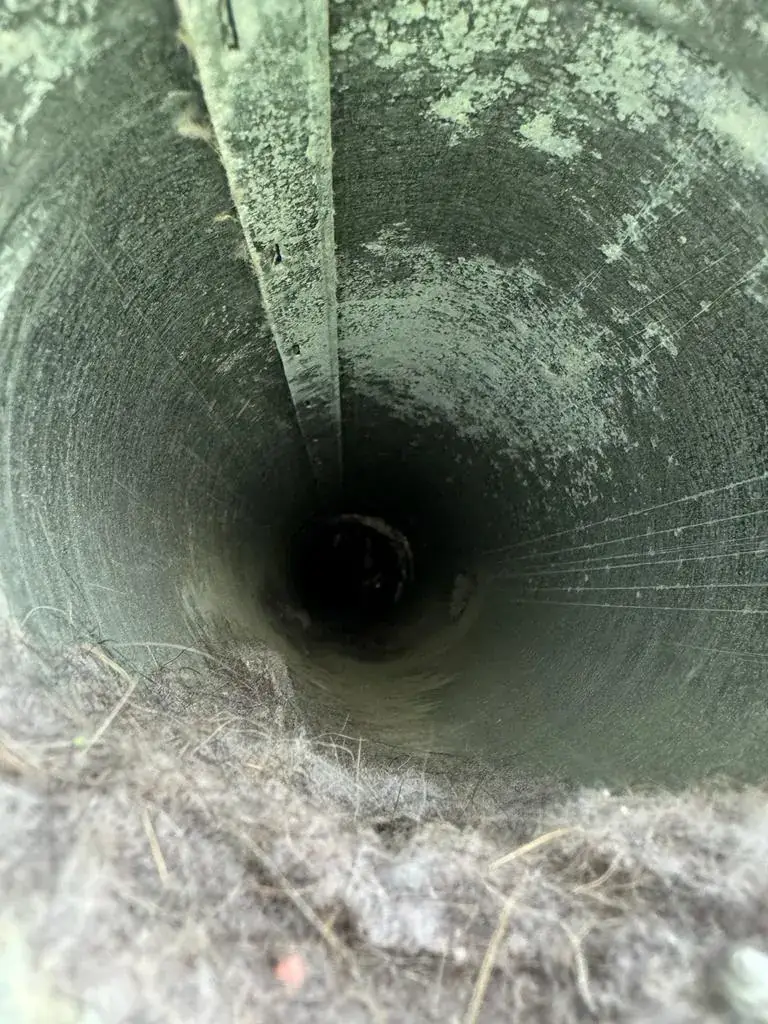
The photo above is from a real job — nesting material and debris sitting inside a duct exactly the way we find it. After extraction, the hood and damper get checked, a broken flap gets flagged for replacement, and you get after-photos of the cleared line. The step-by-step is on our process page. What we will not do is the shop-vac-and-hope version: yank out the visible plug at the hood, leave the packed material two feet up the run, and call it done.
When is it legal and humane to remove a bird's nest?
Timing is the whole question. Most native birds — robins, wrens, chickadees, bluebirds — and their active nests are protected under the federal Migratory Bird Treaty Act. An active nest is one with eggs or young in it, and disturbing or destroying an active nest of a protected species is illegal. The practical rule: an empty nest can be removed at any time; an active nest of a native species has to wait.
The useful twist is that the two birds most likely to be in your vent — European starlings and house sparrows — are non-native species and are not protected under the Act. But identifying a bird from a flapping sound inside a wall is guesswork, and the camera inspection settles it. When a nest is active and protected, or we cannot be sure what built it, the humane and legal path is to wait it out. Most cavity-nesting songbirds go from eggs to an empty nest in roughly four to six weeks, and by the time you notice the noise, the wait remaining is usually shorter than that.
Waiting out an active nest comes with two rules. First, never seal, cap, or guard a vent with birds still inside — you will trap the young, which defeats the point and, for protected species, compounds the legal problem. Second, mind the appliance: a bathroom fan can usually sit unused for a few weeks, but a dryer venting through an occupied nest is a fire risk on every load, so plan on the laundromat rather than pushing hot exhaust through nest material. The moment the young fledge, remove the nest and install the guard the same week — birds re-nest in proven cavities, sometimes within days for a second brood.
How do you install a vent guard without blocking airflow?
The wrong guard causes the very problem it was meant to prevent. Window-screen mesh stretched over a dryer hood is the classic mistake: lint mats over fine mesh within weeks, and a lint-caked screen is functionally the same blockage as a nest. This is why the International Residential Code — the model code Pennsylvania's statewide construction code is based on — prohibits screens on dryer exhaust terminations.
A guard done right is an open cage, not a screen: the openings are wide enough for lint to blow straight through but too small for a starling to squeeze past. It mounts over the hood without pinning the damper flap — the flap must still swing fully open and drop fully closed, because it is the first line of defense and the thing keeping drafts and insects out between loads. It is metal rather than plastic, since plastic guards go brittle in the sun and crack within a few seasons. And it is removable or hinged, because the vent behind it still needs periodic cleaning — a guard is not a substitute for the maintenance schedule in our guide to how often to clean a dryer vent.
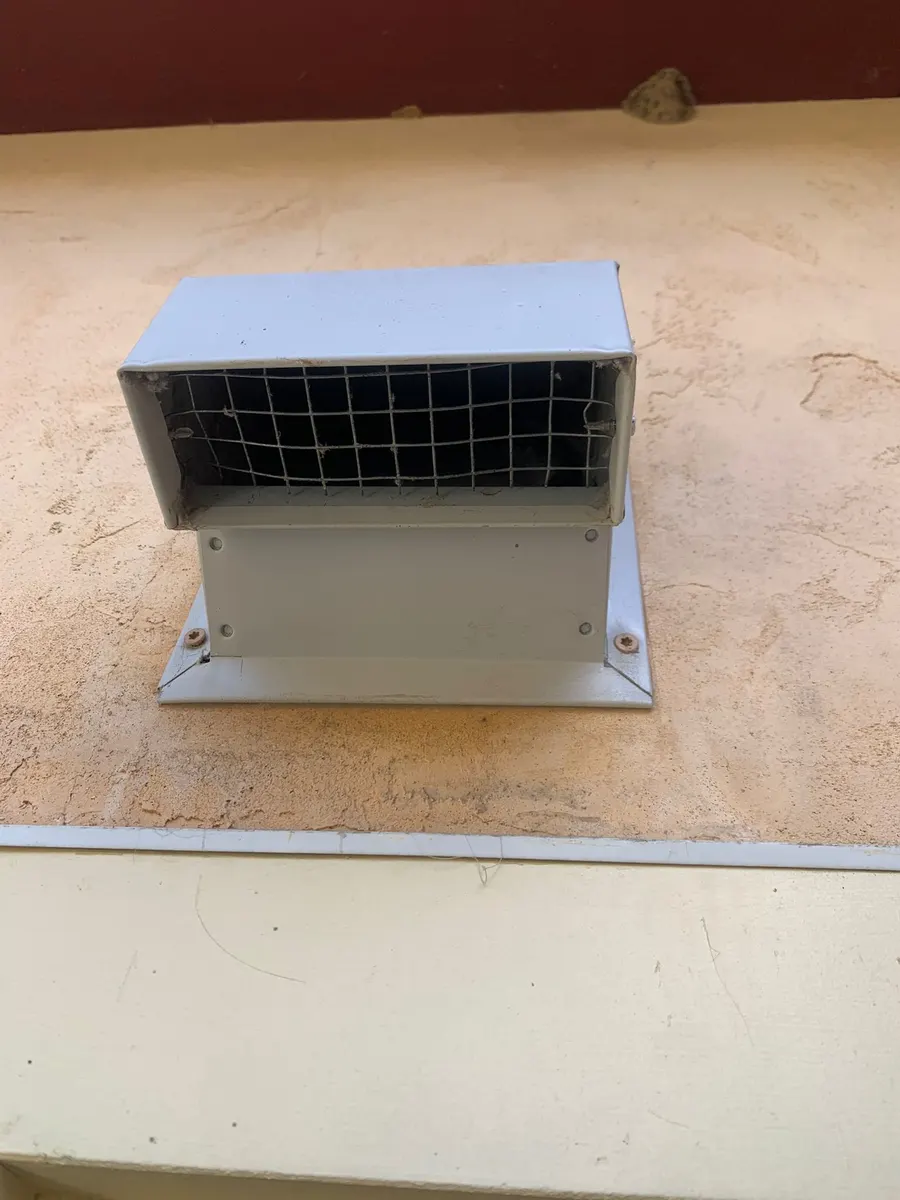
One rule above all: clean first, then guard. Capping a dirty vent locks the existing lint and debris inside the run. On bathroom and kitchen exhaust hoods, which carry far less lint, a finer guard is acceptable — the no-screen rule is specific to dryer exhaust.
How do you keep birds and pests out for good?
Prevention is a five-minute walk around the house each March, before nesting season starts. Check every exterior hood: the flap should sit flush when the appliance is off and swing freely when it runs. Replace cracked or missing flaps — a new hood costs little and is the single most effective barrier you have. Keep the dryer vent cleaned on schedule, because a flap propped open by lint buildup is an open door with a welcome mat. Confirm guards are still attached and intact after winter. And seal gaps around duct penetrations with exterior-rated sealant so mice cannot use the duct as a highway into the house.
If birds nested in one of your vents last year, assume they will try again. Cavity nesters are loyal to successful sites, and the traces of an old nest advertise the spot. That is the argument for removing even an old, inactive nest promptly instead of leaving it — it is a beacon for next spring.
What does nest removal and vent cleaning cost?
A bird's nest in a dryer vent line is handled as a dryer vent cleaning, and it is priced the way every job we do is priced: the free video inspection comes first, then you get a flat, written quote before any work begins — based on what the camera actually found, not on a guess made over the phone. If the inspection shows nesting material or droppings deeper in the HVAC ductwork, that is honestly scoped as its own air duct cleaning and quoted in writing the same way. There are no trip fees anywhere in our service area, no door-step upsell, and no surprise nest surcharge invented at the truck — the written quote is the number on the invoice. Financing is available through Wisetack if you want to spread the cost out.
E Cleaning is family-owned, founded in 2016, PA licensed (PA 187935), insured up to $2 million, and Google Guaranteed with money-back protection up to $2,000 on qualifying jobs. We serve Montgomery, Chester, Bucks, and Delaware counties plus Berks and Philadelphia from our King of Prussia base, around the clock, Sunday through Friday. If something is scratching in your vent line, we can tell you exactly what it is before anything gets touched.
