
Dryer Vent Cleaning in Plumstead, PA
E Cleaning provides professional dryer vent cleaning throughout Plumstead Township — farmhouse basement hookups, second-floor laundry rooms venting to roof caps, and everything between. Every job starts with a free video inspection of your actual vent run, and you get a flat written quote before any work begins, with no trip fee anywhere in the township. We're family-owned since 2016, PA-licensed (PA 187935), insured to $2 million, and Google Guaranteed.
Big Detached Houses, Long Vent Runs: Where Plumstead Keeps Its Dryers
In dryer vent cleaning, the house matters less than two questions: what floor is the laundry on, and how far does the exhaust travel before it reaches outside air? Plumstead's answer, in most of the township, is "farther than you'd think" — and that distance is the whole story of lint, airflow, and fire risk here.
Plumstead is a rural-suburban township in central-upper Bucks County, northeast of Doylestown, its homes strung along Route 611 through Plumsteadville, along Durham Road (Route 413) through Gardenville, and scattered across former farmland on spacious lots between the villages of Danboro, Fountainville, and Point Pleasant on the Delaware. Unlike the boroughs of lower Bucks, where rowhomes share walls and vent runs are short and standardized, Plumstead is overwhelmingly a township of detached single-family homes — and detached homes with big floor plans produce exactly the opposite problem. The laundry can sit almost anywhere in the house, and wherever it sits, the vent has to find its own way out.
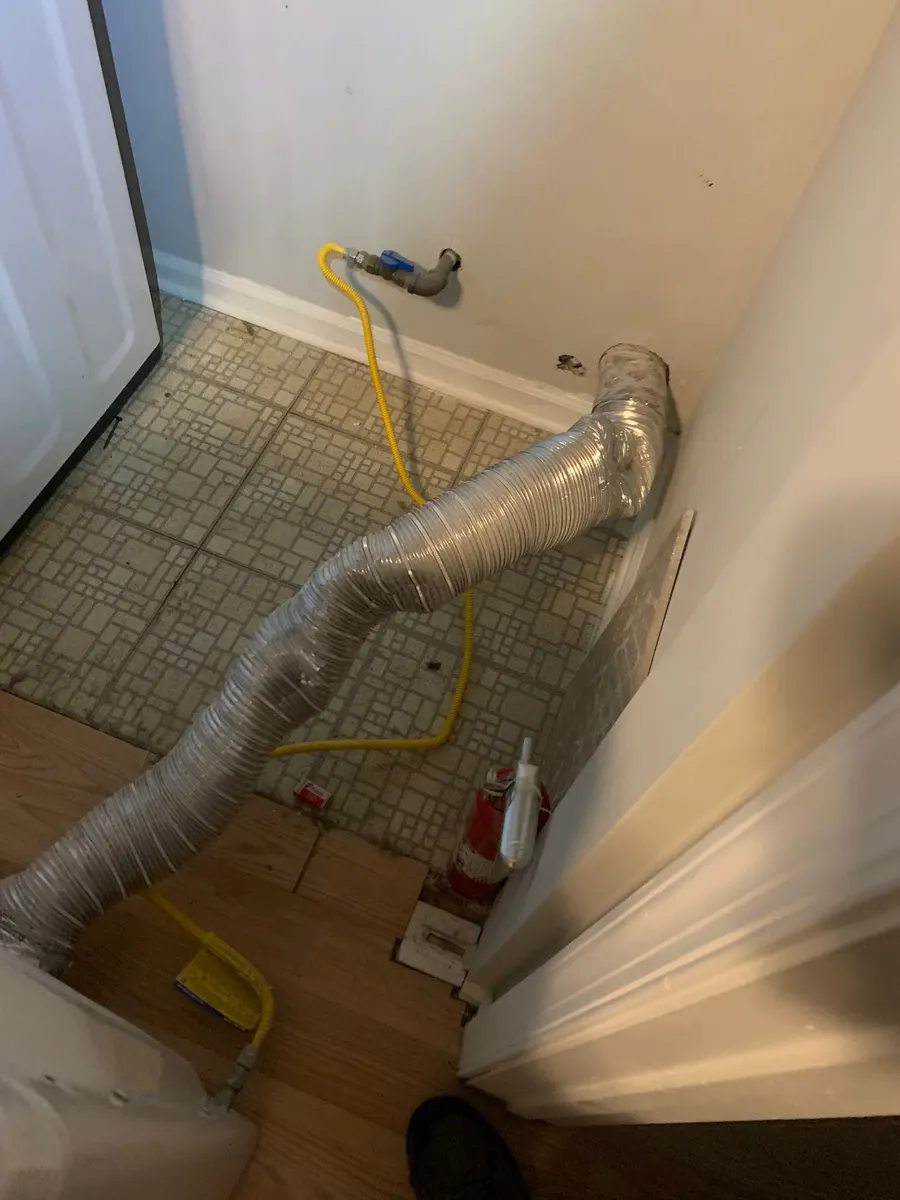
Start in the basements. The township's stone farmhouses and older village homes were built generations before anyone owned a clothes dryer, so the laundry went wherever it could be plumbed — usually the basement, sometimes a rear addition or converted outbuilding bay. Punching a four-inch duct through a stone wall that can run eighteen inches thick is real work, so many installers took the easier road: long horizontal runs through joist bays or crawlspaces to reach a more forgiving exterior wall. Plenty of those runs were done decades ago in flexible foil duct that sags between supports, and every sag is a low spot where damp lint settles and stays. A farmhouse dryer can sit six feet from a wall while its exhaust travels twenty-five feet before it sees daylight — and nobody has looked inside that run since it was installed.
Now go upstairs. Plumstead's biggest housing wave came in the 1980s through the 2000s, when subdivisions filled in around Plumsteadville and the 611 corridor, and by then builders had moved the laundry to the second floor, next to the bedrooms. Convenient for hampers; unforgiving for exhaust. A second-floor laundry room usually vents vertically through a wall chase and terminates at a roof cap — a long run with elbows, lint fighting gravity the whole way up, and a termination nobody can see from the ground, let alone check. In a township this wooded, an unguarded roof cap is prime spring real estate for nesting birds, and a matted lint screen two stories up goes unnoticed until the dryer starts underperforming. The township's newer homes add a third pattern: a laundry closet near the middle of the floor plan, with a concealed run through the floor system that builds a problem invisibly behind drywall.
Then there's how Plumstead actually uses its dryers. Rural and semi-rural properties generate heavy laundry — work clothes, muddy boots and gear, pet and animal bedding, and the towel volume of large households. Heavier, dirtier loads shed more lint per cycle than office wardrobes do, and from late fall through early spring nothing dries on a line; the dryer carries all of it. Because natural gas never reached much of the township, many of those dryers run on propane or electricity, and a dryer pushing exhaust through a restricted run burns noticeably more of either. Long runs, heavy use, terminations nobody can see: that combination is precisely the profile where vents clog fastest — and in a township of spread-out rural roads, prevention is worth far more than reaction.
What a Clogged Vent Actually Risks
Lint is fine, dry, and packed around a heat source — close to ideal fire fuel. When the vent can't move air, the heat that should exit the house builds up inside the duct and the dryer itself, and the lint lining the run sits exactly where the temperature climbs.
Plumstead's long runs make those numbers worth taking personally. A short, straight vent in a modern rowhome can limp along half-blocked; a twenty-five-foot farmhouse run or a two-story vertical chase cannot, because every added foot and every elbow gives lint another place to accumulate and airflow another reason to slow down. The dryer usually announces the problem before it becomes dangerous — if you know how to read it:
| What you notice | What it usually means |
|---|---|
| Towels or jeans need a second cycle | The clearest early symptom — airflow is restricted and moisture can't exit |
| The dryer top or laundry room gets hot mid-cycle | Exhaust heat is staying in the machine and the room instead of leaving the house |
| A burning or scorched smell while the dryer runs | Lint somewhere in the system is sitting against real heat — stop and get it inspected |
| Lint collecting behind the dryer or at the door seal | Backpressure is forcing lint out of the joints instead of out the vent |
| The exterior flap barely moves — or you've never seen your roof cap | The termination may be matted over, screened shut, or nested in |
| The dryer shuts itself off mid-cycle | Many newer models trip a thermal cutoff when exhaust heat builds — a warning, not a quirk |
There's a quieter cost even before anyone talks about fire. A dryer forcing exhaust through a clogged run works longer per load, wears out its heating element and thermostat faster, and burns more electricity or propane doing it. In a township where plenty of homes run propane appliances, an inefficient dryer is a quietly expensive one — and the fix is the same cleaning the fire risk calls for anyway.
Routine or Deep? The Camera Answers Before the Quote Is Written
A vent carrying a season of normal lint and a vent that has been packing itself solid for a decade are honestly different jobs, and we refuse to price them as one. Every Plumstead visit starts with a free video inspection of your actual run — then a flat written quote, before any work begins.
Routine cleaning covers a maintained vent: we restore full airflow end to end and keep the system honest for another year. Deep cleaning is a different service for a different situation — years of compacted lint, saturated low spots in a sagging farmhouse run, or a bird's nest packed into a roof cap. The camera decides which one your vent needs, you see the same footage we do, and the written quote names the scope plainly. No per-foot surprises, no doorstep revision, no upsell theater. If the run turns out to be genuinely clean, we tell you that instead, and you keep the footage.
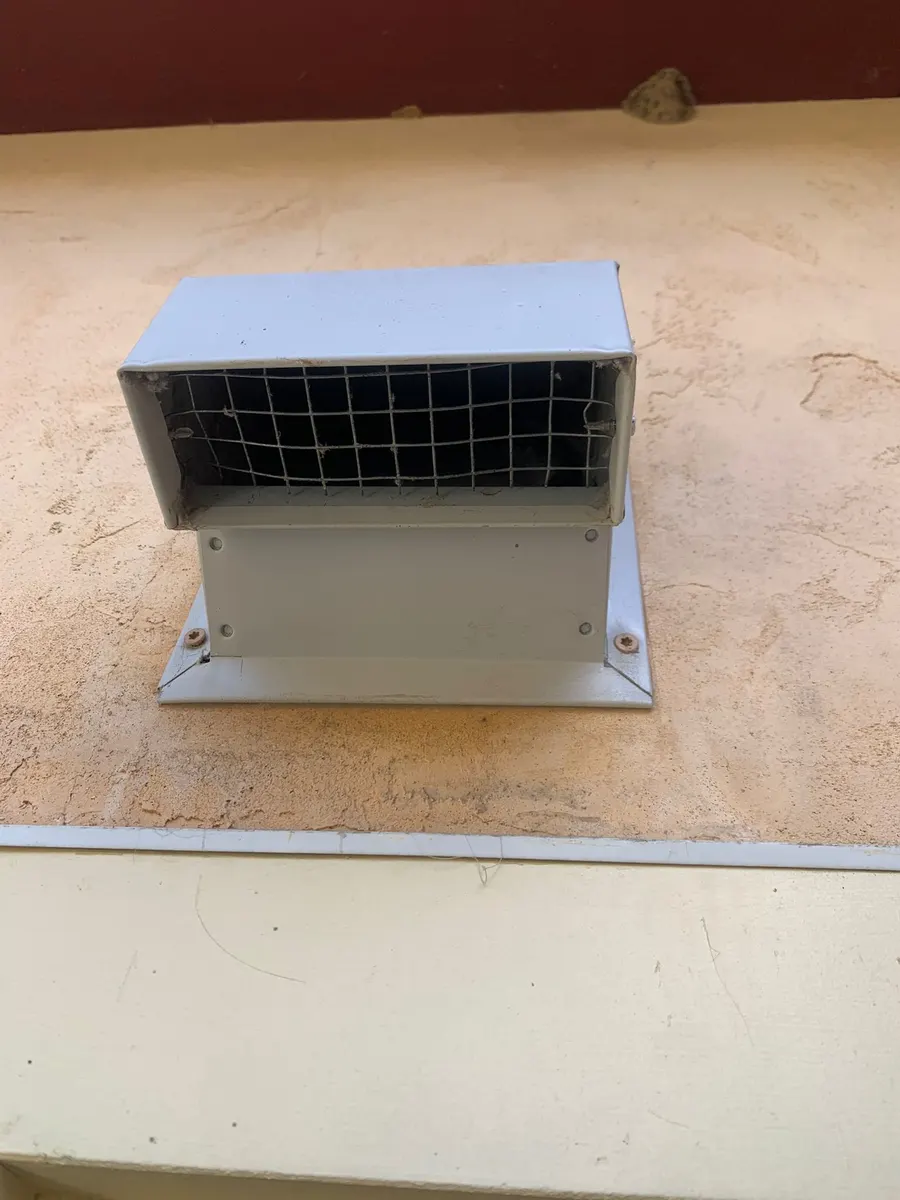
The cleaning itself works from both ends of the system. We disconnect the dryer and clean the transition hose behind it — often the dirtiest few feet of the whole run. Rotary agitation brushes then travel the full length of the duct while HEPA-filtered vacuum extraction pulls the loosened lint into our equipment rather than across your basement or out into the yard. We clear the exterior termination — wall cap or roof cap, and yes, we work the roof terminations on Plumstead's two-story colonials — verify real airflow at the outlet, reconnect the dryer properly, and hand you after-photos of the finished run. Behind the work stands the same guarantee stack as every job we do: a Price Match Guarantee against any competitor's written quote for the same scope, a 6-month workmanship warranty, and Google Guaranteed protection up to $2,000 on qualifying jobs, from a licensed and insured PA contractor (PA 187935).

How often should a Plumstead home do this?
- Once a year is the right baseline for most households
- Every six to nine months for long or roof-terminated runs — most of the township's second-floor laundry colonials qualify
- Every six to nine months for large, pet-heavy, or animal-property households whose laundry sheds more lint per cycle
- Promptly after any bird or pest activity at the termination — nest material doesn't clear itself
- On moving into a home with an unknown service history — the free inspection settles the question either way
Every Village, Every Rural Road, No Trip Fee
Plumsteadville, Danboro, Gardenville, Fountainville, Point Pleasant, or a farmhouse on a road between them — the process is identical everywhere in Plumstead Township: free video inspection, flat written quote before any work, and no trip fee anywhere on the map.
Our base is in King of Prussia and our crews reach Plumstead by the Doylestown corridor and Route 611, so the township is a routine trip despite its rural feel. We work around the clock, Sunday through Friday — we're closed Saturdays when something can't wait, and Wisetack financing is available at booking if you'd rather spread the cost. Many Plumstead homeowners pair the vent work with air duct cleaning in Plumstead, since one visit and one setup can handle both systems. We serve the neighboring communities on the same terms, including Tinicum, Solebury, and New Britain — the full list is on our Bucks County service area page.
- Family-owned and operated since 2016
- Licensed PA contractor #PA 187935, insured up to $2 million
- Google Guaranteed — money-back protection up to $2,000 on qualifying jobs
- rated 4.8 stars across 144 Google reviews
- Free video inspection before every job, after-photos when it's done
- Flat written quote before any work — never a revised number at the door
How much does dryer vent cleaning cost?
Routine and deep cleaning are different services — the free inspection determines which one your system actually needs. Prices vary house to house; your exact price comes as a flat written quote before any work begins.
| Dryer vent routine — basement / 1st floor | $129.99 |
| Dryer vent routine — 2nd floor & up | $149.99 |
| Dryer vent deep cleaning | $299.99 |
| Nest removal · bird guard installation | from $250 · from $150 |
Three promises. In writing. On every job.
Price Match Guarantee
Bring a competitor's written quote for the same scope of work — we'll match it. You never overpay for doing it right.
6-Month Warranty
Every job carries a 6-month workmanship warranty. If a problem traced to our work shows up, we come back and make it right — free.
Google Guaranteed
Booked through Google Local Services, qualifying jobs carry Google's own money-back protection up to $2,000, administered by Google.
Backed by a real license and $1M/$2M insurance — see the actual documents
Don't put off air you breathe — finance it with Wisetack
Check your options in about a minute with no impact to your credit score, choose terms that fit your budget, and pay over time instead of all at once.
*All financing is subject to credit approval. Your terms may vary. Wisetack loans are issued by Hatch Bank. See additional terms at wisetack.com/faqs.
4.8 stars from 144 Google reviews — and easy to find
E Cleaning Duct & Vent Cleaning is based at 555 S Goddard Blvd, King of Prussia, and serves Plumstead and all of Bucks County from right here. Check our Google profile: real jobs, real photos, and a rating our crew protects on every visit.
- Google Guaranteed business — screened, licensed and insured (see the documents)
- Read every review on our Google profile — we don't cherry-pick what you can verify
Dryer Vent Cleaning questions from Plumstead homeowners
Do you charge extra to come out to Plumstead?
No. There are no trip fees or travel surcharges anywhere in Plumstead Township — Plumsteadville, Danboro, Gardenville, Fountainville, Point Pleasant, and every rural road between them. Every job starts with a free video inspection of your vent run, and you get a flat written quote before any work begins. The quote you approve is the amount you pay, same as in every town we serve.
Our laundry room is upstairs and the dryer takes two cycles. Is that the vent?
Very likely. Second-floor laundry rooms — standard in the colonials built around Plumsteadville and the 611 corridor from the 1980s through the 2000s — usually vent vertically through a wall chase to a roof cap. That means a long run, several elbows, lint fighting gravity, and a termination nobody ever sees. Long dry times are the classic symptom of restricted airflow in exactly that setup, and the free video inspection will show you the run's actual condition before you commit to anything.
Can you clean a dryer vent that terminates on the roof?
Yes, routinely. Roof terminations are common on Plumstead's two-story homes, and they're where problems hide — matted lint screens, stuck flappers, and birds nesting in spring, all two stories above anyone's sight line. We clear the cap itself, brush and vacuum-extract the full vertical run, and verify airflow at the top before we leave, with after-photos so you can see what you can't from the ground.
We're in a stone farmhouse with the dryer in the basement. Can you handle that run?
Yes — it's a configuration we know well in Plumstead. Farmhouse laundry hookups were added long after the houses were built, so the vent often takes a long horizontal path through joist bays or a crawlspace to reach a workable exterior wall, sometimes in older flexible duct that sags and traps damp lint in every low spot. The camera maps the actual route first, and the written quote reflects what the footage shows — routine cleaning or a genuine deep clean, named plainly.
Our dryer runs on propane. Does that change anything?
The cleaning process is the same, but the stakes tilt a little. A propane dryer pushing exhaust through a restricted run burns more fuel per load, so a clogged vent shows up on your propane bill as well as your dry times — and like any dryer, the combination of trapped heat and packed lint is the fire risk the NFPA numbers point to. Restoring full airflow fixes the efficiency and the safety problem in the same visit.
How often should a Plumstead home have its dryer vent cleaned — and can you do the air ducts the same day?
Once a year is the right baseline; go to every six to nine months if you have a roof-terminated or extra-long run, or the heavy laundry load that comes with rural property life. And yes — many Plumstead homeowners book dryer vent and air duct cleaning together, since one visit and one setup covers both. Each service gets its own free video inspection and its own line in the flat written quote before any work begins.
Ready for honest dryer vent cleaning in Plumstead?
Free video inspection, a flat written quote before any work, and real before/after proof — call (484) 367-5944 or book online now.
