
What to Expect During Your Duct Cleaning Appointment
A standard air duct cleaning appointment with E Cleaning takes about two to four hours. Your technician arrives in a marked van, runs a free video inspection inside your ducts, hands you a flat written quote before any work starts, protects your floors and walls, cleans every supply and return line with negative-pressure equipment, then shows you after-photos before you pay.
Most homeowners who put off booking a duct cleaning are not really stalling over the price. They are stalling over the unknowns. Who is coming into my house? Will the quote suddenly triple once they are inside? How loud and messy is it? Do I have to hover over them for four hours? This guide walks through a real E Cleaning appointment stage by stage, so that by the time the technician knocks on your door, nothing that happens will surprise you.
How long does a duct cleaning appointment take?
Plan on two to four hours for a single HVAC system in an average home. Larger homes, multiple systems, heavy buildup, or add-ons like dryer vent cleaning and sanitization stretch that window. Here is how the time typically breaks down:
| Stage | Typical time | What happens |
|---|---|---|
| Arrival and walkthrough | 10–15 minutes | Introductions, count systems and vents, discuss problem areas |
| Video inspection | 15–20 minutes | Camera goes inside the ducts; you see the footage with the tech |
| Quote confirmation | 5 minutes | Scope and price confirmed in writing before any work starts |
| Protection and setup | 15–20 minutes | Floor coverings down, equipment staged, vents prepped |
| The cleaning itself | 1.5–2.5 hours | Negative-pressure machine plus agitation, supply and return sides |
| After-photos and walkthrough | 10–15 minutes | Before/after comparison of the same duct sections |
| Payment and paperwork | 5–10 minutes | Payment only after you have reviewed the results |
Those numbers are worth keeping in mind for another reason: time is one of the easiest ways to spot a bad operator. A crew that is in and out of a whole house in 45 minutes did not clean your ductwork — they fogged some air freshener and vacuumed a few register covers. That rushed visit is a signature move of the $49 whole-house special scam we write about often.
What happens when the technician arrives?
Your technician shows up in a marked E Cleaning van, in uniform, at the scheduled window. E Cleaning is a PA licensed contractor (PA 187935) and insured up to $2 million, and we have served the Philadelphia suburbs from our King of Prussia base since 2016 — you are not letting a stranger with a shop vac into your home.
The first ten minutes are a walkthrough with you. The tech will:
- Put on shoe covers before stepping inside
- Confirm how many HVAC systems the home has (this sets the scope of your quote)
- Count and locate every supply register and return grille
- Look at the furnace or air handler and how the trunk lines run
- Ask about problem rooms, allergies, pets, recent renovation, or musty smells
- Note anything fragile near vents so it can be moved or covered
Nothing gets unpacked from the van until this walkthrough — and the inspection that follows — is done.
What does the free video inspection show?
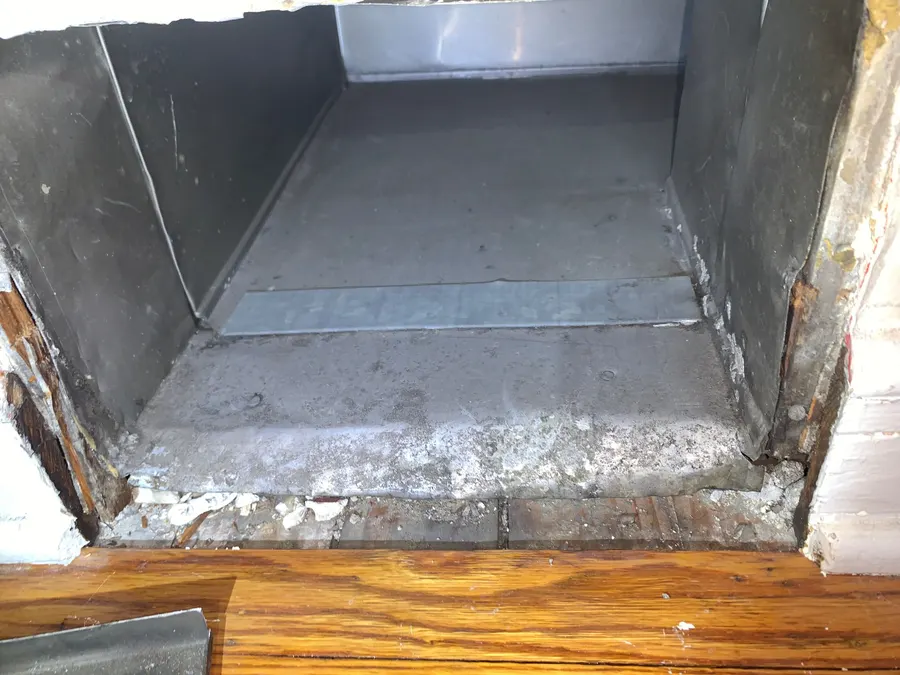
Before we quote a single dollar of work, a camera goes inside your ductwork. You watch the screen with the technician, live. What you typically see is a gray blanket of settled dust and lint; in some homes it is drywall powder from an old renovation, matted pet hair, or construction debris the builder left behind. Occasionally we find surprises like nesting material near an exterior opening.
The inspection does two jobs at once. First, it is an honest before-record: the exact sections you see dirty on camera are the sections we photograph again after cleaning. Second, it sets the real scope. If your ducts are genuinely clean — say the previous owner had them done recently — we tell you that, and you keep your money. A company that inspects after quoting has it backwards; you can read more about how we sequence the visit on our process page.
Will the price change after the inspection?
No. Your quote is flat and in writing, and it is set before a single tool comes off the van — after the free video inspection, not before. Because the camera establishes the scope first, the number on that quote already reflects what is actually inside your ducts. Routine cleaning and deep cleaning are scoped honestly as different services: if heavy buildup genuinely calls for a deep cleaning, or visible contamination makes the optional sanitization treatment (EPA-registered products only) worth considering, the technician shows you the camera footage that justifies it and you decide — before work begins, in writing. And since we charge no trip fees anywhere in our service area, saying no costs you nothing. How the whole quote process works is laid out on our pricing page.
This is the opposite of the bait-and-switch model, where a $49 coupon walks in the door and a four-figure invoice walks out. Our inspection can confirm the scope or shrink it; it is never a lever to inflate it. Every qualifying job is also backed by Google Guaranteed money-back protection up to $2,000, and if you would rather spread the cost out, financing is available through Wisetack — you can prequalify in about a minute with no impact on your credit score.
How do we protect your floors and walls?
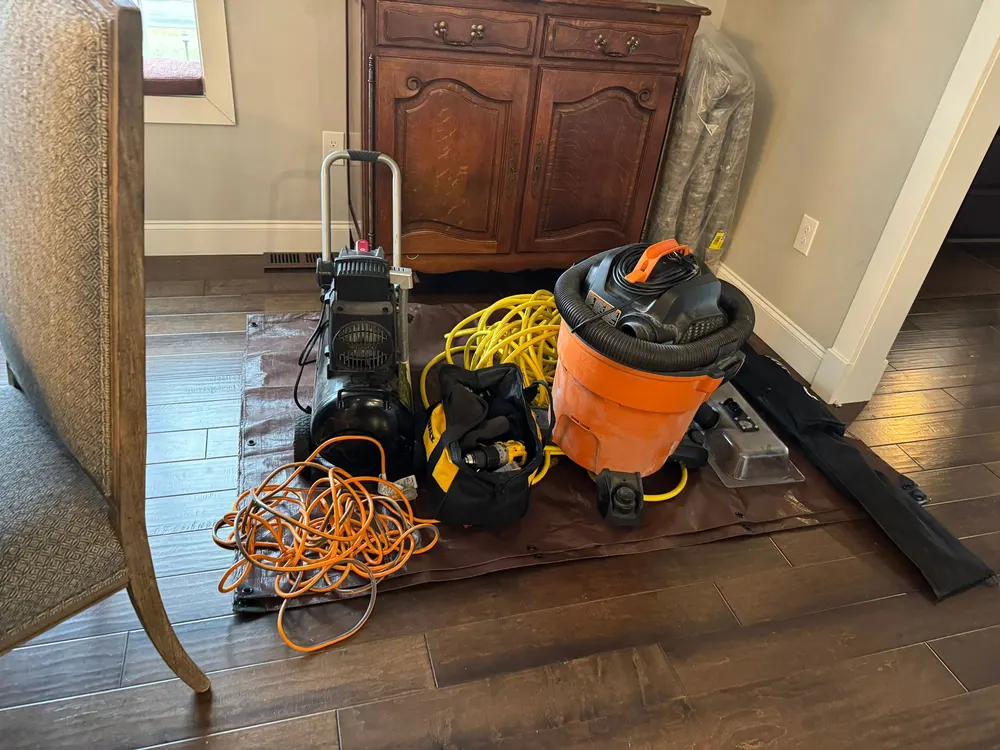
This is the part of setup most homeowners never see coming, and it is why the cleaning does not start the moment the quote is signed. Duct cleaning means running vacuum hoses from the van or machine to your furnace and moving a ladder from room to room, so the technician spends 15–20 minutes preparing the house first: floor coverings go down along the main hose path, hoses are routed and padded so they do not scuff wall corners on turns, register covers are removed carefully and set aside rather than pried loose, and anything sitting directly under a ceiling vent gets shifted or covered before the ladder comes near it.
The equipment itself is part of the protection plan. Our Nikro machines pull air through HEPA filtration, so the decades of dust leaving your ducts is captured at the machine — not exhausted back into your living room. Done right, the visible evidence that a crew spent hours in your house should be clean ducts and nothing else.
What are the stages of the cleaning itself?
E Cleaning uses the source-removal method — the approach NADCA sets as the industry standard. In plain terms: put the entire duct system under strong negative pressure, then physically knock the buildup loose so the vacuum can carry it away. Here is the sequence you will see and hear.
Hookup and sealing
The negative-pressure machine connects to your main trunk line near the furnace. Registers get temporarily covered so the machine's suction concentrates through the ductwork instead of leaking out of every opening.
Negative pressure on
The vacuum starts and the whole duct system becomes a controlled, sealed pathway flowing toward the machine. This is the loud part — comparable to a shop vacuum running — and it continues through the cleaning.
Agitation, vent by vent
The technician works through each supply run with air whips and agitation tools that scour the duct walls and drive debris toward the vacuum. Settled dust does not leave a duct on its own; this mechanical scrubbing is what separates a real cleaning from a blower-and-fragrance visit. We break down why in our guide to source-removal cleaning.
Return side and trunk lines
Return ducts — usually the dirtiest part of the system, since they pull unfiltered household air — get the same treatment, followed by the main supply and return trunks.
Reassembly
Register covers are wiped down and reinstalled, coverings come up, and equipment goes back in the van. The system is run briefly to confirm normal airflow.
How do you know the job was actually done?
You do not take our word for it — you compare pictures. After the cleaning, the technician photographs the same duct sections you saw during the video inspection and walks you through them side by side: the gray blanket of buildup at the start, bare sheet metal at the end. These after-photos are yours to keep with your records, which is handy for real estate disclosures and for knowing your true baseline the next time the ducts are due. If you want to see what realistic results look like before you book, our article on duct cleaning before and after shows honest examples — including what cleaning does and does not fix.
How does payment work?
Payment comes last, after the after-photo walkthrough — you pay for results you have already seen, not promises. The technician totals the job against the written quote you approved at the start, answers any questions, and takes payment on the spot. If you set up Wisetack financing, the quoted price is exactly what you finance; the payment plan never changes the cost of the job. You will also get maintenance guidance that fits your home — how the filter you use, your pets, and any upcoming renovation affect when the ducts will need attention again.
How should you prepare before we arrive?
Honestly, not much — the technician handles the heavy lifting. But five minutes of prep makes the visit faster:
- Clear a couple of feet of space around the furnace or air handler
- Move small or fragile items off surfaces directly under ceiling vents
- Plan for pets — a closed room, crate, or the yard works, since doors open repeatedly and the vacuum is loud
- Leave a parking spot reasonably close to the door for hose runs
- Expect a few hours of vacuum noise — schedule calls or naps around it
- If you also want the dryer vent cleaned, mention it when booking so the visit is scheduled with time for both
You do not need to be glued to the technician's side. Most homeowners check in at the milestones — inspection, quote, after-photos — and otherwise go about their day.
Ready to stop putting it off?
The whole reason we inspect on camera before quoting, put every quote in writing before work begins, and photograph our results is to remove every unknown that keeps people from booking. If your air ducts have never been cleaned — or you cannot remember the last time — the appointment described above is a phone call away. We serve Montgomery, Chester, Bucks, Delaware, Berks, and Philadelphia counties, around the clock, Sunday through Friday.
